

Synthesis of Nanomaterials for Energy Generation …
217
3 Synthesis of Nanomaterials
The synthesis of nanoparticles depends on two major approaches: (i) Top-down
method and (ii) Bottom-up method. In top-down approach, the macro bulk form of
the precursor has been physically processed to break and bring down particle size to
nano dimensions. In contrast, bottom-up method, the nanoparticles are synthesized by
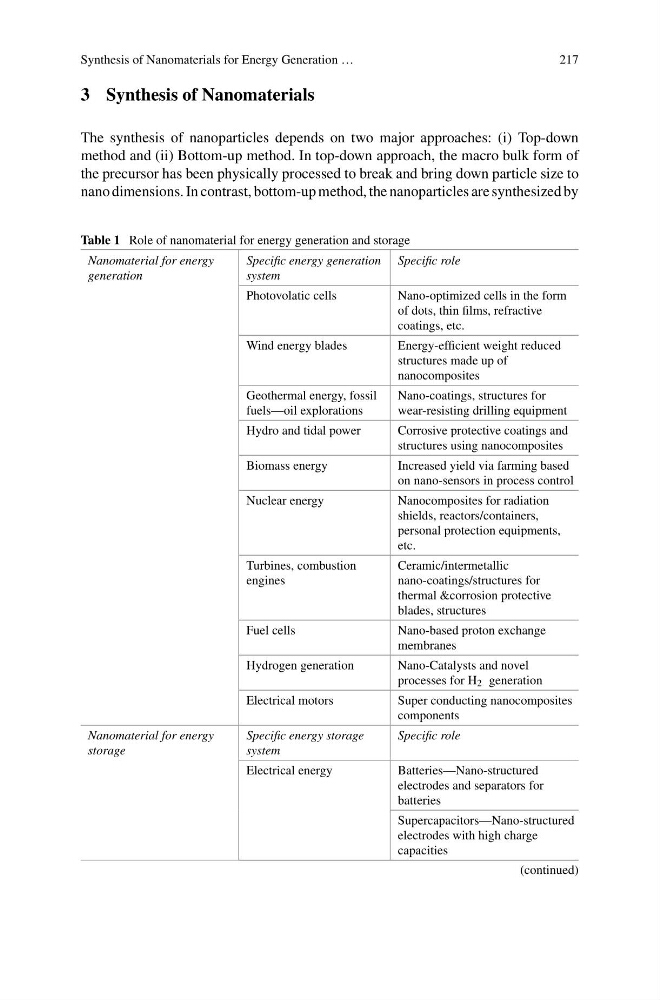
Table 1 Role of nanomaterial for energy generation and storage
Nanomaterial for energy
generation
Specific energy generation
system
Specific role
Photovolatic cells
Nano-optimized cells in the form
of dots, thin films, refractive
coatings, etc.
Wind energy blades
Energy-efficient weight reduced
structures made up of
nanocomposites
Geothermal energy, fossil
fuels—oil explorations
Nano-coatings, structures for
wear-resisting drilling equipment
Hydro and tidal power
Corrosive protective coatings and
structures using nanocomposites
Biomass energy
Increased yield via farming based
on nano-sensors in process control
Nuclear energy
Nanocomposites for radiation
shields, reactors/containers,
personal protection equipments,
etc.
Turbines, combustion
engines
Ceramic/intermetallic
nano-coatings/structures for
thermal &corrosion protective
blades, structures
Fuel cells
Nano-based proton exchange
membranes
Hydrogen generation
Nano-Catalysts and novel
processes for H 2 generation
Electrical motors
Super conducting nanocomposites
components
Nanomaterial for energy
storage
Specific energy storage
system
Specific role
Electrical energy
Batteries—Nano-structured
electrodes and separators for
batteries
Supercapacitors—Nano-structured
electrodes with high charge
capacities
(continued)
217
3 Synthesis of Nanomaterials
The synthesis of nanoparticles depends on two major approaches: (i) Top-down
method and (ii) Bottom-up method. In top-down approach, the macro bulk form of
the precursor has been physically processed to break and bring down particle size to
nano dimensions. In contrast, bottom-up method, the nanoparticles are synthesized by
Table 1 Role of nanomaterial for energy generation and storage
Nanomaterial for energy
generation
Specific energy generation
system
Specific role
Photovolatic cells
Nano-optimized cells in the form
of dots, thin films, refractive
coatings, etc.
Wind energy blades
Energy-efficient weight reduced
structures made up of
nanocomposites
Geothermal energy, fossil
fuels—oil explorations
Nano-coatings, structures for
wear-resisting drilling equipment
Hydro and tidal power
Corrosive protective coatings and
structures using nanocomposites
Biomass energy
Increased yield via farming based
on nano-sensors in process control
Nuclear energy
Nanocomposites for radiation
shields, reactors/containers,
personal protection equipments,
etc.
Turbines, combustion
engines
Ceramic/intermetallic
nano-coatings/structures for
thermal &corrosion protective
blades, structures
Fuel cells
Nano-based proton exchange
membranes
Hydrogen generation
Nano-Catalysts and novel
processes for H 2 generation
Electrical motors
Super conducting nanocomposites
components
Nanomaterial for energy
storage
Specific energy storage
system
Specific role
Electrical energy
Batteries—Nano-structured
electrodes and separators for
batteries
Supercapacitors—Nano-structured
electrodes with high charge
capacities
(continued)