

54
X-Machines for Agent-Based Modeling: FLAME Perspectives
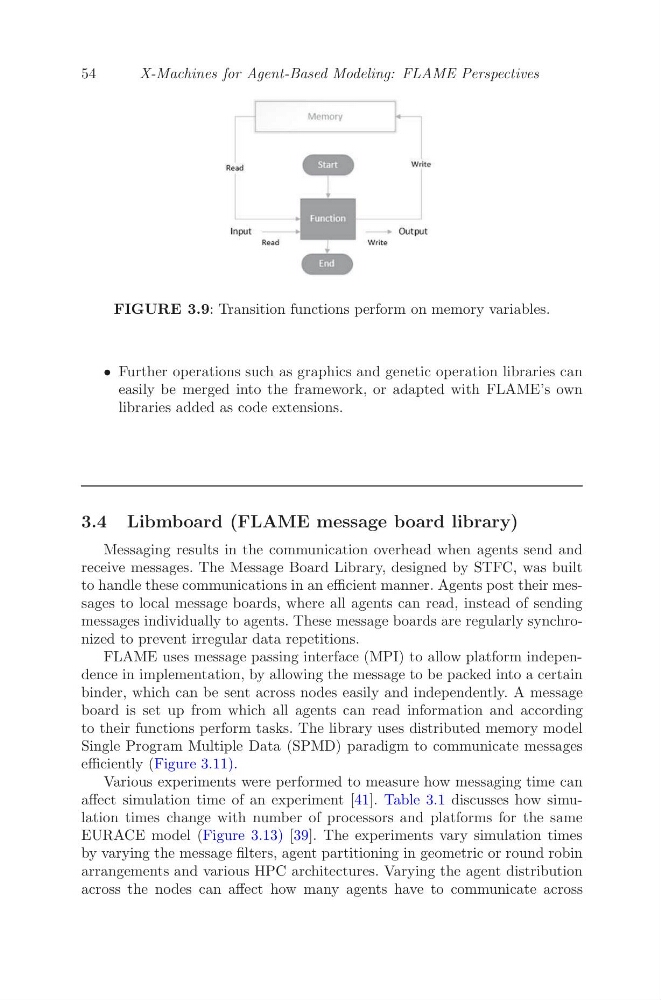
FIGURE 3.9: Transition functions perform on memory variables.
• Further operations such as graphics and genetic operation libraries can
easily be merged into the framework, or adapted with FLAME’s own
libraries added as code extensions.
3.4 Libmboard (FLAME message board library)
Messaging results in the communication overhead when agents send and
receive messages. The Message Board Library, designed by STFC, was built
to handle these communications in an efficient manner. Agents post their messages to local message boards, where all agents can read, instead of sending
messages individually to agents. These message boards are regularly synchronized to prevent irregular data repetitions.
FLAME uses message passing interface (MPI) to allow platform independence in implementation, by allowing the message to be packed into a certain
binder, which can be sent across nodes easily and independently. A message
board is set up from which all agents can read information and according
to their functions perform tasks. The library uses distributed memory model
Single Program Multiple Data (SPMD) paradigm to communicate messages
efficiently (Figure 3.11).
Various experiments were performed to measure how messaging time can
affect simulation time of an experiment [41]. Table 3.1 discusses how simulation times change with number of processors and platforms for the same
EURACE model (Figure 3.13) [39]. The experiments vary simulation times
by varying the message filters, agent partitioning in geometric or round robin
arrangements and various HPC architectures. Varying the agent distribution
across the nodes can affect how many agents have to communicate across
X-Machines for Agent-Based Modeling: FLAME Perspectives
FIGURE 3.9: Transition functions perform on memory variables.
• Further operations such as graphics and genetic operation libraries can
easily be merged into the framework, or adapted with FLAME’s own
libraries added as code extensions.
3.4 Libmboard (FLAME message board library)
Messaging results in the communication overhead when agents send and
receive messages. The Message Board Library, designed by STFC, was built
to handle these communications in an efficient manner. Agents post their messages to local message boards, where all agents can read, instead of sending
messages individually to agents. These message boards are regularly synchronized to prevent irregular data repetitions.
FLAME uses message passing interface (MPI) to allow platform independence in implementation, by allowing the message to be packed into a certain
binder, which can be sent across nodes easily and independently. A message
board is set up from which all agents can read information and according
to their functions perform tasks. The library uses distributed memory model
Single Program Multiple Data (SPMD) paradigm to communicate messages
efficiently (Figure 3.11).
Various experiments were performed to measure how messaging time can
affect simulation time of an experiment [41]. Table 3.1 discusses how simulation times change with number of processors and platforms for the same
EURACE model (Figure 3.13) [39]. The experiments vary simulation times
by varying the message filters, agent partitioning in geometric or round robin
arrangements and various HPC architectures. Varying the agent distribution
across the nodes can affect how many agents have to communicate across