

Artificial Agents
31
A g e n t 1
A g e n t 2
C h r o m o s o m e
(a) Agent with single strategy.
A g e n t 1
A g e n t 2
D a t a b a s e o f
c h r o m o s o m e s
(b) Agent with multiple strategies.
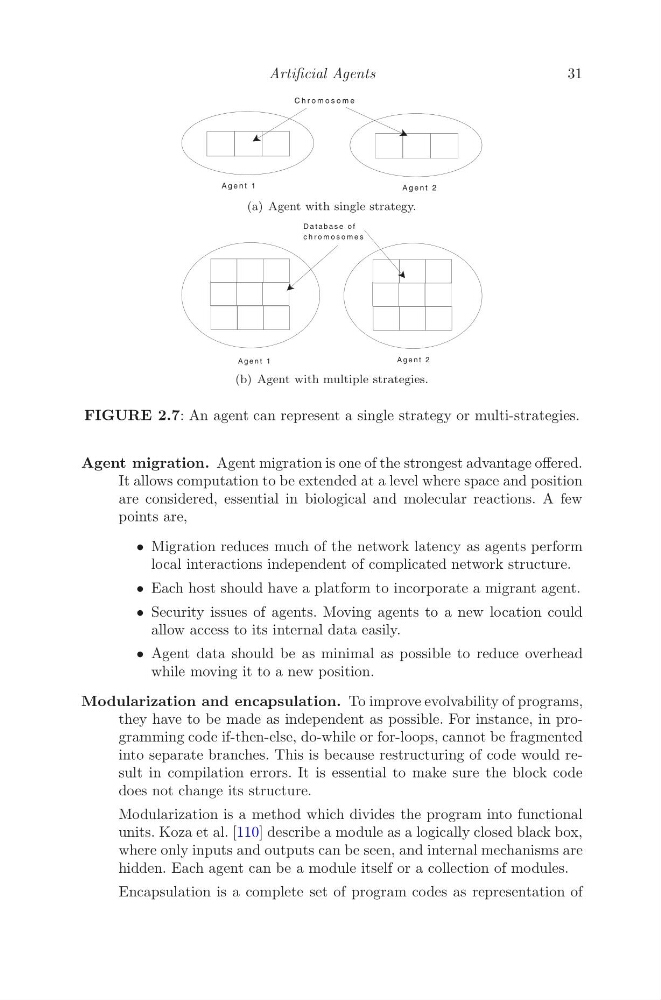
FIGURE 2.7: An agent can represent a single strategy or multi-strategies.
Agent migration. Agent migration is one of the strongest advantage offered.
It allows computation to be extended at a level where space and position
are considered, essential in biological and molecular reactions. A few
points are,
• Migration reduces much of the network latency as agents perform
local interactions independent of complicated network structure.
• Each host should have a platform to incorporate a migrant agent.
• Security issues of agents. Moving agents to a new location could
allow access to its internal data easily.
• Agent data should be as minimal as possible to reduce overhead
while moving it to a new position.
Modularization and encapsulation. To improve evolvability of programs,
they have to be made as independent as possible. For instance, in programming code if-then-else, do-while or for-loops, cannot be fragmented
into separate branches. This is because restructuring of code would result in compilation errors. It is essential to make sure the block code
does not change its structure.
Modularization is a method which divides the program into functional
units. Koza et al. [110] describe a module as a logically closed black box,
where only inputs and outputs can be seen, and internal mechanisms are
hidden. Each agent can be a module itself or a collection of modules.
Encapsulation is a complete set of program codes as representation of
31
A g e n t 1
A g e n t 2
C h r o m o s o m e
(a) Agent with single strategy.
A g e n t 1
A g e n t 2
D a t a b a s e o f
c h r o m o s o m e s
(b) Agent with multiple strategies.
FIGURE 2.7: An agent can represent a single strategy or multi-strategies.
Agent migration. Agent migration is one of the strongest advantage offered.
It allows computation to be extended at a level where space and position
are considered, essential in biological and molecular reactions. A few
points are,
• Migration reduces much of the network latency as agents perform
local interactions independent of complicated network structure.
• Each host should have a platform to incorporate a migrant agent.
• Security issues of agents. Moving agents to a new location could
allow access to its internal data easily.
• Agent data should be as minimal as possible to reduce overhead
while moving it to a new position.
Modularization and encapsulation. To improve evolvability of programs,
they have to be made as independent as possible. For instance, in programming code if-then-else, do-while or for-loops, cannot be fragmented
into separate branches. This is because restructuring of code would result in compilation errors. It is essential to make sure the block code
does not change its structure.
Modularization is a method which divides the program into functional
units. Koza et al. [110] describe a module as a logically closed black box,
where only inputs and outputs can be seen, and internal mechanisms are
hidden. Each agent can be a module itself or a collection of modules.
Encapsulation is a complete set of program codes as representation of