

Agents in Biology
185
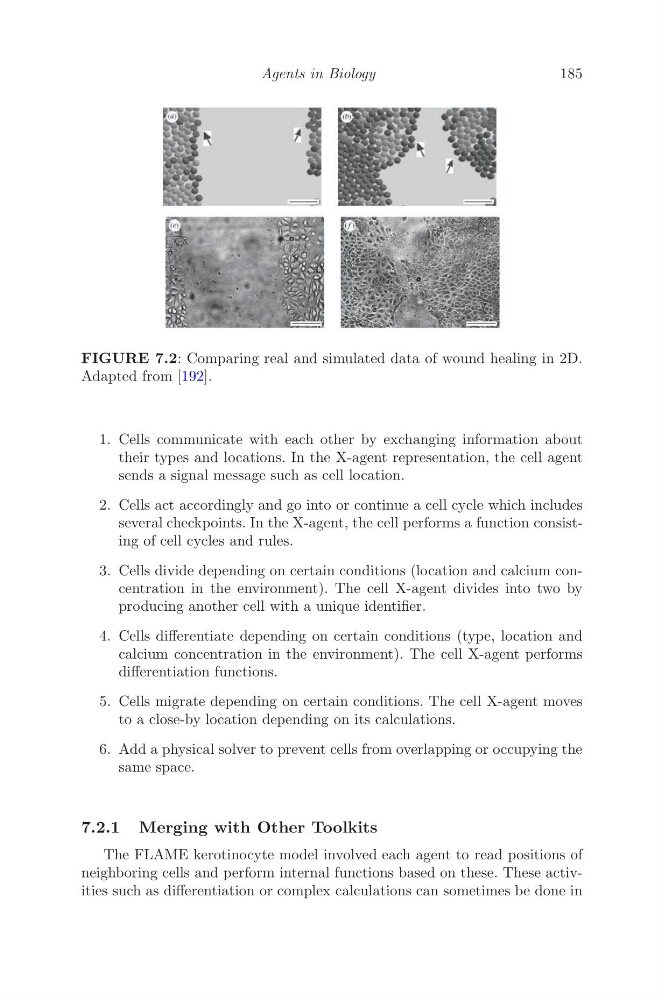
FIGURE 7.2: Comparing real and simulated data of wound healing in 2D.
Adapted from [192].
1. Cells communicate with each other by exchanging information about
their types and locations. In the X-agent representation, the cell agent
sends a signal message such as cell location.
2. Cells act accordingly and go into or continue a cell cycle which includes
several checkpoints. In the X-agent, the cell performs a function consisting of cell cycles and rules.
3. Cells divide depending on certain conditions (location and calcium concentration in the environment). The cell X-agent divides into two by
producing another cell with a unique identifier.
4. Cells differentiate depending on certain conditions (type, location and
calcium concentration in the environment). The cell X-agent performs
differentiation functions.
5. Cells migrate depending on certain conditions. The cell X-agent moves
to a close-by location depending on its calculations.
6. Add a physical solver to prevent cells from overlapping or occupying the
same space.
7.2.1 Merging with Other Toolkits
The FLAME kerotinocyte model involved each agent to read positions of
neighboring cells and perform internal functions based on these. These activities such as differentiation or complex calculations can sometimes be done in
185
FIGURE 7.2: Comparing real and simulated data of wound healing in 2D.
Adapted from [192].
1. Cells communicate with each other by exchanging information about
their types and locations. In the X-agent representation, the cell agent
sends a signal message such as cell location.
2. Cells act accordingly and go into or continue a cell cycle which includes
several checkpoints. In the X-agent, the cell performs a function consisting of cell cycles and rules.
3. Cells divide depending on certain conditions (location and calcium concentration in the environment). The cell X-agent divides into two by
producing another cell with a unique identifier.
4. Cells differentiate depending on certain conditions (type, location and
calcium concentration in the environment). The cell X-agent performs
differentiation functions.
5. Cells migrate depending on certain conditions. The cell X-agent moves
to a close-by location depending on its calculations.
6. Add a physical solver to prevent cells from overlapping or occupying the
same space.
7.2.1 Merging with Other Toolkits
The FLAME kerotinocyte model involved each agent to read positions of
neighboring cells and perform internal functions based on these. These activities such as differentiation or complex calculations can sometimes be done in