

168
X-Machines for Agent-Based Modeling: FLAME Perspectives
1
2
3
4
5
C , C / C
D , D / C ; C , D / C
C , C / D ; C , D / D
D , C / D ; D , D / D
D , D / C
C , C / C
D , D / C
D , C / D
C , D / D ; C , C / C
C , D / C
D , C / C
D , C / D
C , D / D
C , C / D
D , D / D
D , C / C
D , D / C
C , D / C
C , C / C
C
6
= S t a r t S t a t e
C = C o o p e r a t e
D = D e f e c t
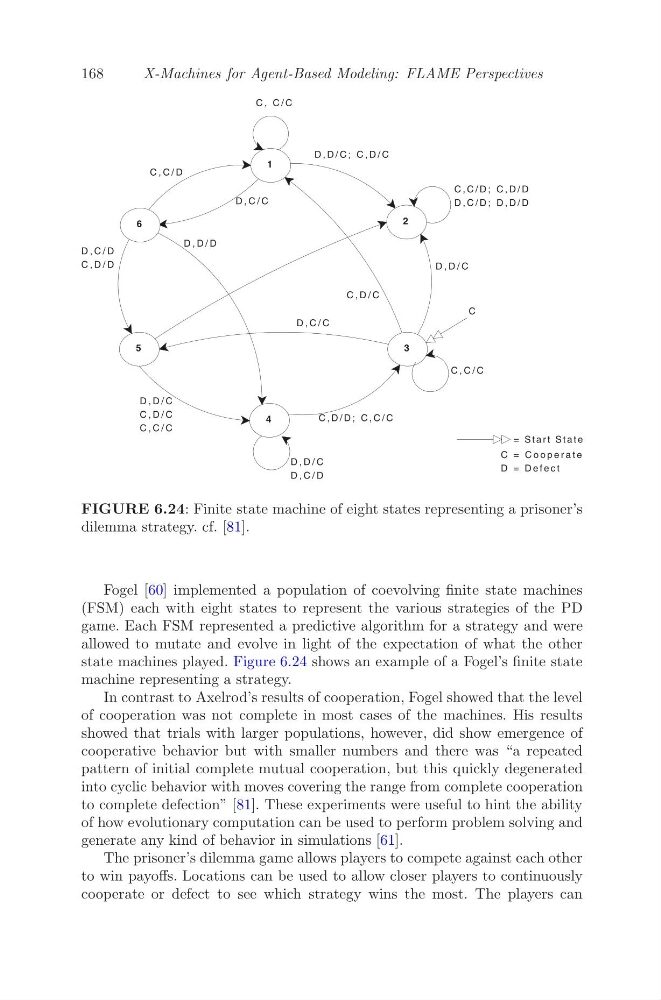
FIGURE 6.24: Finite state machine of eight states representing a prisoner’s
dilemma strategy. cf. [81].
Fogel [60] implemented a population of coevolving finite state machines
(FSM) each with eight states to represent the various strategies of the PD
game. Each FSM represented a predictive algorithm for a strategy and were
allowed to mutate and evolve in light of the expectation of what the other
state machines played. Figure 6.24 shows an example of a Fogel’s finite state
machine representing a strategy.
In contrast to Axelrod’s results of cooperation, Fogel showed that the level
of cooperation was not complete in most cases of the machines. His results
showed that trials with larger populations, however, did show emergence of
cooperative behavior but with smaller numbers and there was “a repeated
pattern of initial complete mutual cooperation, but this quickly degenerated
into cyclic behavior with moves covering the range from complete cooperation
to complete defection” [81]. These experiments were useful to hint the ability
of how evolutionary computation can be used to perform problem solving and
generate any kind of behavior in simulations [61].
The prisoner’s dilemma game allows players to compete against each other
to win payoffs. Locations can be used to allow closer players to continuously
cooperate or defect to see which strategy wins the most. The players can
X-Machines for Agent-Based Modeling: FLAME Perspectives
1
2
3
4
5
C , C / C
D , D / C ; C , D / C
C , C / D ; C , D / D
D , C / D ; D , D / D
D , D / C
C , C / C
D , D / C
D , C / D
C , D / D ; C , C / C
C , D / C
D , C / C
D , C / D
C , D / D
C , C / D
D , D / D
D , C / C
D , D / C
C , D / C
C , C / C
C
6
= S t a r t S t a t e
C = C o o p e r a t e
D = D e f e c t
FIGURE 6.24: Finite state machine of eight states representing a prisoner’s
dilemma strategy. cf. [81].
Fogel [60] implemented a population of coevolving finite state machines
(FSM) each with eight states to represent the various strategies of the PD
game. Each FSM represented a predictive algorithm for a strategy and were
allowed to mutate and evolve in light of the expectation of what the other
state machines played. Figure 6.24 shows an example of a Fogel’s finite state
machine representing a strategy.
In contrast to Axelrod’s results of cooperation, Fogel showed that the level
of cooperation was not complete in most cases of the machines. His results
showed that trials with larger populations, however, did show emergence of
cooperative behavior but with smaller numbers and there was “a repeated
pattern of initial complete mutual cooperation, but this quickly degenerated
into cyclic behavior with moves covering the range from complete cooperation
to complete defection” [81]. These experiments were useful to hint the ability
of how evolutionary computation can be used to perform problem solving and
generate any kind of behavior in simulations [61].
The prisoner’s dilemma game allows players to compete against each other
to win payoffs. Locations can be used to allow closer players to continuously
cooperate or defect to see which strategy wins the most. The players can