

Data Structures and Workflows for ICME
21
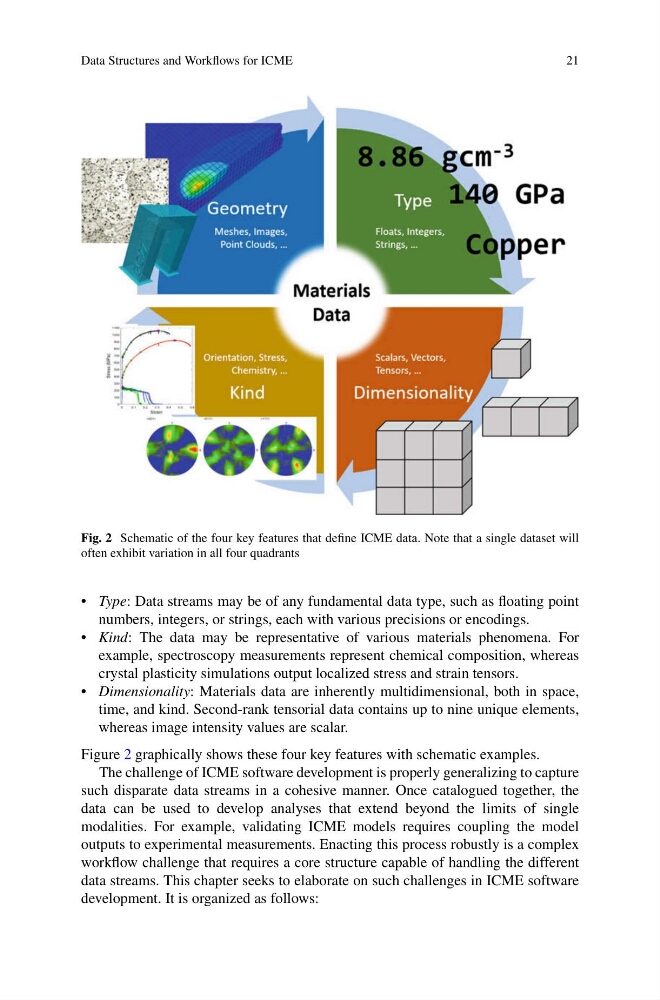
Fig. 2 Schematic of the four key features that define ICME data. Note that a single dataset will
often exhibit variation in all four quadrants
• Type: Data streams may be of any fundamental data type, such as floating point
numbers, integers, or strings, each with various precisions or encodings.
• Kind: The data may be representative of various materials phenomena. For
example, spectroscopy measurements represent chemical composition, whereas
crystal plasticity simulations output localized stress and strain tensors.
• Dimensionality: Materials data are inherently multidimensional, both in space,
time, and kind. Second-rank tensorial data contains up to nine unique elements,
whereas image intensity values are scalar.
Figure 2 graphically shows these four key features with schematic examples.
The challenge of ICME software development is properly generalizing to capture
such disparate data streams in a cohesive manner. Once catalogued together, the
data can be used to develop analyses that extend beyond the limits of single
modalities. For example, validating ICME models requires coupling the model
outputs to experimental measurements. Enacting this process robustly is a complex
workflow challenge that requires a core structure capable of handling the different
data streams. This chapter seeks to elaborate on such challenges in ICME software
development. It is organized as follows:
21
Fig. 2 Schematic of the four key features that define ICME data. Note that a single dataset will
often exhibit variation in all four quadrants
• Type: Data streams may be of any fundamental data type, such as floating point
numbers, integers, or strings, each with various precisions or encodings.
• Kind: The data may be representative of various materials phenomena. For
example, spectroscopy measurements represent chemical composition, whereas
crystal plasticity simulations output localized stress and strain tensors.
• Dimensionality: Materials data are inherently multidimensional, both in space,
time, and kind. Second-rank tensorial data contains up to nine unique elements,
whereas image intensity values are scalar.
Figure 2 graphically shows these four key features with schematic examples.
The challenge of ICME software development is properly generalizing to capture
such disparate data streams in a cohesive manner. Once catalogued together, the
data can be used to develop analyses that extend beyond the limits of single
modalities. For example, validating ICME models requires coupling the model
outputs to experimental measurements. Enacting this process robustly is a complex
workflow challenge that requires a core structure capable of handling the different
data streams. This chapter seeks to elaborate on such challenges in ICME software
development. It is organized as follows: