

Geometric Modeling of Transverse Cracking of Composites
365
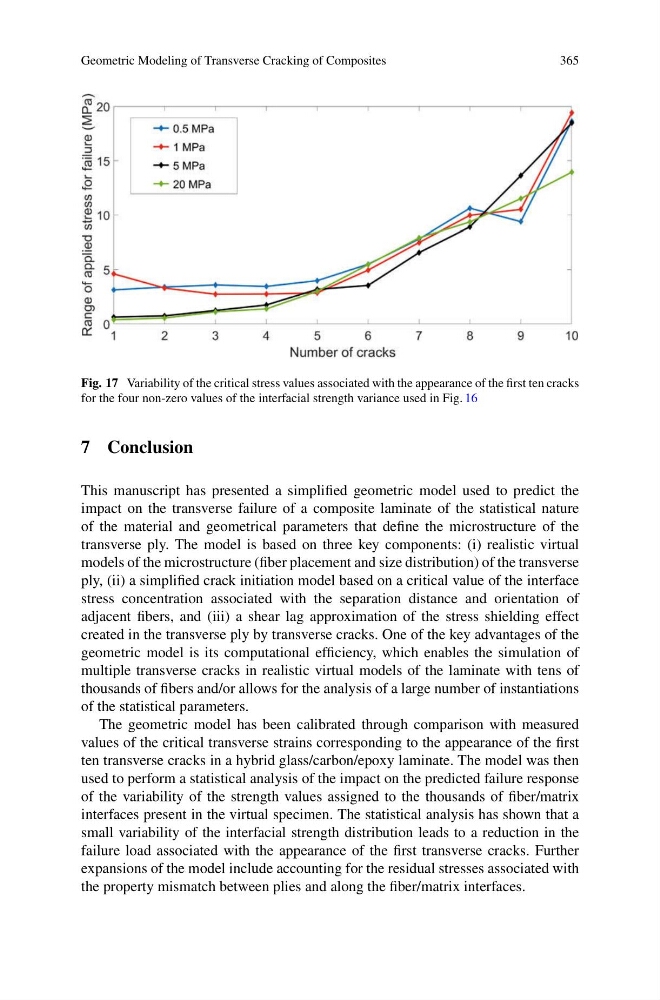
Fig. 17 Variability of the critical stress values associated with the appearance of the first ten cracks
for the four non-zero values of the interfacial strength variance used in Fig. 16
7 Conclusion
This manuscript has presented a simplified geometric model used to predict the
impact on the transverse failure of a composite laminate of the statistical nature
of the material and geometrical parameters that define the microstructure of the
transverse ply. The model is based on three key components: (i) realistic virtual
models of the microstructure (fiber placement and size distribution) of the transverse
ply, (ii) a simplified crack initiation model based on a critical value of the interface
stress concentration associated with the separation distance and orientation of
adjacent fibers, and (iii) a shear lag approximation of the stress shielding effect
created in the transverse ply by transverse cracks. One of the key advantages of the
geometric model is its computational efficiency, which enables the simulation of
multiple transverse cracks in realistic virtual models of the laminate with tens of
thousands of fibers and/or allows for the analysis of a large number of instantiations
of the statistical parameters.
The geometric model has been calibrated through comparison with measured
values of the critical transverse strains corresponding to the appearance of the first
ten transverse cracks in a hybrid glass/carbon/epoxy laminate. The model was then
used to perform a statistical analysis of the impact on the predicted failure response
of the variability of the strength values assigned to the thousands of fiber/matrix
interfaces present in the virtual specimen. The statistical analysis has shown that a
small variability of the interfacial strength distribution leads to a reduction in the
failure load associated with the appearance of the first transverse cracks. Further
expansions of the model include accounting for the residual stresses associated with
the property mismatch between plies and along the fiber/matrix interfaces.
365
Fig. 17 Variability of the critical stress values associated with the appearance of the first ten cracks
for the four non-zero values of the interfacial strength variance used in Fig. 16
7 Conclusion
This manuscript has presented a simplified geometric model used to predict the
impact on the transverse failure of a composite laminate of the statistical nature
of the material and geometrical parameters that define the microstructure of the
transverse ply. The model is based on three key components: (i) realistic virtual
models of the microstructure (fiber placement and size distribution) of the transverse
ply, (ii) a simplified crack initiation model based on a critical value of the interface
stress concentration associated with the separation distance and orientation of
adjacent fibers, and (iii) a shear lag approximation of the stress shielding effect
created in the transverse ply by transverse cracks. One of the key advantages of the
geometric model is its computational efficiency, which enables the simulation of
multiple transverse cracks in realistic virtual models of the laminate with tens of
thousands of fibers and/or allows for the analysis of a large number of instantiations
of the statistical parameters.
The geometric model has been calibrated through comparison with measured
values of the critical transverse strains corresponding to the appearance of the first
ten transverse cracks in a hybrid glass/carbon/epoxy laminate. The model was then
used to perform a statistical analysis of the impact on the predicted failure response
of the variability of the strength values assigned to the thousands of fiber/matrix
interfaces present in the virtual specimen. The statistical analysis has shown that a
small variability of the interfacial strength distribution leads to a reduction in the
failure load associated with the appearance of the first transverse cracks. Further
expansions of the model include accounting for the residual stresses associated with
the property mismatch between plies and along the fiber/matrix interfaces.