

SERVE-Boundary Conditions
317
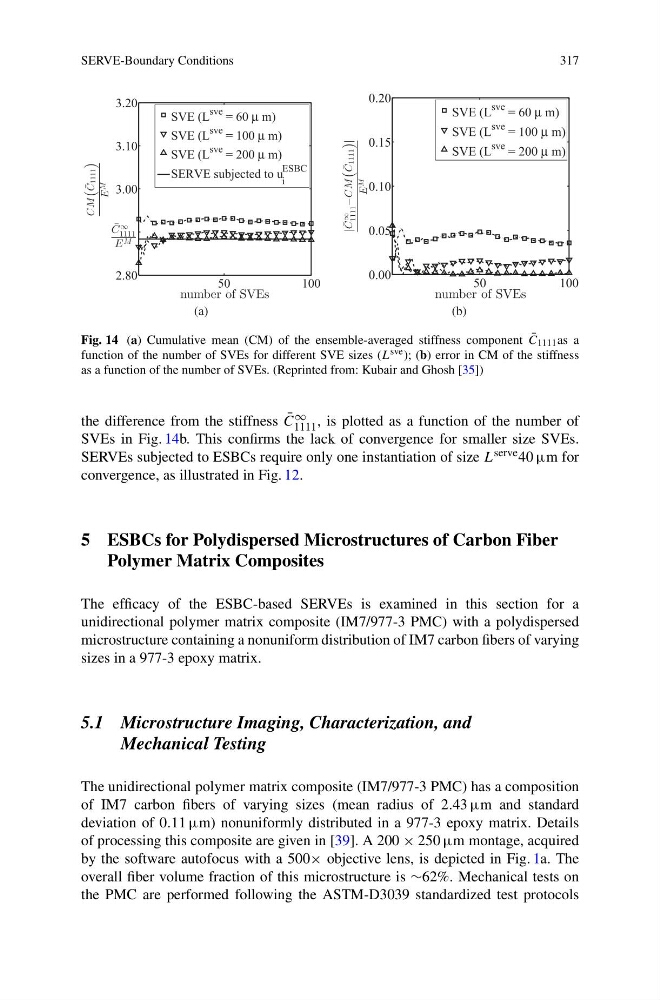
Fig. 14 (a) Cumulative mean (CM) of the ensemble-averaged stiffness component ¯
C 1111 as a
function of the number of SVEs for different SVE sizes (L sve ); (b) error in CM of the stiffness
as a function of the number of SVEs. (Reprinted from: Kubair and Ghosh [35])
the difference from the stiffness ¯
C ∞
1111 , is plotted as a function of the number of
SVEs in Fig. 14b. This confirms the lack of convergence for smaller size SVEs.
SERVEs subjected to ESBCs require only one instantiation of size L serve 40 μm for
convergence, as illustrated in Fig. 12.
5 ESBCs for Polydispersed Microstructures of Carbon Fiber
Polymer Matrix Composites
The efficacy of the ESBC-based SERVEs is examined in this section for a
unidirectional polymer matrix composite (IM7/977-3 PMC) with a polydispersed
microstructure containing a nonuniform distribution of IM7 carbon fibers of varying
sizes in a 977-3 epoxy matrix.
5.1 Microstructure Imaging, Characterization, and
Mechanical Testing
The unidirectional polymer matrix composite (IM7/977-3 PMC) has a composition
of IM7 carbon fibers of varying sizes (mean radius of 2.43 μm and standard
deviation of 0.11 μm) nonuniformly distributed in a 977-3 epoxy matrix. Details
of processing this composite are given in [39]. A 200 × 250 μm montage, acquired
by the software autofocus with a 500× objective lens, is depicted in Fig. 1a. The
overall fiber volume fraction of this microstructure is ∼62%. Mechanical tests on
the PMC are performed following the ASTM-D3039 standardized test protocols
317
Fig. 14 (a) Cumulative mean (CM) of the ensemble-averaged stiffness component ¯
C 1111 as a
function of the number of SVEs for different SVE sizes (L sve ); (b) error in CM of the stiffness
as a function of the number of SVEs. (Reprinted from: Kubair and Ghosh [35])
the difference from the stiffness ¯
C ∞
1111 , is plotted as a function of the number of
SVEs in Fig. 14b. This confirms the lack of convergence for smaller size SVEs.
SERVEs subjected to ESBCs require only one instantiation of size L serve 40 μm for
convergence, as illustrated in Fig. 12.
5 ESBCs for Polydispersed Microstructures of Carbon Fiber
Polymer Matrix Composites
The efficacy of the ESBC-based SERVEs is examined in this section for a
unidirectional polymer matrix composite (IM7/977-3 PMC) with a polydispersed
microstructure containing a nonuniform distribution of IM7 carbon fibers of varying
sizes in a 977-3 epoxy matrix.
5.1 Microstructure Imaging, Characterization, and
Mechanical Testing
The unidirectional polymer matrix composite (IM7/977-3 PMC) has a composition
of IM7 carbon fibers of varying sizes (mean radius of 2.43 μm and standard
deviation of 0.11 μm) nonuniformly distributed in a 977-3 epoxy matrix. Details
of processing this composite are given in [39]. A 200 × 250 μm montage, acquired
by the software autofocus with a 500× objective lens, is depicted in Fig. 1a. The
overall fiber volume fraction of this microstructure is ∼62%. Mechanical tests on
the PMC are performed following the ASTM-D3039 standardized test protocols