

240
N. Wade et al.
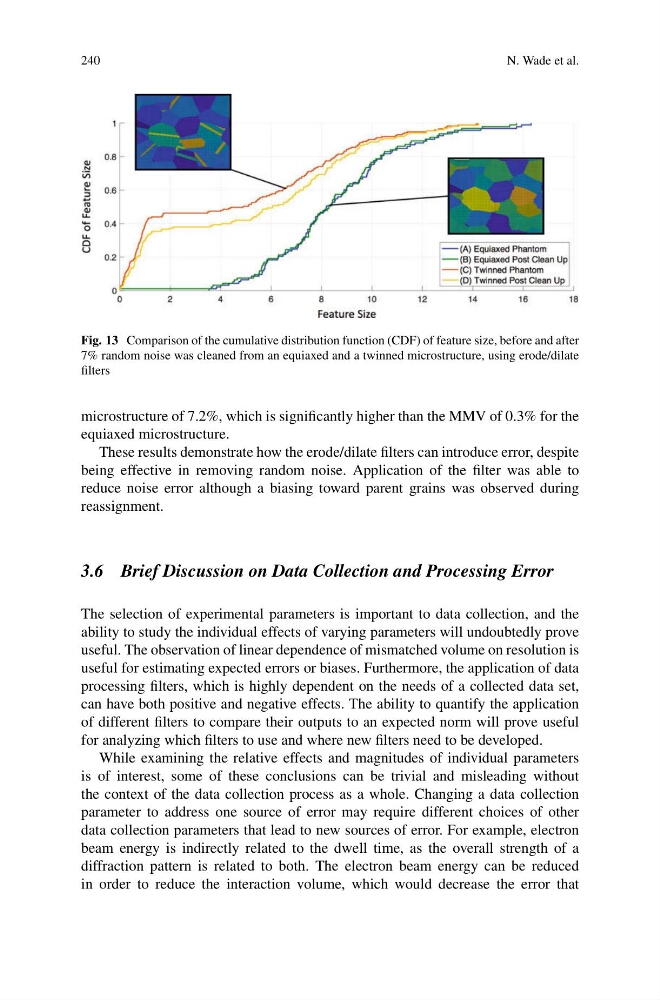
Fig. 13 Comparison of the cumulative distribution function (CDF) of feature size, before and after
7% random noise was cleaned from an equiaxed and a twinned microstructure, using erode/dilate
filters
microstructure of 7.2%, which is significantly higher than the MMV of 0.3% for the
equiaxed microstructure.
These results demonstrate how the erode/dilate filters can introduce error, despite
being effective in removing random noise. Application of the filter was able to
reduce noise error although a biasing toward parent grains was observed during
reassignment.
3.6 Brief Discussion on Data Collection and Processing Error
The selection of experimental parameters is important to data collection, and the
ability to study the individual effects of varying parameters will undoubtedly prove
useful. The observation of linear dependence of mismatched volume on resolution is
useful for estimating expected errors or biases. Furthermore, the application of data
processing filters, which is highly dependent on the needs of a collected data set,
can have both positive and negative effects. The ability to quantify the application
of different filters to compare their outputs to an expected norm will prove useful
for analyzing which filters to use and where new filters need to be developed.
While examining the relative effects and magnitudes of individual parameters
is of interest, some of these conclusions can be trivial and misleading without
the context of the data collection process as a whole. Changing a data collection
parameter to address one source of error may require different choices of other
data collection parameters that lead to new sources of error. For example, electron
beam energy is indirectly related to the dwell time, as the overall strength of a
diffraction pattern is related to both. The electron beam energy can be reduced
in order to reduce the interaction volume, which would decrease the error that
N. Wade et al.
Fig. 13 Comparison of the cumulative distribution function (CDF) of feature size, before and after
7% random noise was cleaned from an equiaxed and a twinned microstructure, using erode/dilate
filters
microstructure of 7.2%, which is significantly higher than the MMV of 0.3% for the
equiaxed microstructure.
These results demonstrate how the erode/dilate filters can introduce error, despite
being effective in removing random noise. Application of the filter was able to
reduce noise error although a biasing toward parent grains was observed during
reassignment.
3.6 Brief Discussion on Data Collection and Processing Error
The selection of experimental parameters is important to data collection, and the
ability to study the individual effects of varying parameters will undoubtedly prove
useful. The observation of linear dependence of mismatched volume on resolution is
useful for estimating expected errors or biases. Furthermore, the application of data
processing filters, which is highly dependent on the needs of a collected data set,
can have both positive and negative effects. The ability to quantify the application
of different filters to compare their outputs to an expected norm will prove useful
for analyzing which filters to use and where new filters need to be developed.
While examining the relative effects and magnitudes of individual parameters
is of interest, some of these conclusions can be trivial and misleading without
the context of the data collection process as a whole. Changing a data collection
parameter to address one source of error may require different choices of other
data collection parameters that lead to new sources of error. For example, electron
beam energy is indirectly related to the dwell time, as the overall strength of a
diffraction pattern is related to both. The electron beam energy can be reduced
in order to reduce the interaction volume, which would decrease the error that