

236
N. Wade et al.
Assuming finite sampling occurs in only one coordinate direction is not physically realistic, since infinite sampling in the other two directions is infeasible. The
analytical model is therefore extended to consider the effect of sample spacing in all
three coordinate directions in a 3D microstructure. This is enabled by assuming that
the probability of a correctly assigned grain ID is independent in all three directions.
In other words, the grain ID at a point is only matched correctly if there is no
mismatch due to sample spacing in any of the 3 coordinate directions. Therefore,
the probability p 3 of a correctly matched value at a given 3D location is the cubed
probability of a correctly matched grain ID at a 1D location:
p 3 =
1 − 0.25
x
L g
3
(7)
The probability of an incorrectly matched grain ID at a 3D location (or the
mismatched volume MMV ) is simply the complement of p 3 :
MMV = 1 − p 3 = 0.75
x
L g
− 0.1875
x
L g
2
+ .015625
x
L g
3
(8)
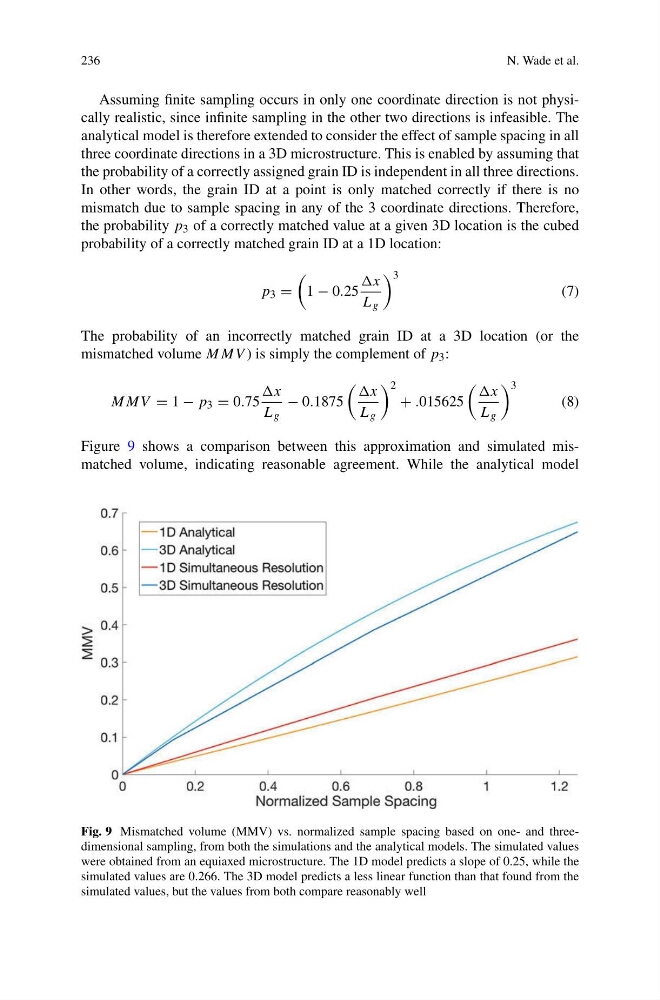
Figure 9 shows a comparison between this approximation and simulated mismatched volume, indicating reasonable agreement. While the analytical model
Fig. 9 Mismatched volume (MMV) vs. normalized sample spacing based on one- and threedimensional sampling, from both the simulations and the analytical models. The simulated values
were obtained from an equiaxed microstructure. The 1D model predicts a slope of 0.25, while the
simulated values are 0.266. The 3D model predicts a less linear function than that found from the
simulated values, but the values from both compare reasonably well
N. Wade et al.
Assuming finite sampling occurs in only one coordinate direction is not physically realistic, since infinite sampling in the other two directions is infeasible. The
analytical model is therefore extended to consider the effect of sample spacing in all
three coordinate directions in a 3D microstructure. This is enabled by assuming that
the probability of a correctly assigned grain ID is independent in all three directions.
In other words, the grain ID at a point is only matched correctly if there is no
mismatch due to sample spacing in any of the 3 coordinate directions. Therefore,
the probability p 3 of a correctly matched value at a given 3D location is the cubed
probability of a correctly matched grain ID at a 1D location:
p 3 =
1 − 0.25
x
L g
3
(7)
The probability of an incorrectly matched grain ID at a 3D location (or the
mismatched volume MMV ) is simply the complement of p 3 :
MMV = 1 − p 3 = 0.75
x
L g
− 0.1875
x
L g
2
+ .015625
x
L g
3
(8)
Figure 9 shows a comparison between this approximation and simulated mismatched volume, indicating reasonable agreement. While the analytical model
Fig. 9 Mismatched volume (MMV) vs. normalized sample spacing based on one- and threedimensional sampling, from both the simulations and the analytical models. The simulated values
were obtained from an equiaxed microstructure. The 1D model predicts a slope of 0.25, while the
simulated values are 0.266. The 3D model predicts a less linear function than that found from the
simulated values, but the values from both compare reasonably well