

A Framework for Quantifying Effects of Characterization Error on the. . .
229
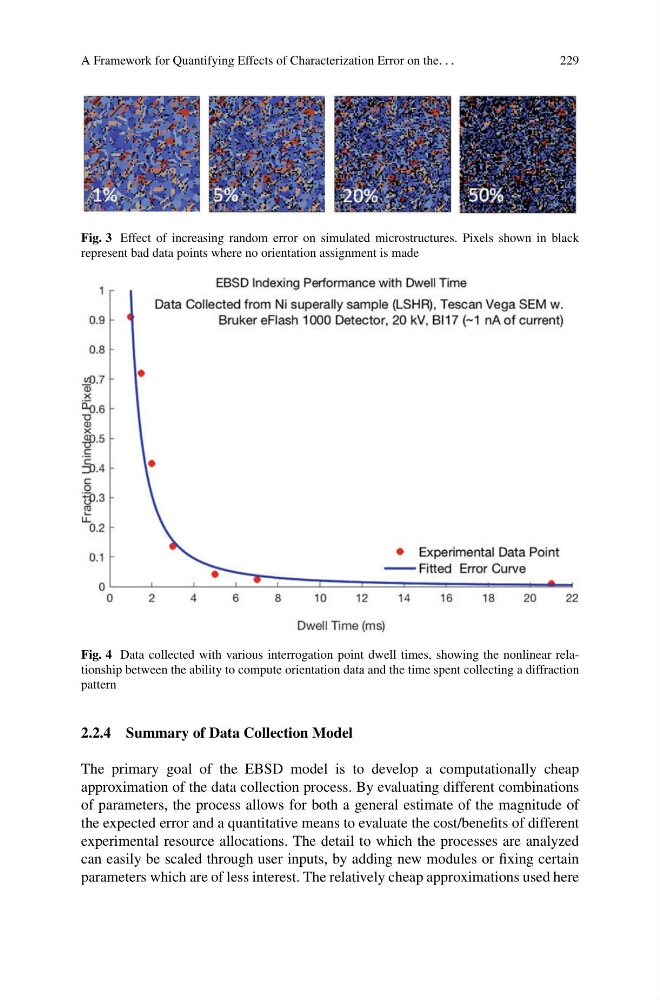
Fig. 3 Effect of increasing random error on simulated microstructures. Pixels shown in black
represent bad data points where no orientation assignment is made
Fig. 4 Data collected with various interrogation point dwell times, showing the nonlinear relationship between the ability to compute orientation data and the time spent collecting a diffraction
pattern
2.2.4 Summary of Data Collection Model
The primary goal of the EBSD model is to develop a computationally cheap
approximation of the data collection process. By evaluating different combinations
of parameters, the process allows for both a general estimate of the magnitude of
the expected error and a quantitative means to evaluate the cost/benefits of different
experimental resource allocations. The detail to which the processes are analyzed
can easily be scaled through user inputs, by adding new modules or fixing certain
parameters which are of less interest. The relatively cheap approximations used here
229
Fig. 3 Effect of increasing random error on simulated microstructures. Pixels shown in black
represent bad data points where no orientation assignment is made
Fig. 4 Data collected with various interrogation point dwell times, showing the nonlinear relationship between the ability to compute orientation data and the time spent collecting a diffraction
pattern
2.2.4 Summary of Data Collection Model
The primary goal of the EBSD model is to develop a computationally cheap
approximation of the data collection process. By evaluating different combinations
of parameters, the process allows for both a general estimate of the magnitude of
the expected error and a quantitative means to evaluate the cost/benefits of different
experimental resource allocations. The detail to which the processes are analyzed
can easily be scaled through user inputs, by adding new modules or fixing certain
parameters which are of less interest. The relatively cheap approximations used here