

Non-deterministic Calibration
191
Table 3 Results of
global-local deterministic
calibration
Optimized True
Relative
Parameter value
value error
m
0.04837
0.05 3.2%
g ∗
s
350.1
113.9 207%
g 0
128.1
130.0 1.4%
G 0
41.55
100.4 58%
0.000
0.002
0.004
0.006
0.008
0.010
Strain
0
50
100
150
200
Stress [MPa]
simulated experiment
simulated experiment with added noise
global-local fit
0.004
0.006
0.008
0.010
230
240
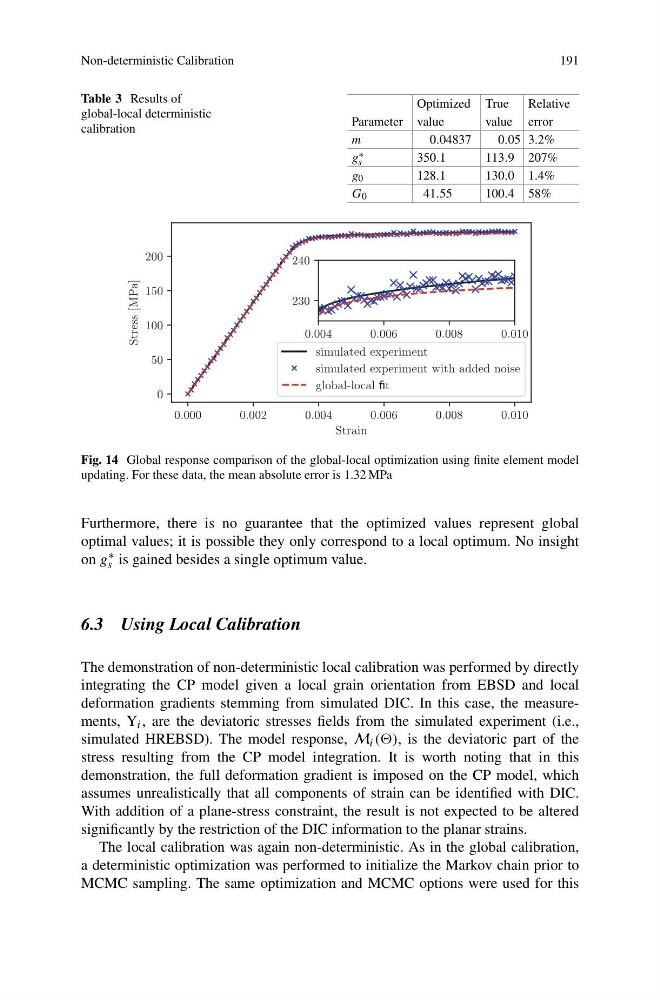
Fig. 14 Global response comparison of the global-local optimization using finite element model
updating. For these data, the mean absolute error is 1.32 MPa
Furthermore, there is no guarantee that the optimized values represent global
optimal values; it is possible they only correspond to a local optimum. No insight
on g ∗
s is gained besides a single optimum value.
6.3 Using Local Calibration
The demonstration of non-deterministic local calibration was performed by directly
integrating the CP model given a local grain orientation from EBSD and local
deformation gradients stemming from simulated DIC. In this case, the measurements, Y i , are the deviatoric stresses fields from the simulated experiment (i.e.,
simulated HREBSD). The model response, M i ((), is the deviatoric part of the
stress resulting from the CP model integration. It is worth noting that in this
demonstration, the full deformation gradient is imposed on the CP model, which
assumes unrealistically that all components of strain can be identified with DIC.
With addition of a plane-stress constraint, the result is not expected to be altered
significantly by the restriction of the DIC information to the planar strains.
The local calibration was again non-deterministic. As in the global calibration,
a deterministic optimization was performed to initialize the Markov chain prior to
MCMC sampling. The same optimization and MCMC options were used for this
191
Table 3 Results of
global-local deterministic
calibration
Optimized True
Relative
Parameter value
value error
m
0.04837
0.05 3.2%
g ∗
s
350.1
113.9 207%
g 0
128.1
130.0 1.4%
G 0
41.55
100.4 58%
0.000
0.002
0.004
0.006
0.008
0.010
Strain
0
50
100
150
200
Stress [MPa]
simulated experiment
simulated experiment with added noise
global-local fit
0.004
0.006
0.008
0.010
230
240
Fig. 14 Global response comparison of the global-local optimization using finite element model
updating. For these data, the mean absolute error is 1.32 MPa
Furthermore, there is no guarantee that the optimized values represent global
optimal values; it is possible they only correspond to a local optimum. No insight
on g ∗
s is gained besides a single optimum value.
6.3 Using Local Calibration
The demonstration of non-deterministic local calibration was performed by directly
integrating the CP model given a local grain orientation from EBSD and local
deformation gradients stemming from simulated DIC. In this case, the measurements, Y i , are the deviatoric stresses fields from the simulated experiment (i.e.,
simulated HREBSD). The model response, M i ((), is the deviatoric part of the
stress resulting from the CP model integration. It is worth noting that in this
demonstration, the full deformation gradient is imposed on the CP model, which
assumes unrealistically that all components of strain can be identified with DIC.
With addition of a plane-stress constraint, the result is not expected to be altered
significantly by the restriction of the DIC information to the planar strains.
The local calibration was again non-deterministic. As in the global calibration,
a deterministic optimization was performed to initialize the Markov chain prior to
MCMC sampling. The same optimization and MCMC options were used for this