

178
J. Hochhalter et al.
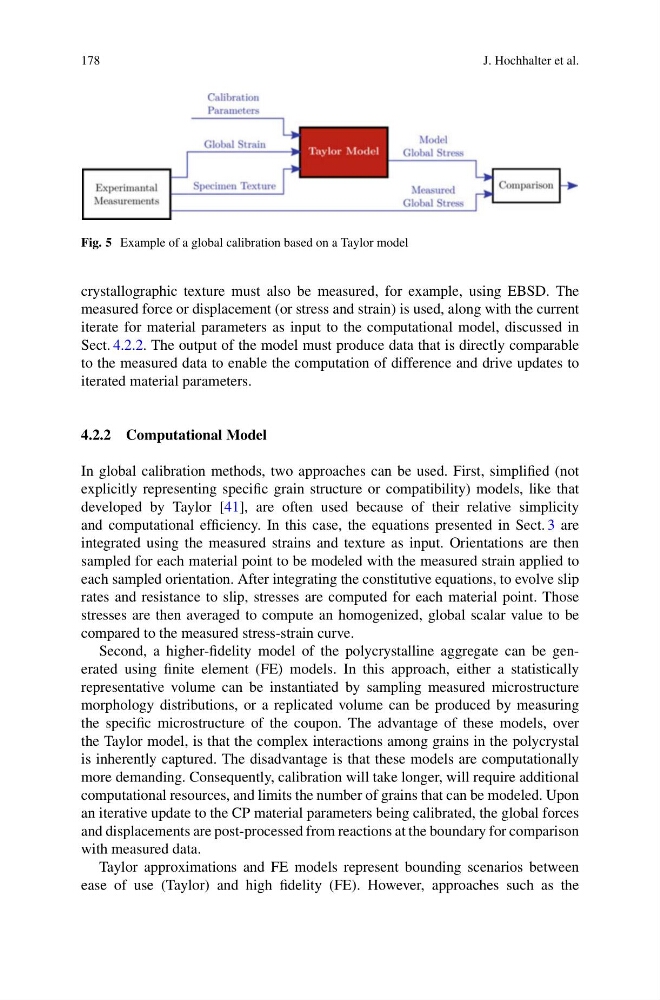
Fig. 5 Example of a global calibration based on a Taylor model
crystallographic texture must also be measured, for example, using EBSD. The
measured force or displacement (or stress and strain) is used, along with the current
iterate for material parameters as input to the computational model, discussed in
Sect. 4.2.2. The output of the model must produce data that is directly comparable
to the measured data to enable the computation of difference and drive updates to
iterated material parameters.
4.2.2 Computational Model
In global calibration methods, two approaches can be used. First, simplified (not
explicitly representing specific grain structure or compatibility) models, like that
developed by Taylor [41], are often used because of their relative simplicity
and computational efficiency. In this case, the equations presented in Sect. 3 are
integrated using the measured strains and texture as input. Orientations are then
sampled for each material point to be modeled with the measured strain applied to
each sampled orientation. After integrating the constitutive equations, to evolve slip
rates and resistance to slip, stresses are computed for each material point. Those
stresses are then averaged to compute an homogenized, global scalar value to be
compared to the measured stress-strain curve.
Second, a higher-fidelity model of the polycrystalline aggregate can be generated using finite element (FE) models. In this approach, either a statistically
representative volume can be instantiated by sampling measured microstructure
morphology distributions, or a replicated volume can be produced by measuring
the specific microstructure of the coupon. The advantage of these models, over
the Taylor model, is that the complex interactions among grains in the polycrystal
is inherently captured. The disadvantage is that these models are computationally
more demanding. Consequently, calibration will take longer, will require additional
computational resources, and limits the number of grains that can be modeled. Upon
an iterative update to the CP material parameters being calibrated, the global forces
and displacements are post-processed from reactions at the boundary for comparison
with measured data.
Taylor approximations and FE models represent bounding scenarios between
ease of use (Taylor) and high fidelity (FE). However, approaches such as the
J. Hochhalter et al.
Fig. 5 Example of a global calibration based on a Taylor model
crystallographic texture must also be measured, for example, using EBSD. The
measured force or displacement (or stress and strain) is used, along with the current
iterate for material parameters as input to the computational model, discussed in
Sect. 4.2.2. The output of the model must produce data that is directly comparable
to the measured data to enable the computation of difference and drive updates to
iterated material parameters.
4.2.2 Computational Model
In global calibration methods, two approaches can be used. First, simplified (not
explicitly representing specific grain structure or compatibility) models, like that
developed by Taylor [41], are often used because of their relative simplicity
and computational efficiency. In this case, the equations presented in Sect. 3 are
integrated using the measured strains and texture as input. Orientations are then
sampled for each material point to be modeled with the measured strain applied to
each sampled orientation. After integrating the constitutive equations, to evolve slip
rates and resistance to slip, stresses are computed for each material point. Those
stresses are then averaged to compute an homogenized, global scalar value to be
compared to the measured stress-strain curve.
Second, a higher-fidelity model of the polycrystalline aggregate can be generated using finite element (FE) models. In this approach, either a statistically
representative volume can be instantiated by sampling measured microstructure
morphology distributions, or a replicated volume can be produced by measuring
the specific microstructure of the coupon. The advantage of these models, over
the Taylor model, is that the complex interactions among grains in the polycrystal
is inherently captured. The disadvantage is that these models are computationally
more demanding. Consequently, calibration will take longer, will require additional
computational resources, and limits the number of grains that can be modeled. Upon
an iterative update to the CP material parameters being calibrated, the global forces
and displacements are post-processed from reactions at the boundary for comparison
with measured data.
Taylor approximations and FE models represent bounding scenarios between
ease of use (Taylor) and high fidelity (FE). However, approaches such as the