

10.2. Application to signed directed networks
147
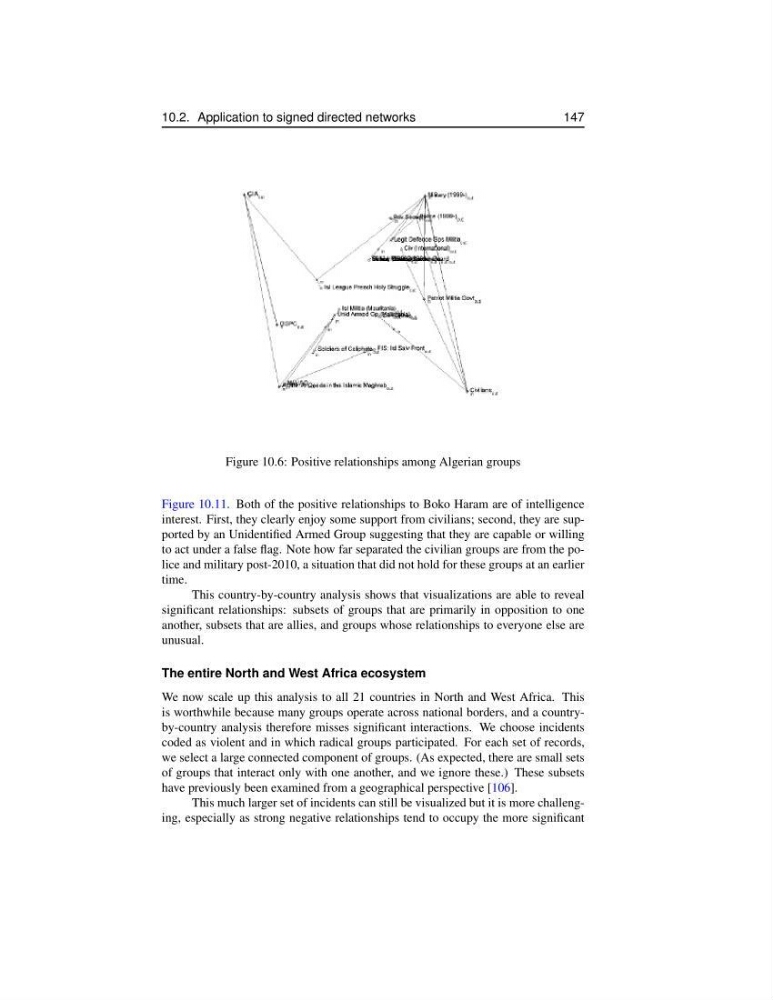
Figure 10.6: Positive relationships among Algerian groups
Figure 10.11. Both of the positive relationships to Boko Haram are of intelligence
interest. First, they clearly enjoy some support from civilians; second, they are supported by an Unidentified Armed Group suggesting that they are capable or willing
to act under a false flag. Note how far separated the civilian groups are from the police and military post-2010, a situation that did not hold for these groups at an earlier
time.
This country-by-country analysis shows that visualizations are able to reveal
significant relationships: subsets of groups that are primarily in opposition to one
another, subsets that are allies, and groups whose relationships to everyone else are
unusual.
The entire North and West Africa ecosystem
We now scale up this analysis to all 21 countries in North and West Africa. This
is worthwhile because many groups operate across national borders, and a countryby-country analysis therefore misses significant interactions. We choose incidents
coded as violent and in which radical groups participated. For each set of records,
we select a large connected component of groups. (As expected, there are small sets
of groups that interact only with one another, and we ignore these.) These subsets
have previously been examined from a geographical perspective [106].
This much larger set of incidents can still be visualized but it is more challenging, especially as strong negative relationships tend to occupy the more significant
147
Figure 10.6: Positive relationships among Algerian groups
Figure 10.11. Both of the positive relationships to Boko Haram are of intelligence
interest. First, they clearly enjoy some support from civilians; second, they are supported by an Unidentified Armed Group suggesting that they are capable or willing
to act under a false flag. Note how far separated the civilian groups are from the police and military post-2010, a situation that did not hold for these groups at an earlier
time.
This country-by-country analysis shows that visualizations are able to reveal
significant relationships: subsets of groups that are primarily in opposition to one
another, subsets that are allies, and groups whose relationships to everyone else are
unusual.
The entire North and West Africa ecosystem
We now scale up this analysis to all 21 countries in North and West Africa. This
is worthwhile because many groups operate across national borders, and a countryby-country analysis therefore misses significant interactions. We choose incidents
coded as violent and in which radical groups participated. For each set of records,
we select a large connected component of groups. (As expected, there are small sets
of groups that interact only with one another, and we ignore these.) These subsets
have previously been examined from a geographical perspective [106].
This much larger set of incidents can still be visualized but it is more challenging, especially as strong negative relationships tend to occupy the more significant