

292
M. Kachniewska
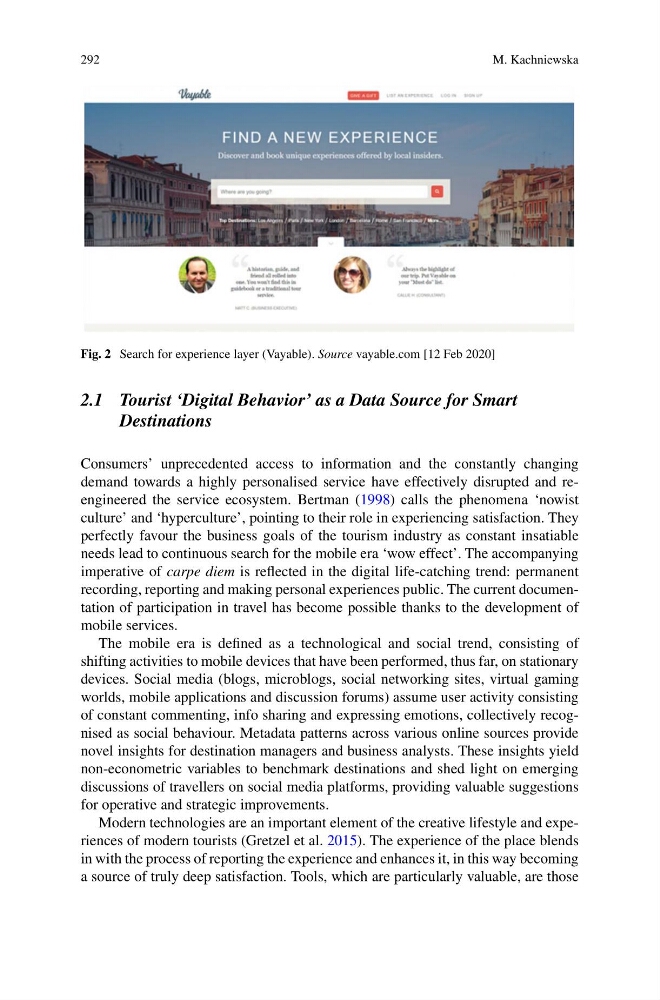
Fig. 2 Search for experience layer (Vayable). Source vayable.com [12 Feb 2020]
2.1 Tourist ‘Digital Behavior’ as a Data Source for Smart
Destinations
Consumers’ unprecedented access to information and the constantly changing
demand towards a highly personalised service have effectively disrupted and reengineered the service ecosystem. Bertman (1998) calls the phenomena ‘nowist
culture’ and ‘hyperculture’, pointing to their role in experiencing satisfaction. They
perfectly favour the business goals of the tourism industry as constant insatiable
needs lead to continuous search for the mobile era ‘wow effect’. The accompanying
imperative of carpe diem is reflected in the digital life-catching trend: permanent
recording, reporting and making personal experiences public. The current documentation of participation in travel has become possible thanks to the development of
mobile services.
The mobile era is defined as a technological and social trend, consisting of
shifting activities to mobile devices that have been performed, thus far, on stationary
devices. Social media (blogs, microblogs, social networking sites, virtual gaming
worlds, mobile applications and discussion forums) assume user activity consisting
of constant commenting, info sharing and expressing emotions, collectively recognised as social behaviour. Metadata patterns across various online sources provide
novel insights for destination managers and business analysts. These insights yield
non-econometric variables to benchmark destinations and shed light on emerging
discussions of travellers on social media platforms, providing valuable suggestions
for operative and strategic improvements.
Modern technologies are an important element of the creative lifestyle and experiences of modern tourists (Gretzel et al. 2015). The experience of the place blends
in with the process of reporting the experience and enhances it, in this way becoming
a source of truly deep satisfaction. Tools, which are particularly valuable, are those
M. Kachniewska
Fig. 2 Search for experience layer (Vayable). Source vayable.com [12 Feb 2020]
2.1 Tourist ‘Digital Behavior’ as a Data Source for Smart
Destinations
Consumers’ unprecedented access to information and the constantly changing
demand towards a highly personalised service have effectively disrupted and reengineered the service ecosystem. Bertman (1998) calls the phenomena ‘nowist
culture’ and ‘hyperculture’, pointing to their role in experiencing satisfaction. They
perfectly favour the business goals of the tourism industry as constant insatiable
needs lead to continuous search for the mobile era ‘wow effect’. The accompanying
imperative of carpe diem is reflected in the digital life-catching trend: permanent
recording, reporting and making personal experiences public. The current documentation of participation in travel has become possible thanks to the development of
mobile services.
The mobile era is defined as a technological and social trend, consisting of
shifting activities to mobile devices that have been performed, thus far, on stationary
devices. Social media (blogs, microblogs, social networking sites, virtual gaming
worlds, mobile applications and discussion forums) assume user activity consisting
of constant commenting, info sharing and expressing emotions, collectively recognised as social behaviour. Metadata patterns across various online sources provide
novel insights for destination managers and business analysts. These insights yield
non-econometric variables to benchmark destinations and shed light on emerging
discussions of travellers on social media platforms, providing valuable suggestions
for operative and strategic improvements.
Modern technologies are an important element of the creative lifestyle and experiences of modern tourists (Gretzel et al. 2015). The experience of the place blends
in with the process of reporting the experience and enhances it, in this way becoming
a source of truly deep satisfaction. Tools, which are particularly valuable, are those