

76
7 Transboundary River Basins in the European Union and the …
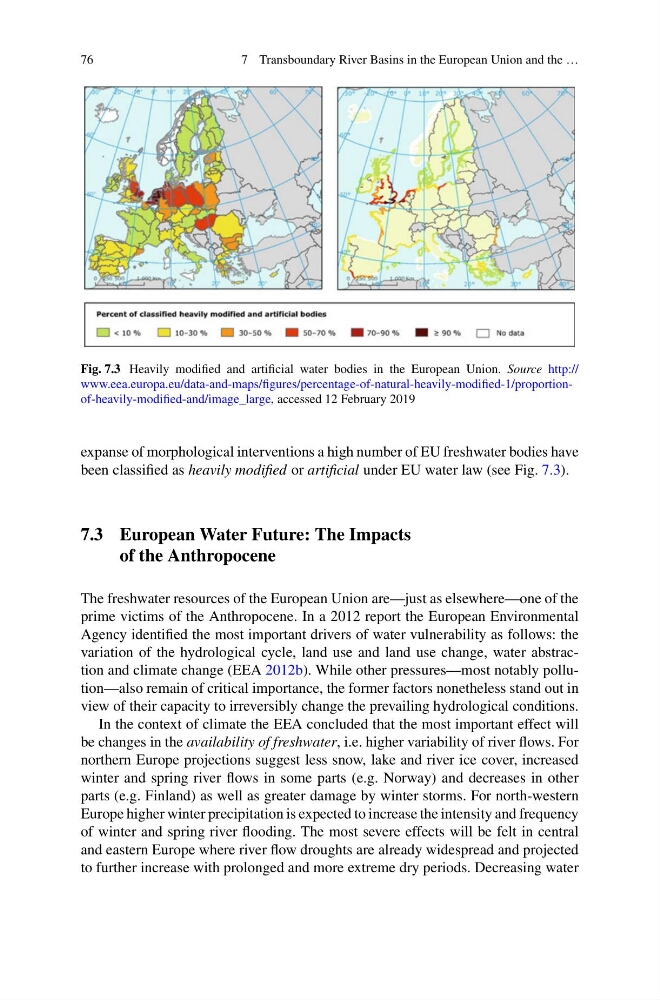
Fig. 7.3 Heavily modified and artificial water bodies in the European Union. Source http://
www.eea.europa.eu/data-and-maps/figures/percentage-of-natural-heavily-modified-1/proportionof-heavily-modified-and/image_large, accessed 12 February 2019
expanse of morphological interventions a high number of EU freshwater bodies have
been classified as heavily modified or artificial under EU water law (see Fig. 7.3).
7.3 European Water Future: The Impacts
of the Anthropocene
The freshwater resources of the European Union are—just as elsewhere—one of the
prime victims of the Anthropocene. In a 2012 report the European Environmental
Agency identified the most important drivers of water vulnerability as follows: the
variation of the hydrological cycle, land use and land use change, water abstraction and climate change (EEA 2012b). While other pressures—most notably pollution—also remain of critical importance, the former factors nonetheless stand out in
view of their capacity to irreversibly change the prevailing hydrological conditions.
In the context of climate the EEA concluded that the most important effect will
be changes in the availability of freshwater, i.e. higher variability of river flows. For
northern Europe projections suggest less snow, lake and river ice cover, increased
winter and spring river flows in some parts (e.g. Norway) and decreases in other
parts (e.g. Finland) as well as greater damage by winter storms. For north-western
Europe higher winter precipitation is expected to increase the intensity and frequency
of winter and spring river flooding. The most severe effects will be felt in central
and eastern Europe where river flow droughts are already widespread and projected
to further increase with prolonged and more extreme dry periods. Decreasing water
7 Transboundary River Basins in the European Union and the …
Fig. 7.3 Heavily modified and artificial water bodies in the European Union. Source http://
www.eea.europa.eu/data-and-maps/figures/percentage-of-natural-heavily-modified-1/proportionof-heavily-modified-and/image_large, accessed 12 February 2019
expanse of morphological interventions a high number of EU freshwater bodies have
been classified as heavily modified or artificial under EU water law (see Fig. 7.3).
7.3 European Water Future: The Impacts
of the Anthropocene
The freshwater resources of the European Union are—just as elsewhere—one of the
prime victims of the Anthropocene. In a 2012 report the European Environmental
Agency identified the most important drivers of water vulnerability as follows: the
variation of the hydrological cycle, land use and land use change, water abstraction and climate change (EEA 2012b). While other pressures—most notably pollution—also remain of critical importance, the former factors nonetheless stand out in
view of their capacity to irreversibly change the prevailing hydrological conditions.
In the context of climate the EEA concluded that the most important effect will
be changes in the availability of freshwater, i.e. higher variability of river flows. For
northern Europe projections suggest less snow, lake and river ice cover, increased
winter and spring river flows in some parts (e.g. Norway) and decreases in other
parts (e.g. Finland) as well as greater damage by winter storms. For north-western
Europe higher winter precipitation is expected to increase the intensity and frequency
of winter and spring river flooding. The most severe effects will be felt in central
and eastern Europe where river flow droughts are already widespread and projected
to further increase with prolonged and more extreme dry periods. Decreasing water