

52 Basic Seismological Theory
Table 2.3-1 Boundary conditions.
Interface
Boundary conditions
solid–solid
T
+
i = T
−
i
u +
i = u −
i
solid–liquid
T
+
3 = T
−
3
T 2 = T 1 = 0
u
+
3 = u
−
3
free surface
T i = 0
V
ˆ
n
−
Medium 2
Medium 1
S
ˆ
n
+
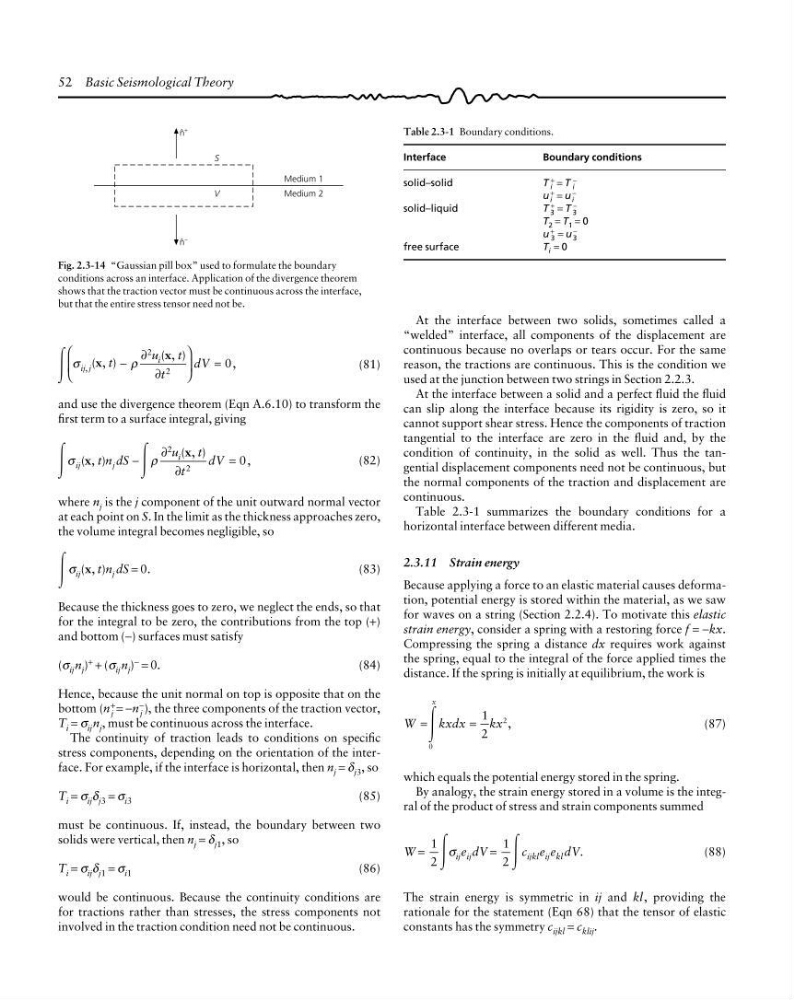
Fig. 2.3-14 “Gaussian pill box” used to formulate the boundary
conditions across an interface. Application of the divergence theorem
shows that the traction vector must be continuous across the interface,
but that the entire stress tensor need not be.
Ύ
σ
ρ
ij j
i
t
u
t
t
dV
, ( , )
( , )
,
x
x
−
⎛
⎝
⎜
⎞
⎠
⎟
=
∂
∂
2
2
0
(81)
and use the divergence theorem (Eqn A.6.10) to transform the
first term to a surface integral, giving
Ύ
Ύ
σ
ρ
ij
j
i
t n dS
u
t
t
dV
( , )
( , )
,
x
x
−
=
∂
∂
2
2
0
(82)
where n j is the j component of the unit outward normal vector
at each point on S. In the limit as the thickness approaches zero,
the volume integral becomes negligible, so
Ύ
σ ij (x, t)n j dS = 0.
(83)
Because the thickness goes to zero, we neglect the ends, so that
for the integral to be zero, the contributions from the top (+)
and bottom (−) surfaces must satisfy
(σ ij n j ) + + (σ ij n j ) − = 0.
(84)
Hence, because the unit normal on top is opposite that on the
bottom (n +
j = −n −
j ), the three components of the traction vector,
T i = σ ij n j , must be continuous across the interface.
The continuity of traction leads to conditions on specific
stress components, depending on the orientation of the interface. For example, if the interface is horizontal, then n j = δ j3 , so
T i = σ ij δ j3 = σ i3
(85)
must be continuous. If, instead, the boundary between two
solids were vertical, then n j = δ j1 , so
T i = σ ij δ j1 = σ i1
(86)
would be continuous. Because the continuity conditions are
for tractions rather than stresses, the stress components not
involved in the traction condition need not be continuous.
At the interface between two solids, sometimes called a
“welded” interface, all components of the displacement are
continuous because no overlaps or tears occur. For the same
reason, the tractions are continuous. This is the condition we
used at the junction between two strings in Section 2.2.3.
At the interface between a solid and a perfect fluid the fluid
can slip along the interface because its rigidity is zero, so it
cannot support shear stress. Hence the components of traction
tangential to the interface are zero in the fluid and, by the
condition of continuity, in the solid as well. Thus the tangential displacement components need not be continuous, but
the normal components of the traction and displacement are
continuous.
Table 2.3-1 summarizes the boundary conditions for a
horizontal interface between different media.
2.3.11 Strain energy
Because applying a force to an elastic material causes deformation, potential energy is stored within the material, as we saw
for waves on a string (Section 2.2.4). To motivate this elastic
strain energy, consider a spring with a restoring force f = −kx.
Compressing the spring a distance dx requires work against
the spring, equal to the integral of the force applied times the
distance. If the spring is initially at equilibrium, the work is
W
kxdx
kx
x
,
=
=
0
2
1
2
Ύ
(87)
which equals the potential energy stored in the spring.
By analogy, the strain energy stored in a volume is the integral of the product of stress and strain components summed
W =
1
2 Ύ
σ ij e ij dV =
1
2 Ύ
c ijkl e ij e kl dV.
(88)
The strain energy is symmetric in ij and kl, providing the
rationale for the statement (Eqn 68) that the tensor of elastic
constants has the symmetry c ijkl = c klij .
Table 2.3-1 Boundary conditions.
Interface
Boundary conditions
solid–solid
T
+
i = T
−
i
u +
i = u −
i
solid–liquid
T
+
3 = T
−
3
T 2 = T 1 = 0
u
+
3 = u
−
3
free surface
T i = 0
V
ˆ
n
−
Medium 2
Medium 1
S
ˆ
n
+
Fig. 2.3-14 “Gaussian pill box” used to formulate the boundary
conditions across an interface. Application of the divergence theorem
shows that the traction vector must be continuous across the interface,
but that the entire stress tensor need not be.
Ύ
σ
ρ
ij j
i
t
u
t
t
dV
, ( , )
( , )
,
x
x
−
⎛
⎝
⎜
⎞
⎠
⎟
=
∂
∂
2
2
0
(81)
and use the divergence theorem (Eqn A.6.10) to transform the
first term to a surface integral, giving
Ύ
Ύ
σ
ρ
ij
j
i
t n dS
u
t
t
dV
( , )
( , )
,
x
x
−
=
∂
∂
2
2
0
(82)
where n j is the j component of the unit outward normal vector
at each point on S. In the limit as the thickness approaches zero,
the volume integral becomes negligible, so
Ύ
σ ij (x, t)n j dS = 0.
(83)
Because the thickness goes to zero, we neglect the ends, so that
for the integral to be zero, the contributions from the top (+)
and bottom (−) surfaces must satisfy
(σ ij n j ) + + (σ ij n j ) − = 0.
(84)
Hence, because the unit normal on top is opposite that on the
bottom (n +
j = −n −
j ), the three components of the traction vector,
T i = σ ij n j , must be continuous across the interface.
The continuity of traction leads to conditions on specific
stress components, depending on the orientation of the interface. For example, if the interface is horizontal, then n j = δ j3 , so
T i = σ ij δ j3 = σ i3
(85)
must be continuous. If, instead, the boundary between two
solids were vertical, then n j = δ j1 , so
T i = σ ij δ j1 = σ i1
(86)
would be continuous. Because the continuity conditions are
for tractions rather than stresses, the stress components not
involved in the traction condition need not be continuous.
At the interface between two solids, sometimes called a
“welded” interface, all components of the displacement are
continuous because no overlaps or tears occur. For the same
reason, the tractions are continuous. This is the condition we
used at the junction between two strings in Section 2.2.3.
At the interface between a solid and a perfect fluid the fluid
can slip along the interface because its rigidity is zero, so it
cannot support shear stress. Hence the components of traction
tangential to the interface are zero in the fluid and, by the
condition of continuity, in the solid as well. Thus the tangential displacement components need not be continuous, but
the normal components of the traction and displacement are
continuous.
Table 2.3-1 summarizes the boundary conditions for a
horizontal interface between different media.
2.3.11 Strain energy
Because applying a force to an elastic material causes deformation, potential energy is stored within the material, as we saw
for waves on a string (Section 2.2.4). To motivate this elastic
strain energy, consider a spring with a restoring force f = −kx.
Compressing the spring a distance dx requires work against
the spring, equal to the integral of the force applied times the
distance. If the spring is initially at equilibrium, the work is
W
kxdx
kx
x
,
=
=
0
2
1
2
Ύ
(87)
which equals the potential energy stored in the spring.
By analogy, the strain energy stored in a volume is the integral of the product of stress and strain components summed
W =
1
2 Ύ
σ ij e ij dV =
1
2 Ύ
c ijkl e ij e kl dV.
(88)
The strain energy is symmetric in ij and kl, providing the
rationale for the statement (Eqn 68) that the tensor of elastic
constants has the symmetry c ijkl = c klij .