

444 Appendix
O
θ
a
Real part
b
z
Imaginary part
r
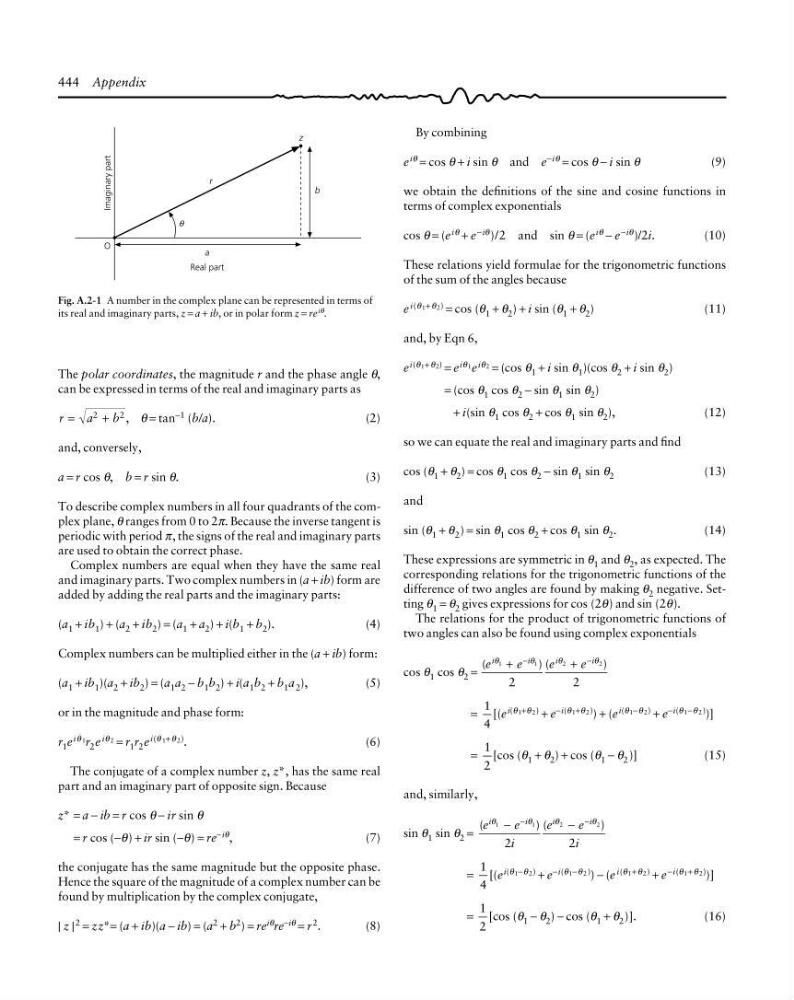
Fig. A.2-1 A number in the complex plane can be represented in terms of
its real and imaginary parts, z = a + ib, or in polar form z = re
iθ .
The polar coordinates, the magnitude r and the phase angle θ,
can be expressed in terms of the real and imaginary parts as
r
a
b ,
=
+
2
2
θ = tan −1 (b/a).
(2)
and, conversely,
a = r cos θ, b = r sin θ.
(3)
To describe complex numbers in all four quadrants of the complex plane, θ ranges from 0 to 2π. Because the inverse tangent is
periodic with period π, the signs of the real and imaginary parts
are used to obtain the correct phase.
Complex numbers are equal when they have the same real
and imaginary parts. Two complex numbers in (a + ib) form are
added by adding the real parts and the imaginary parts:
(a 1 + ib 1 ) + (a 2 + ib 2 ) = (a 1 + a 2 ) + i(b 1 + b 2 ).
(4)
Complex numbers can be multiplied either in the (a + ib) form:
(a 1 + ib 1 )(a 2 + ib 2 ) = (a 1 a 2 − b 1 b 2 ) + i(a 1 b 2 + b 1 a 2 ),
(5)
or in the magnitude and phase form:
r 1 e iθ 1 r 2 e iθ 2 = r 1 r 2 e i(θ 1+ θ 2) .
(6)
The conjugate of a complex number z, z*, has the same real
part and an imaginary part of opposite sign. Because
z* = a − ib = r cos θ − ir sin θ
= r cos (−θ) + ir sin (−θ) = re − iθ ,
(7)
the conjugate has the same magnitude but the opposite phase.
Hence the square of the magnitude of a complex number can be
found by multiplication by the complex conjugate,
| z | 2 = zz*= (a + ib)(a − ib) = (a 2 + b 2 ) = re iθ re −iθ = r 2 .
(8)
By combining
e iθ = cos θ + i sin θ and e −iθ = cos θ − i sin θ
(9)
we obtain the definitions of the sine and cosine functions in
terms of complex exponentials
cos θ = (e
iθ
+ e
−iθ )/2 and sin θ = (e
iθ
− e
−iθ )/2i.
(10)
These relations yield formulae for the trigonometric functions
of the sum of the angles because
e i(θ1+ θ2) = cos (θ 1 + θ 2 ) + i sin (θ 1 + θ 2 )
(11)
and, by Eqn 6,
e i(θ1+ θ2) = e iθ1 e iθ2 = (cos θ 1 + i sin θ 1 )(cos θ 2 + i sin θ 2 )
= (cos θ 1 cos θ 2 − sin θ 1 sin θ 2 )
+ i(sin θ 1 cos θ 2 + cos θ 1 sin θ 2 ),
(12)
so we can equate the real and imaginary parts and find
cos (θ 1 + θ 2 ) = cos θ 1 cos θ 2 − sin θ 1 sin θ 2
(13)
and
sin (θ 1 + θ 2 ) = sin θ 1 cos θ 2 + cos θ 1 sin θ 2 .
(14)
These expressions are symmetric in θ 1 and θ 2 , as expected. The
corresponding relations for the trigonometric functions of the
difference of two angles are found by making θ 2 negative. Setting θ 1 = θ 2 gives expressions for cos (2θ) and sin (2θ).
The relations for the product of trigonometric functions of
two angles can also be found using complex exponentials
cos θ 1 cos θ 2 =
(
) (
)
e
e
e
e
i
i
i
i
θ
θ
θ
θ
1
1
2
2
2
2
+
+
−
−
=
1
4
[(e i(θ1+θ 2) + e −i(θ1+θ 2) ) + (e i(θ1−θ 2) + e −i(θ 1− θ 2 ) )]
=
1
2
[cos (θ 1 + θ 2 ) + cos (θ 1 − θ 2 )]
(15)
and, similarly,
sin θ 1 sin θ 2 =
(
) (
)
e
e
i
e
e
i
i
i
i
i
θ
θ
θ
θ
1
1
2
2
2
2
−
−
−
−
=
1
4
[(e i(θ1−θ 2) + e −i(θ1−θ 2 ) ) − (e i(θ1+ θ 2) + e −i(θ1+ θ 2) )]
=
1
2
[cos (θ 1 − θ 2 ) − cos (θ 1 + θ 2 )].
(16)
O
θ
a
Real part
b
z
Imaginary part
r
Fig. A.2-1 A number in the complex plane can be represented in terms of
its real and imaginary parts, z = a + ib, or in polar form z = re
iθ .
The polar coordinates, the magnitude r and the phase angle θ,
can be expressed in terms of the real and imaginary parts as
r
a
b ,
=
+
2
2
θ = tan −1 (b/a).
(2)
and, conversely,
a = r cos θ, b = r sin θ.
(3)
To describe complex numbers in all four quadrants of the complex plane, θ ranges from 0 to 2π. Because the inverse tangent is
periodic with period π, the signs of the real and imaginary parts
are used to obtain the correct phase.
Complex numbers are equal when they have the same real
and imaginary parts. Two complex numbers in (a + ib) form are
added by adding the real parts and the imaginary parts:
(a 1 + ib 1 ) + (a 2 + ib 2 ) = (a 1 + a 2 ) + i(b 1 + b 2 ).
(4)
Complex numbers can be multiplied either in the (a + ib) form:
(a 1 + ib 1 )(a 2 + ib 2 ) = (a 1 a 2 − b 1 b 2 ) + i(a 1 b 2 + b 1 a 2 ),
(5)
or in the magnitude and phase form:
r 1 e iθ 1 r 2 e iθ 2 = r 1 r 2 e i(θ 1+ θ 2) .
(6)
The conjugate of a complex number z, z*, has the same real
part and an imaginary part of opposite sign. Because
z* = a − ib = r cos θ − ir sin θ
= r cos (−θ) + ir sin (−θ) = re − iθ ,
(7)
the conjugate has the same magnitude but the opposite phase.
Hence the square of the magnitude of a complex number can be
found by multiplication by the complex conjugate,
| z | 2 = zz*= (a + ib)(a − ib) = (a 2 + b 2 ) = re iθ re −iθ = r 2 .
(8)
By combining
e iθ = cos θ + i sin θ and e −iθ = cos θ − i sin θ
(9)
we obtain the definitions of the sine and cosine functions in
terms of complex exponentials
cos θ = (e
iθ
+ e
−iθ )/2 and sin θ = (e
iθ
− e
−iθ )/2i.
(10)
These relations yield formulae for the trigonometric functions
of the sum of the angles because
e i(θ1+ θ2) = cos (θ 1 + θ 2 ) + i sin (θ 1 + θ 2 )
(11)
and, by Eqn 6,
e i(θ1+ θ2) = e iθ1 e iθ2 = (cos θ 1 + i sin θ 1 )(cos θ 2 + i sin θ 2 )
= (cos θ 1 cos θ 2 − sin θ 1 sin θ 2 )
+ i(sin θ 1 cos θ 2 + cos θ 1 sin θ 2 ),
(12)
so we can equate the real and imaginary parts and find
cos (θ 1 + θ 2 ) = cos θ 1 cos θ 2 − sin θ 1 sin θ 2
(13)
and
sin (θ 1 + θ 2 ) = sin θ 1 cos θ 2 + cos θ 1 sin θ 2 .
(14)
These expressions are symmetric in θ 1 and θ 2 , as expected. The
corresponding relations for the trigonometric functions of the
difference of two angles are found by making θ 2 negative. Setting θ 1 = θ 2 gives expressions for cos (2θ) and sin (2θ).
The relations for the product of trigonometric functions of
two angles can also be found using complex exponentials
cos θ 1 cos θ 2 =
(
) (
)
e
e
e
e
i
i
i
i
θ
θ
θ
θ
1
1
2
2
2
2
+
+
−
−
=
1
4
[(e i(θ1+θ 2) + e −i(θ1+θ 2) ) + (e i(θ1−θ 2) + e −i(θ 1− θ 2 ) )]
=
1
2
[cos (θ 1 + θ 2 ) + cos (θ 1 − θ 2 )]
(15)
and, similarly,
sin θ 1 sin θ 2 =
(
) (
)
e
e
i
e
e
i
i
i
i
i
θ
θ
θ
θ
1
1
2
2
2
2
−
−
−
−
=
1
4
[(e i(θ1−θ 2) + e −i(θ1−θ 2 ) ) − (e i(θ1+ θ 2) + e −i(θ1+ θ 2) )]
=
1
2
[cos (θ 1 − θ 2 ) − cos (θ 1 + θ 2 )].
(16)