

20 Introduction
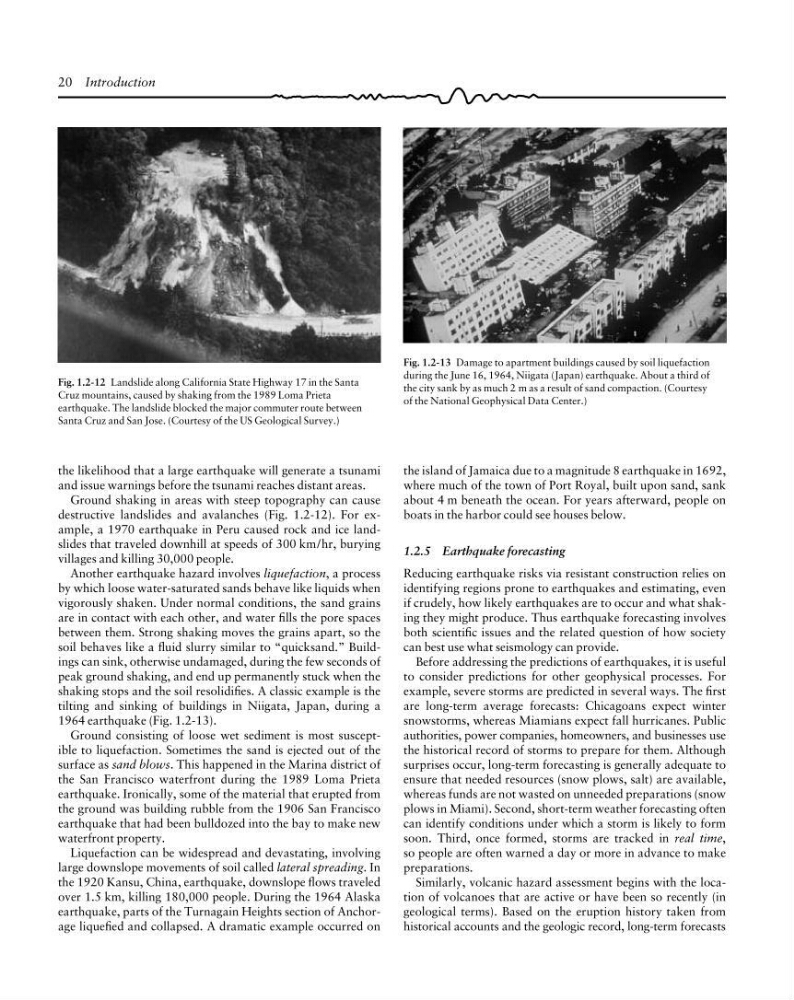
Fig. 1.2-12 Landslide along California State Highway 17 in the Santa
Cruz mountains, caused by shaking from the 1989 Loma Prieta
earthquake. The landslide blocked the major commuter route between
Santa Cruz and San Jose. (Courtesy of the US Geological Survey.)
the likelihood that a large earthquake will generate a tsunami
and issue warnings before the tsunami reaches distant areas.
Ground shaking in areas with steep topography can cause
destructive landslides and avalanches (Fig. 1.2-12). For example, a 1970 earthquake in Peru caused rock and ice landslides that traveled downhill at speeds of 300 km/hr, burying
villages and killing 30,000 people.
Another earthquake hazard involves liquefaction, a process
by which loose water-saturated sands behave like liquids when
vigorously shaken. Under normal conditions, the sand grains
are in contact with each other, and water fills the pore spaces
between them. Strong shaking moves the grains apart, so the
soil behaves like a fluid slurry similar to “quicksand.” Buildings can sink, otherwise undamaged, during the few seconds of
peak ground shaking, and end up permanently stuck when the
shaking stops and the soil resolidifies. A classic example is the
tilting and sinking of buildings in Niigata, Japan, during a
1964 earthquake (Fig. 1.2-13).
Ground consisting of loose wet sediment is most susceptible to liquefaction. Sometimes the sand is ejected out of the
surface as sand blows. This happened in the Marina district of
the San Francisco waterfront during the 1989 Loma Prieta
earthquake. Ironically, some of the material that erupted from
the ground was building rubble from the 1906 San Francisco
earthquake that had been bulldozed into the bay to make new
waterfront property.
Liquefaction can be widespread and devastating, involving
large downslope movements of soil called lateral spreading. In
the 1920 Kansu, China, earthquake, downslope flows traveled
over 1.5 km, killing 180,000 people. During the 1964 Alaska
earthquake, parts of the Turnagain Heights section of Anchorage liquefied and collapsed. A dramatic example occurred on
Fig. 1.2-13 Damage to apartment buildings caused by soil liquefaction
during the June 16, 1964, Niigata (Japan) earthquake. About a third of
the city sank by as much 2 m as a result of sand compaction. (Courtesy
of the National Geophysical Data Center.)
the island of Jamaica due to a magnitude 8 earthquake in 1692,
where much of the town of Port Royal, built upon sand, sank
about 4 m beneath the ocean. For years afterward, people on
boats in the harbor could see houses below.
1.2.5 Earthquake forecasting
Reducing earthquake risks via resistant construction relies on
identifying regions prone to earthquakes and estimating, even
if crudely, how likely earthquakes are to occur and what shaking they might produce. Thus earthquake forecasting involves
both scientific issues and the related question of how society
can best use what seismology can provide.
Before addressing the predictions of earthquakes, it is useful
to consider predictions for other geophysical processes. For
example, severe storms are predicted in several ways. The first
are long-term average forecasts: Chicagoans expect winter
snowstorms, whereas Miamians expect fall hurricanes. Public
authorities, power companies, homeowners, and businesses use
the historical record of storms to prepare for them. Although
surprises occur, long-term forecasting is generally adequate to
ensure that needed resources (snow plows, salt) are available,
whereas funds are not wasted on unneeded preparations (snow
plows in Miami). Second, short-term weather forecasting often
can identify conditions under which a storm is likely to form
soon. Third, once formed, storms are tracked in real time,
so people are often warned a day or more in advance to make
preparations.
Similarly, volcanic hazard assessment begins with the location of volcanoes that are active or have been so recently (in
geological terms). Based on the eruption history taken from
historical accounts and the geologic record, long-term forecasts
Fig. 1.2-12 Landslide along California State Highway 17 in the Santa
Cruz mountains, caused by shaking from the 1989 Loma Prieta
earthquake. The landslide blocked the major commuter route between
Santa Cruz and San Jose. (Courtesy of the US Geological Survey.)
the likelihood that a large earthquake will generate a tsunami
and issue warnings before the tsunami reaches distant areas.
Ground shaking in areas with steep topography can cause
destructive landslides and avalanches (Fig. 1.2-12). For example, a 1970 earthquake in Peru caused rock and ice landslides that traveled downhill at speeds of 300 km/hr, burying
villages and killing 30,000 people.
Another earthquake hazard involves liquefaction, a process
by which loose water-saturated sands behave like liquids when
vigorously shaken. Under normal conditions, the sand grains
are in contact with each other, and water fills the pore spaces
between them. Strong shaking moves the grains apart, so the
soil behaves like a fluid slurry similar to “quicksand.” Buildings can sink, otherwise undamaged, during the few seconds of
peak ground shaking, and end up permanently stuck when the
shaking stops and the soil resolidifies. A classic example is the
tilting and sinking of buildings in Niigata, Japan, during a
1964 earthquake (Fig. 1.2-13).
Ground consisting of loose wet sediment is most susceptible to liquefaction. Sometimes the sand is ejected out of the
surface as sand blows. This happened in the Marina district of
the San Francisco waterfront during the 1989 Loma Prieta
earthquake. Ironically, some of the material that erupted from
the ground was building rubble from the 1906 San Francisco
earthquake that had been bulldozed into the bay to make new
waterfront property.
Liquefaction can be widespread and devastating, involving
large downslope movements of soil called lateral spreading. In
the 1920 Kansu, China, earthquake, downslope flows traveled
over 1.5 km, killing 180,000 people. During the 1964 Alaska
earthquake, parts of the Turnagain Heights section of Anchorage liquefied and collapsed. A dramatic example occurred on
Fig. 1.2-13 Damage to apartment buildings caused by soil liquefaction
during the June 16, 1964, Niigata (Japan) earthquake. About a third of
the city sank by as much 2 m as a result of sand compaction. (Courtesy
of the National Geophysical Data Center.)
the island of Jamaica due to a magnitude 8 earthquake in 1692,
where much of the town of Port Royal, built upon sand, sank
about 4 m beneath the ocean. For years afterward, people on
boats in the harbor could see houses below.
1.2.5 Earthquake forecasting
Reducing earthquake risks via resistant construction relies on
identifying regions prone to earthquakes and estimating, even
if crudely, how likely earthquakes are to occur and what shaking they might produce. Thus earthquake forecasting involves
both scientific issues and the related question of how society
can best use what seismology can provide.
Before addressing the predictions of earthquakes, it is useful
to consider predictions for other geophysical processes. For
example, severe storms are predicted in several ways. The first
are long-term average forecasts: Chicagoans expect winter
snowstorms, whereas Miamians expect fall hurricanes. Public
authorities, power companies, homeowners, and businesses use
the historical record of storms to prepare for them. Although
surprises occur, long-term forecasting is generally adequate to
ensure that needed resources (snow plows, salt) are available,
whereas funds are not wasted on unneeded preparations (snow
plows in Miami). Second, short-term weather forecasting often
can identify conditions under which a storm is likely to form
soon. Third, once formed, storms are tracked in real time,
so people are often warned a day or more in advance to make
preparations.
Similarly, volcanic hazard assessment begins with the location of volcanoes that are active or have been so recently (in
geological terms). Based on the eruption history taken from
historical accounts and the geologic record, long-term forecasts