

3.8 Composition of the mantle and core 211
Activity level
Condensation
La te ra l m a ss va ri a ti o n s
Mars
Moon
Earth
Venus?
Mercury?
Planetesimal
interaction
Formation
Vigorous
convection
Plate
tectonics
Terminal
volcanism
Quiescence
Stage
R a d io a c t iv e e n e r g y
S u r f a c e m
o t i o n s
C ru s ta l
d if fe re n ti a ti o n
C o re & v o la ti le
d if fe re n ti a ti o n
G ra vi ta tio n al en er g y
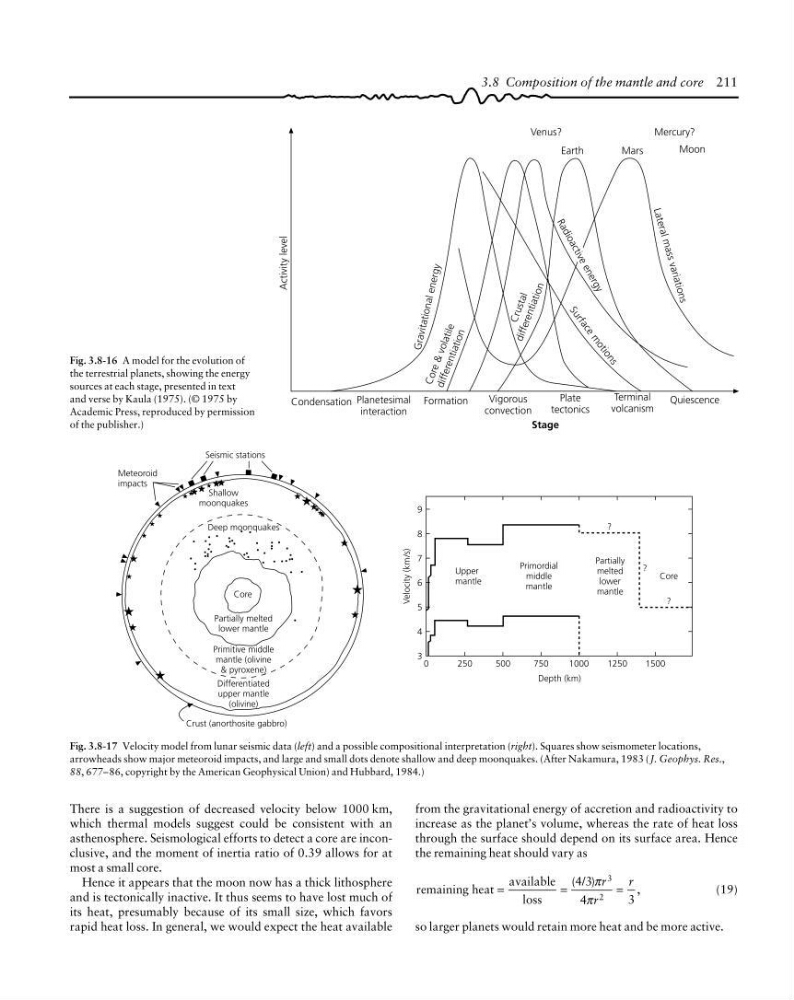
Fig. 3.8-16 A model for the evolution of
the terrestrial planets, showing the energy
sources at each stage, presented in text
and verse by Kaula (1975). (© 1975 by
Academic Press, reproduced by permission
of the publisher.)
Fig. 3.8-17 Velocity model from lunar seismic data (left) and a possible compositional interpretation (right). Squares show seismometer locations,
arrowheads show major meteoroid impacts, and large and small dots denote shallow and deep moonquakes. (After Nakamura, 1983 ( J. Geophys. Res.,
88, 677–86, copyright by the American Geophysical Union) and Hubbard, 1984.)
Velocity (km/s)
9
8
7
6
5
4
3
Upper
mantle
Primordial
middle
mantle
Partially
melted
lower
mantle
Core
250
0
500
750
1000
1250
1500
Depth (km)
?
?
?
Differentiated
upper mantle
(olivine)
Primitive middle
mantle (olivine
& pyroxene)
Partially melted
lower mantle
Core
Deep moonquakes
Shallow
moonquakes
Seismic stations
Meteoroid
impacts
Crust (anorthosite gabbro)
There is a suggestion of decreased velocity below 1000 km,
which thermal models suggest could be consistent with an
asthenosphere. Seismological efforts to detect a core are inconclusive, and the moment of inertia ratio of 0.39 allows for at
most a small core.
Hence it appears that the moon now has a thick lithosphere
and is tectonically inactive. It thus seems to have lost much of
its heat, presumably because of its small size, which favors
rapid heat loss. In general, we would expect the heat available
from the gravitational energy of accretion and radioactivity to
increase as the planet’s volume, whereas the rate of heat loss
through the surface should depend on its surface area. Hence
the remaining heat should vary as
remaining heat
available
loss
=
=
=
( / )
,
4 3
4
3
3
2
π
π
r
r
r
(19)
so larger planets would retain more heat and be more active.
Activity level
Condensation
La te ra l m a ss va ri a ti o n s
Mars
Moon
Earth
Venus?
Mercury?
Planetesimal
interaction
Formation
Vigorous
convection
Plate
tectonics
Terminal
volcanism
Quiescence
Stage
R a d io a c t iv e e n e r g y
S u r f a c e m
o t i o n s
C ru s ta l
d if fe re n ti a ti o n
C o re & v o la ti le
d if fe re n ti a ti o n
G ra vi ta tio n al en er g y
Fig. 3.8-16 A model for the evolution of
the terrestrial planets, showing the energy
sources at each stage, presented in text
and verse by Kaula (1975). (© 1975 by
Academic Press, reproduced by permission
of the publisher.)
Fig. 3.8-17 Velocity model from lunar seismic data (left) and a possible compositional interpretation (right). Squares show seismometer locations,
arrowheads show major meteoroid impacts, and large and small dots denote shallow and deep moonquakes. (After Nakamura, 1983 ( J. Geophys. Res.,
88, 677–86, copyright by the American Geophysical Union) and Hubbard, 1984.)
Velocity (km/s)
9
8
7
6
5
4
3
Upper
mantle
Primordial
middle
mantle
Partially
melted
lower
mantle
Core
250
0
500
750
1000
1250
1500
Depth (km)
?
?
?
Differentiated
upper mantle
(olivine)
Primitive middle
mantle (olivine
& pyroxene)
Partially melted
lower mantle
Core
Deep moonquakes
Shallow
moonquakes
Seismic stations
Meteoroid
impacts
Crust (anorthosite gabbro)
There is a suggestion of decreased velocity below 1000 km,
which thermal models suggest could be consistent with an
asthenosphere. Seismological efforts to detect a core are inconclusive, and the moment of inertia ratio of 0.39 allows for at
most a small core.
Hence it appears that the moon now has a thick lithosphere
and is tectonically inactive. It thus seems to have lost much of
its heat, presumably because of its small size, which favors
rapid heat loss. In general, we would expect the heat available
from the gravitational energy of accretion and radioactivity to
increase as the planet’s volume, whereas the rate of heat loss
through the surface should depend on its surface area. Hence
the remaining heat should vary as
remaining heat
available
loss
=
=
=
( / )
,
4 3
4
3
3
2
π
π
r
r
r
(19)
so larger planets would retain more heat and be more active.