

221
H 3 CO 2 C
O
H 3 CO 2 C
O
O
H 3 CO 2 C
+
134
1141
1153
1152
O
O
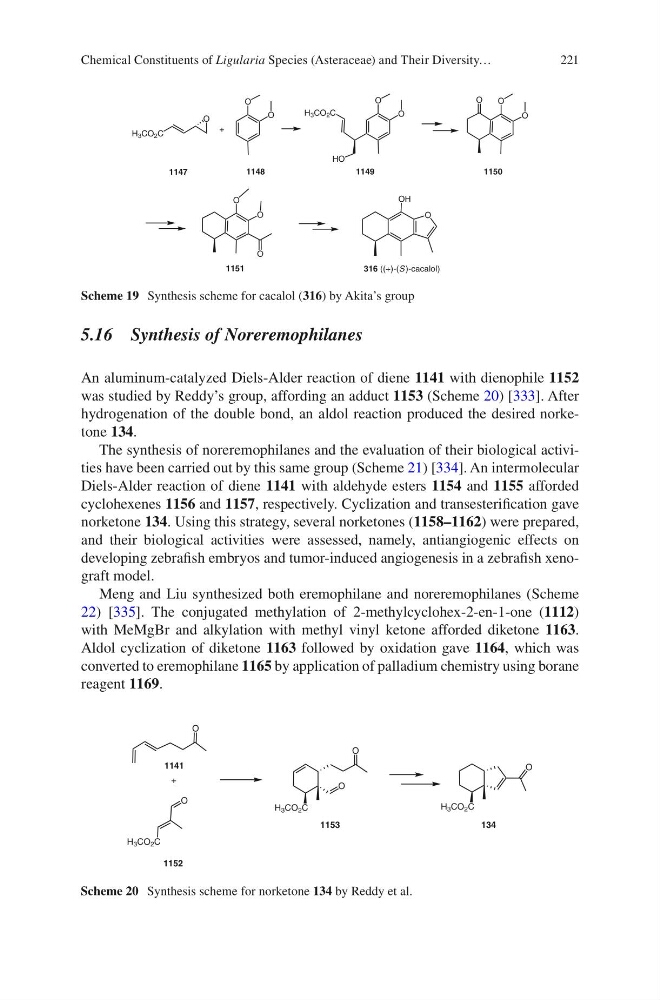
Scheme 20 Synthesis scheme for norketone 134 by Reddy et al.
O
H 3 CO 2 C
O
O
O
O
H 3 CO 2 C
HO
O
O
O
+
O
O
O
O
OH
316 ((+)-(S )-cacalol)
1148
1149
1150
1151
1147
Scheme 19 Synthesis scheme for cacalol (316) by Akita’s group
5.16 Synthesis of Noreremophilanes
An aluminum-catalyzed Diels-Alder reaction of diene 1141 with dienophile 1152
was studied by Reddy’s group, affording an adduct 1153 (Scheme 20) [333]. After
hydrogenation of the double bond, an aldol reaction produced the desired norketone 134.
The synthesis of noreremophilanes and the evaluation of their biological activities have been carried out by this same group (Scheme 21) [334]. An intermolecular
Diels-Alder reaction of diene 1141 with aldehyde esters 1154 and 1155 afforded
cyclohexenes 1156 and 1157, respectively. Cyclization and transesterification gave
norketone 134. Using this strategy, several norketones (1158–1162) were prepared,
and their biological activities were assessed, namely, antiangiogenic effects on
developing zebrafish embryos and tumor-induced angiogenesis in a zebrafish xenograft model.
Meng and Liu synthesized both eremophilane and noreremophilanes (Scheme
22) [335]. The conjugated methylation of 2-methylcyclohex-2-en-1-one (1112)
with MeMgBr and alkylation with methyl vinyl ketone afforded diketone 1163.
Aldol cyclization of diketone 1163 followed by oxidation gave 1164, which was
converted to eremophilane 1165 by application of palladium chemistry using borane
reagent 1169.
Chemical Constituents of Ligularia Species (Asteraceae) and Their Diversity…
H 3 CO 2 C
O
H 3 CO 2 C
O
O
H 3 CO 2 C
+
134
1141
1153
1152
O
O
Scheme 20 Synthesis scheme for norketone 134 by Reddy et al.
O
H 3 CO 2 C
O
O
O
O
H 3 CO 2 C
HO
O
O
O
+
O
O
O
O
OH
316 ((+)-(S )-cacalol)
1148
1149
1150
1151
1147
Scheme 19 Synthesis scheme for cacalol (316) by Akita’s group
5.16 Synthesis of Noreremophilanes
An aluminum-catalyzed Diels-Alder reaction of diene 1141 with dienophile 1152
was studied by Reddy’s group, affording an adduct 1153 (Scheme 20) [333]. After
hydrogenation of the double bond, an aldol reaction produced the desired norketone 134.
The synthesis of noreremophilanes and the evaluation of their biological activities have been carried out by this same group (Scheme 21) [334]. An intermolecular
Diels-Alder reaction of diene 1141 with aldehyde esters 1154 and 1155 afforded
cyclohexenes 1156 and 1157, respectively. Cyclization and transesterification gave
norketone 134. Using this strategy, several norketones (1158–1162) were prepared,
and their biological activities were assessed, namely, antiangiogenic effects on
developing zebrafish embryos and tumor-induced angiogenesis in a zebrafish xenograft model.
Meng and Liu synthesized both eremophilane and noreremophilanes (Scheme
22) [335]. The conjugated methylation of 2-methylcyclohex-2-en-1-one (1112)
with MeMgBr and alkylation with methyl vinyl ketone afforded diketone 1163.
Aldol cyclization of diketone 1163 followed by oxidation gave 1164, which was
converted to eremophilane 1165 by application of palladium chemistry using borane
reagent 1169.
Chemical Constituents of Ligularia Species (Asteraceae) and Their Diversity…