

220
O
O
O
132
O
O
O
+
+
O
O
1146 (nootkatone)
BF .
3 Et 2 O
1141
1102
1143
1144
1102
1145
1142
O
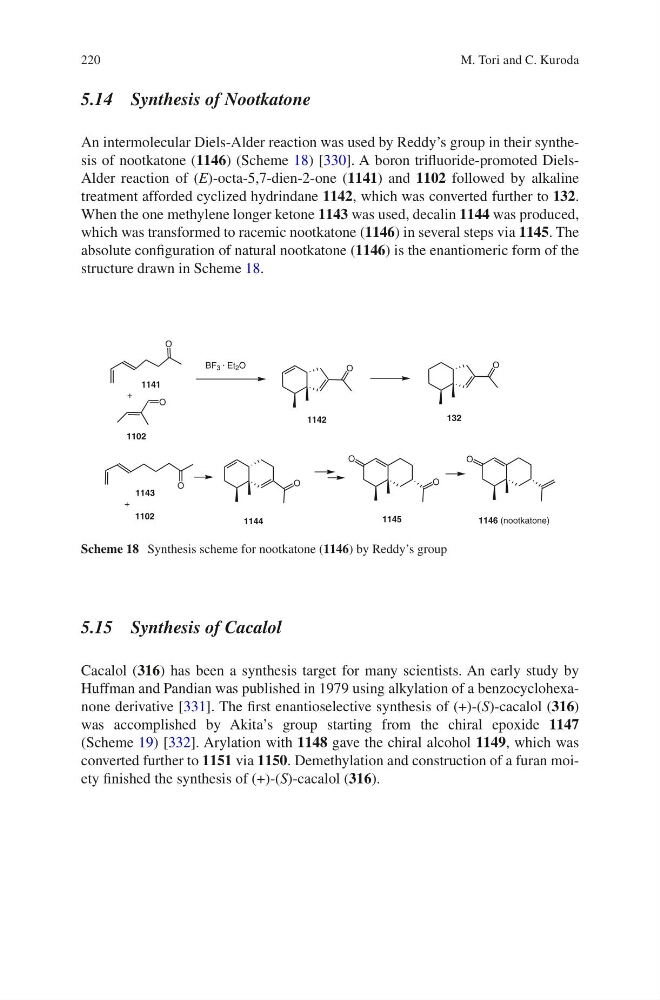
Scheme 18 Synthesis scheme for nootkatone (1146) by Reddy’s group
5.14 Synthesis of Nootkatone
An intermolecular Diels-Alder reaction was used by Reddy’s group in their synthesis of nootkatone (1146) (Scheme 18) [330]. A boron trifluoride-promoted DielsAlder reaction of (E)-octa-5,7-dien-2-one (1141) and 1102 followed by alkaline
treatment afforded cyclized hydrindane 1142, which was converted further to 132.
When the one methylene longer ketone 1143 was used, decalin 1144 was produced,
which was transformed to racemic nootkatone (1146) in several steps via 1145. The
absolute configuration of natural nootkatone (1146) is the enantiomeric form of the
structure drawn in Scheme 18.
5.15 Synthesis of Cacalol
Cacalol (316) has been a synthesis target for many scientists. An early study by
Huffman and Pandian was published in 1979 using alkylation of a benzocyclohexanone derivative [331]. The first enantioselective synthesis of (+)-(S)-cacalol (316)
was accomplished by Akita’s group starting from the chiral epoxide 1147
(Scheme 19) [332]. Arylation with 1148 gave the chiral alcohol 1149, which was
converted further to 1151 via 1150. Demethylation and construction of a furan moiety finished the synthesis of (+)-(S)-cacalol (316).
M. Tori and C. Kuroda
O
O
O
132
O
O
O
+
+
O
O
1146 (nootkatone)
BF .
3 Et 2 O
1141
1102
1143
1144
1102
1145
1142
O
Scheme 18 Synthesis scheme for nootkatone (1146) by Reddy’s group
5.14 Synthesis of Nootkatone
An intermolecular Diels-Alder reaction was used by Reddy’s group in their synthesis of nootkatone (1146) (Scheme 18) [330]. A boron trifluoride-promoted DielsAlder reaction of (E)-octa-5,7-dien-2-one (1141) and 1102 followed by alkaline
treatment afforded cyclized hydrindane 1142, which was converted further to 132.
When the one methylene longer ketone 1143 was used, decalin 1144 was produced,
which was transformed to racemic nootkatone (1146) in several steps via 1145. The
absolute configuration of natural nootkatone (1146) is the enantiomeric form of the
structure drawn in Scheme 18.
5.15 Synthesis of Cacalol
Cacalol (316) has been a synthesis target for many scientists. An early study by
Huffman and Pandian was published in 1979 using alkylation of a benzocyclohexanone derivative [331]. The first enantioselective synthesis of (+)-(S)-cacalol (316)
was accomplished by Akita’s group starting from the chiral epoxide 1147
(Scheme 19) [332]. Arylation with 1148 gave the chiral alcohol 1149, which was
converted further to 1151 via 1150. Demethylation and construction of a furan moiety finished the synthesis of (+)-(S)-cacalol (316).
M. Tori and C. Kuroda