

Aquatic macrophytes are powerful tools that can be explored to reduce the
concentration of heavy metals from water bodies and have drawn a lot of attention
worldwide. They possess tremendous capacity to accumulate/concentrate various
metal ions in their plant parts and for this reason they are used in phytoremediation of
heavy metal ions from both, industrial as well as municipal wastewater.
2 Conclusion
Anthropogenic emissions of heavy metals have causes widespread pollution of the
natural ecosystems. Various industrial activities like metal finishing, electroplating,
Textiles, metal mining and smelting activities and nuclear power discharge inorganic
pollutant as well as organic pollutants to the natural ecosystem. These pollutants are
resistant to degradation and represent an ongoing toxicological threat to both wildlife
and human beings. Aquatic macrophytes have greater metal hyperaccumulation
mechanisms, which is of particular importance in the context of the potential use
of this plant in bioremediation process. Bioremediation has grown into a green,
attractive and promising alternative to other conventional techniques in treating large
volumes of wastewater with low concentration of pollutants as it can be more cost
effective too.
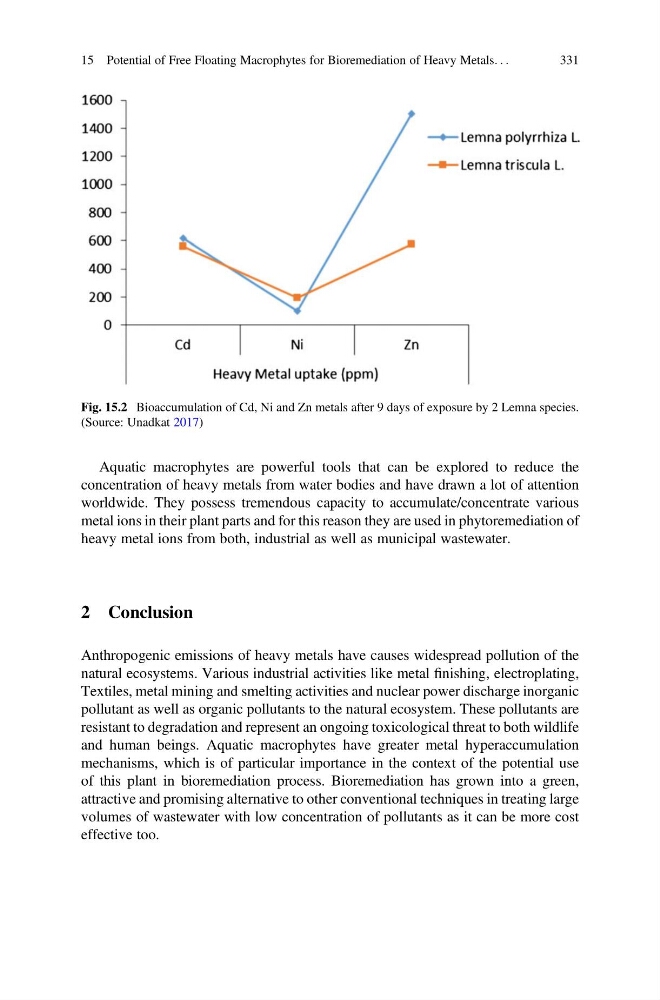
Fig. 15.2 Bioaccumulation of Cd, Ni and Zn metals after 9 days of exposure by 2 Lemna species.
(Source: Unadkat 2017)
15 Potential of Free Floating Macrophytes for Bioremediation of Heavy Metals. . .
331
concentration of heavy metals from water bodies and have drawn a lot of attention
worldwide. They possess tremendous capacity to accumulate/concentrate various
metal ions in their plant parts and for this reason they are used in phytoremediation of
heavy metal ions from both, industrial as well as municipal wastewater.
2 Conclusion
Anthropogenic emissions of heavy metals have causes widespread pollution of the
natural ecosystems. Various industrial activities like metal finishing, electroplating,
Textiles, metal mining and smelting activities and nuclear power discharge inorganic
pollutant as well as organic pollutants to the natural ecosystem. These pollutants are
resistant to degradation and represent an ongoing toxicological threat to both wildlife
and human beings. Aquatic macrophytes have greater metal hyperaccumulation
mechanisms, which is of particular importance in the context of the potential use
of this plant in bioremediation process. Bioremediation has grown into a green,
attractive and promising alternative to other conventional techniques in treating large
volumes of wastewater with low concentration of pollutants as it can be more cost
effective too.
Fig. 15.2 Bioaccumulation of Cd, Ni and Zn metals after 9 days of exposure by 2 Lemna species.
(Source: Unadkat 2017)
15 Potential of Free Floating Macrophytes for Bioremediation of Heavy Metals. . .
331