

environment that ends up in wastewater. Various industrial products including
metals like Cd, Pb, Mn, Cu, Zn, Cr, Hg, As, Fe and Ni are discharged in waste.
Some of the human sources of heavy metals in wastewater. Wastewater (effluents)
from metal finishing, electroplating, Textiles, metal mining and smelting activities
and nuclear power are the commonest anthropogenic fount of heavy metals that
contaminate Aquatic bodies. Also, the wet sludge that is generated in the cleaning
processes and in the treatment of wastewater produced in substantial quantities
contain toxic metals in high amount (Cushnie 1985).
After functioning and operation of nuclear power plants, the nuclear effluent
contains metals like Cu and Zn which is directly get discharged into surface water as
well as ground water that pollute the entire Aquatic ecosystems (Begum et al. 2011).
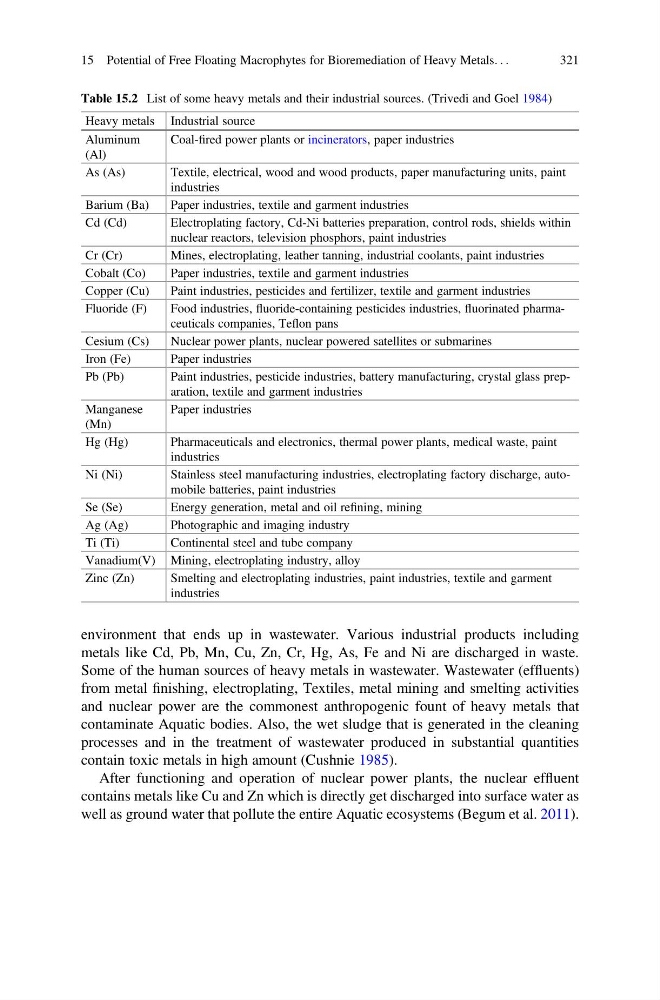
Table 15.2 List of some heavy metals and their industrial sources. (Trivedi and Goel 1984)
Heavy metals Industrial source
Aluminum
(Al)
Coal-fired power plants or incinerators, paper industries
As (As)
Textile, electrical, wood and wood products, paper manufacturing units, paint
industries
Barium (Ba)
Paper industries, textile and garment industries
Cd (Cd)
Electroplating factory, Cd-Ni batteries preparation, control rods, shields within
nuclear reactors, television phosphors, paint industries
Cr (Cr)
Mines, electroplating, leather tanning, industrial coolants, paint industries
Cobalt (Co)
Paper industries, textile and garment industries
Copper (Cu)
Paint industries, pesticides and fertilizer, textile and garment industries
Fluoride (F)
Food industries, fluoride-containing pesticides industries, fluorinated pharmaceuticals companies, Teflon pans
Cesium (Cs)
Nuclear power plants, nuclear powered satellites or submarines
Iron (Fe)
Paper industries
Pb (Pb)
Paint industries, pesticide industries, battery manufacturing, crystal glass preparation, textile and garment industries
Manganese
(Mn)
Paper industries
Hg (Hg)
Pharmaceuticals and electronics, thermal power plants, medical waste, paint
industries
Ni (Ni)
Stainless steel manufacturing industries, electroplating factory discharge, automobile batteries, paint industries
Se (Se)
Energy generation, metal and oil refining, mining
Ag (Ag)
Photographic and imaging industry
Ti (Ti)
Continental steel and tube company
Vanadium(V) Mining, electroplating industry, alloy
Zinc (Zn)
Smelting and electroplating industries, paint industries, textile and garment
industries
15 Potential of Free Floating Macrophytes for Bioremediation of Heavy Metals. . .
321
metals like Cd, Pb, Mn, Cu, Zn, Cr, Hg, As, Fe and Ni are discharged in waste.
Some of the human sources of heavy metals in wastewater. Wastewater (effluents)
from metal finishing, electroplating, Textiles, metal mining and smelting activities
and nuclear power are the commonest anthropogenic fount of heavy metals that
contaminate Aquatic bodies. Also, the wet sludge that is generated in the cleaning
processes and in the treatment of wastewater produced in substantial quantities
contain toxic metals in high amount (Cushnie 1985).
After functioning and operation of nuclear power plants, the nuclear effluent
contains metals like Cu and Zn which is directly get discharged into surface water as
well as ground water that pollute the entire Aquatic ecosystems (Begum et al. 2011).
Table 15.2 List of some heavy metals and their industrial sources. (Trivedi and Goel 1984)
Heavy metals Industrial source
Aluminum
(Al)
Coal-fired power plants or incinerators, paper industries
As (As)
Textile, electrical, wood and wood products, paper manufacturing units, paint
industries
Barium (Ba)
Paper industries, textile and garment industries
Cd (Cd)
Electroplating factory, Cd-Ni batteries preparation, control rods, shields within
nuclear reactors, television phosphors, paint industries
Cr (Cr)
Mines, electroplating, leather tanning, industrial coolants, paint industries
Cobalt (Co)
Paper industries, textile and garment industries
Copper (Cu)
Paint industries, pesticides and fertilizer, textile and garment industries
Fluoride (F)
Food industries, fluoride-containing pesticides industries, fluorinated pharmaceuticals companies, Teflon pans
Cesium (Cs)
Nuclear power plants, nuclear powered satellites or submarines
Iron (Fe)
Paper industries
Pb (Pb)
Paint industries, pesticide industries, battery manufacturing, crystal glass preparation, textile and garment industries
Manganese
(Mn)
Paper industries
Hg (Hg)
Pharmaceuticals and electronics, thermal power plants, medical waste, paint
industries
Ni (Ni)
Stainless steel manufacturing industries, electroplating factory discharge, automobile batteries, paint industries
Se (Se)
Energy generation, metal and oil refining, mining
Ag (Ag)
Photographic and imaging industry
Ti (Ti)
Continental steel and tube company
Vanadium(V) Mining, electroplating industry, alloy
Zinc (Zn)
Smelting and electroplating industries, paint industries, textile and garment
industries
15 Potential of Free Floating Macrophytes for Bioremediation of Heavy Metals. . .
321