

This chapter describes bioleaching techniques for removing heavy metals from
the sludge generated by e-waste treatment. Specifically, it considers the sources of
various e-waste sludges and their heavy metal contents, the microbial species
involved in bioleaching, the conditions and optimization for bioleaching, and mechanisms of bioleaching. Related effects are discussed.
2 Bioleaching and Extremophiles
Both pyrometallurgy and hydrometallurgy are favorable for efficient and rapid and
treatment of metal-bearing sludge. These processes use highly acidic environments
and are done at elevated temperatures (Ilyas et al. 2013). The natural habitats of
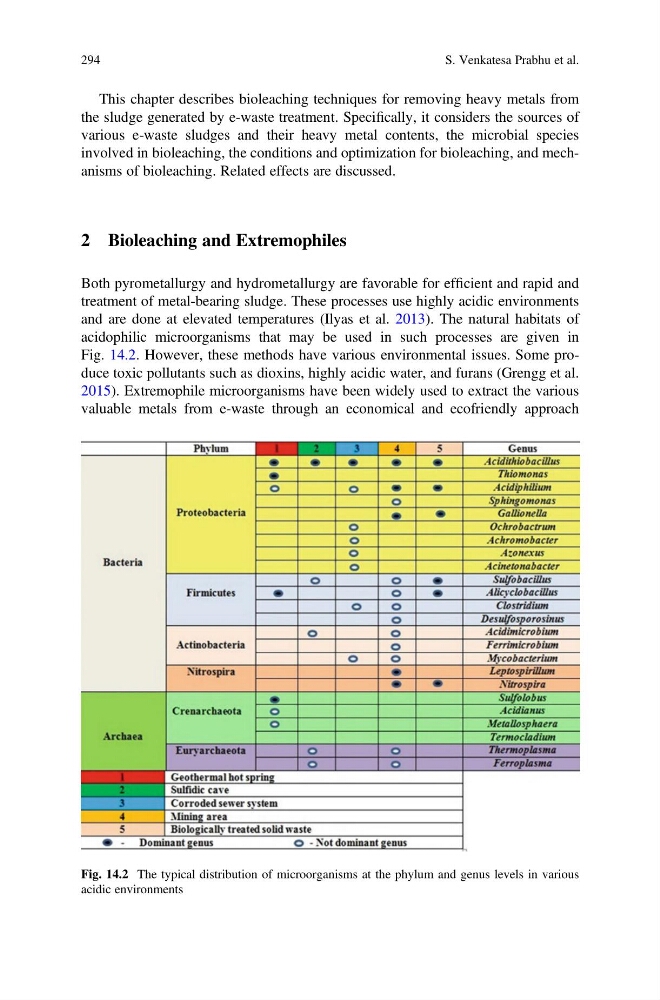
acidophilic microorganisms that may be used in such processes are given in
Fig. 14.2. However, these methods have various environmental issues. Some produce toxic pollutants such as dioxins, highly acidic water, and furans (Grengg et al.
2015). Extremophile microorganisms have been widely used to extract the various
valuable metals from e-waste through an economical and ecofriendly approach
Fig. 14.2 The typical distribution of microorganisms at the phylum and genus levels in various
acidic environments
294
S. Venkatesa Prabhu et al.
the sludge generated by e-waste treatment. Specifically, it considers the sources of
various e-waste sludges and their heavy metal contents, the microbial species
involved in bioleaching, the conditions and optimization for bioleaching, and mechanisms of bioleaching. Related effects are discussed.
2 Bioleaching and Extremophiles
Both pyrometallurgy and hydrometallurgy are favorable for efficient and rapid and
treatment of metal-bearing sludge. These processes use highly acidic environments
and are done at elevated temperatures (Ilyas et al. 2013). The natural habitats of
acidophilic microorganisms that may be used in such processes are given in
Fig. 14.2. However, these methods have various environmental issues. Some produce toxic pollutants such as dioxins, highly acidic water, and furans (Grengg et al.
2015). Extremophile microorganisms have been widely used to extract the various
valuable metals from e-waste through an economical and ecofriendly approach
Fig. 14.2 The typical distribution of microorganisms at the phylum and genus levels in various
acidic environments
294
S. Venkatesa Prabhu et al.