

8 Phycoremediation of Heavy Metals
Heavy metals are a stable contaminant as it cannot be degraded or destroyed by any
chemical or biological process. It can only be able to removed and contained using
physico-chemicals and biological methods. Therefore, to adapt or survive to the
toxic heavy metals, algae have developed extensive adaptation mechanisms (extracellular and intercellular) (Kumar et al. 2015). Moreover, it performs the specific
mechanism to uptake the essential heavy metals required for their cell growth. Algae
can bind metal ions, thus it can be used effectively to clean the metal contaminated
medium especially in industrial effluent. Tables 13.1 and 13.2 indicate some
microalgae and macroalgae used for the removal of heavy metals from the previous
studies. Most of the studies were evidence in aqueous solutions and synthetic
wastewater while real industrial effluent is limited. The efficiency of metal absorption was found to be different in macro and microalgae strains (Tables 13.1 and
13.2). The 100% removal efficiency was achieved using microalgae of Scenedesmus
obliquus against cadmium (Chen et al. 2012), and macroalgae of Palmaria palmate
and Pelvetia canaliculata against lead and chromium, respectively (Prasher et al.
2004; Hackbarth et al. 2016). A minimum of 2% removal was observed using
microalgae of Botryococcus sp., against Cd (Onalo et al. 2014), whereas in the
case of macroalgae (Jania rubens) showed a minimum of 54% Hg removal
(Anastopoulos and Kyzas 2015).
Besides, metal biosorption via live cells and dead cells has been differing mainly
in duration of adsorption however; ion exchange is the mutual process responsible in
both biosorbents largely. Most of the previous literature also preferred dead biomass
for the biosorption process due to its reduced time (a maximum of 30 min is enough
to absorb 90% heavy metal) possibility in recycling and reuse of the biomass and
does not require nutrients and will work in extreme environments. Whereas in living
algal cell, sorption potential is limited, needs to provide nutrients, and depends on
growth capacity and conditions of algal strain.
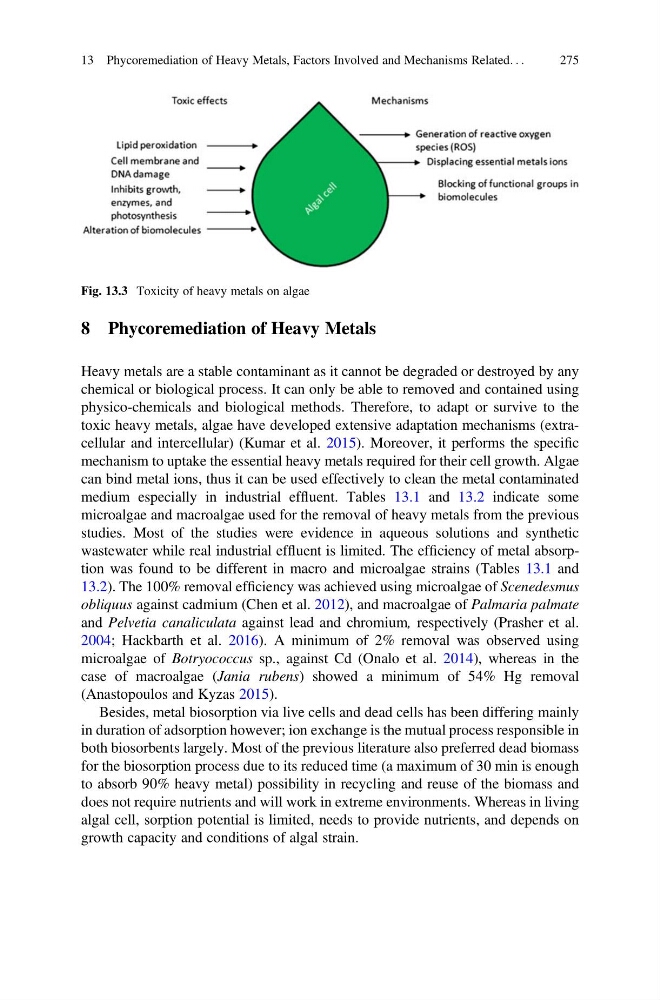
Fig. 13.3 Toxicity of heavy metals on algae
13 Phycoremediation of Heavy Metals, Factors Involved and Mechanisms Related. . .
275
Heavy metals are a stable contaminant as it cannot be degraded or destroyed by any
chemical or biological process. It can only be able to removed and contained using
physico-chemicals and biological methods. Therefore, to adapt or survive to the
toxic heavy metals, algae have developed extensive adaptation mechanisms (extracellular and intercellular) (Kumar et al. 2015). Moreover, it performs the specific
mechanism to uptake the essential heavy metals required for their cell growth. Algae
can bind metal ions, thus it can be used effectively to clean the metal contaminated
medium especially in industrial effluent. Tables 13.1 and 13.2 indicate some
microalgae and macroalgae used for the removal of heavy metals from the previous
studies. Most of the studies were evidence in aqueous solutions and synthetic
wastewater while real industrial effluent is limited. The efficiency of metal absorption was found to be different in macro and microalgae strains (Tables 13.1 and
13.2). The 100% removal efficiency was achieved using microalgae of Scenedesmus
obliquus against cadmium (Chen et al. 2012), and macroalgae of Palmaria palmate
and Pelvetia canaliculata against lead and chromium, respectively (Prasher et al.
2004; Hackbarth et al. 2016). A minimum of 2% removal was observed using
microalgae of Botryococcus sp., against Cd (Onalo et al. 2014), whereas in the
case of macroalgae (Jania rubens) showed a minimum of 54% Hg removal
(Anastopoulos and Kyzas 2015).
Besides, metal biosorption via live cells and dead cells has been differing mainly
in duration of adsorption however; ion exchange is the mutual process responsible in
both biosorbents largely. Most of the previous literature also preferred dead biomass
for the biosorption process due to its reduced time (a maximum of 30 min is enough
to absorb 90% heavy metal) possibility in recycling and reuse of the biomass and
does not require nutrients and will work in extreme environments. Whereas in living
algal cell, sorption potential is limited, needs to provide nutrients, and depends on
growth capacity and conditions of algal strain.
Fig. 13.3 Toxicity of heavy metals on algae
13 Phycoremediation of Heavy Metals, Factors Involved and Mechanisms Related. . .
275