

ions by the oxidation and reduction process simultaneously in the anode and cathode
chambers.
Anode Oxidation
ð
Þ: 2H 2 O ! 4H
þ
þ O 2 þ 4e
À
ð11:1Þ
Cathode Reduction
ð
Þ: 2H 2 O þ 2e
À
! H 2 þ 2OH
À
ð11:2Þ
The process of EK-bioremediation showed promising results in the removal of
oxyfluorfen from 0.11 up to 0.17 mg/kg/day than the single process of bioremediation (Barba et al. 2018). EK-remediation has also been combined with
phytoremediation for the removal of contaminants from contaminated soil. Feasible
removal of lead, arsenic, and cesium from contaminated paddy soil was evaluated by
Mao et al. (2016), coupling EK-remediation with phytoremediation. The germination and growth of plant, which is hindered due to the contaminated soil, was favored
through EK-phytoremediation, using ryegrass with significant removal of heavy
metals and polycyclic aromatic hydrocarbons (Acosta-Santoyo et al. 2017). However, the EK process can also pose a limitation in treating soil contaminants.
Deposition of hardness in the electrode and reduction in the motility of bacterial
cells can occur, if a high amount of calcium and magnesium are present in the
contaminated soil, leading to inefficient removal (Annamalai and Sundaram 2020).
2.2 Nanobioremediation
Various nanoparticles have played a significant role in the treatment of pollutants in
the environment. The different properties of nanoparticles are considered to be
useful in the mechanism of bioremediation. The large surface area enhances
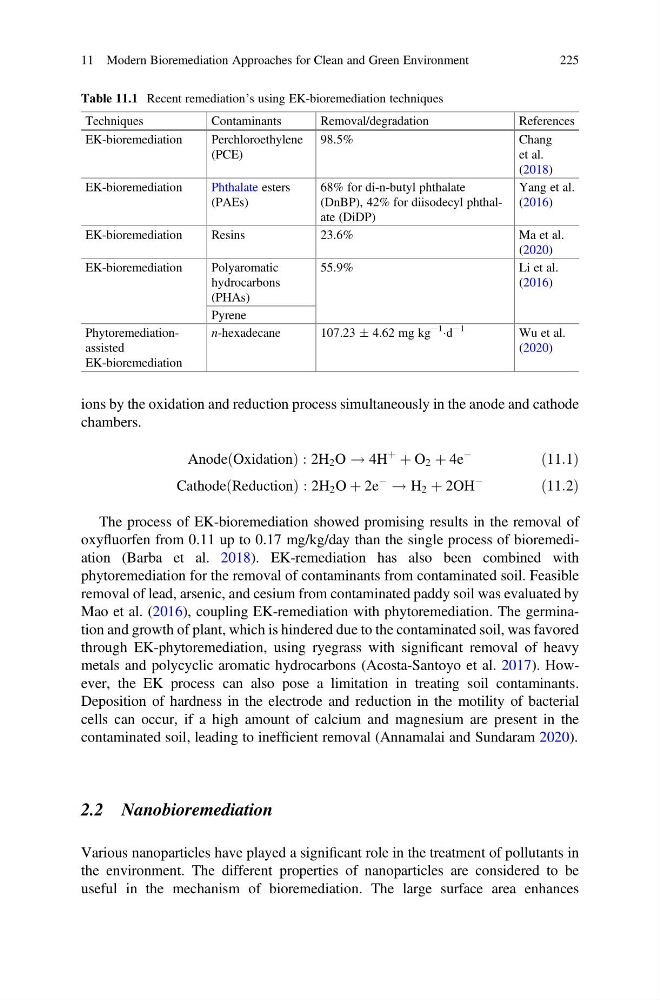
Table 11.1 Recent remediation’s using EK-bioremediation techniques
Techniques
Contaminants
Removal/degradation
References
EK-bioremediation
Perchloroethylene
(PCE)
98.5%
Chang
et al.
(2018)
EK-bioremediation
Phthalate esters
(PAEs)
68% for di-n-butyl phthalate
(DnBP), 42% for diisodecyl phthalate (DiDP)
Yang et al.
(2016)
EK-bioremediation
Resins
23.6%
Ma et al.
(2020)
EK-bioremediation
Polyaromatic
hydrocarbons
(PHAs)
55.9%
Li et al.
(2016)
Pyrene
Phytoremediationassisted
EK-bioremediation
n-hexadecane
107.23 Æ 4.62 mg kg
À1
Ád
À1
Wu et al.
(2020)
11 Modern Bioremediation Approaches for Clean and Green Environment
225
chambers.
Anode Oxidation
ð
Þ: 2H 2 O ! 4H
þ
þ O 2 þ 4e
À
ð11:1Þ
Cathode Reduction
ð
Þ: 2H 2 O þ 2e
À
! H 2 þ 2OH
À
ð11:2Þ
The process of EK-bioremediation showed promising results in the removal of
oxyfluorfen from 0.11 up to 0.17 mg/kg/day than the single process of bioremediation (Barba et al. 2018). EK-remediation has also been combined with
phytoremediation for the removal of contaminants from contaminated soil. Feasible
removal of lead, arsenic, and cesium from contaminated paddy soil was evaluated by
Mao et al. (2016), coupling EK-remediation with phytoremediation. The germination and growth of plant, which is hindered due to the contaminated soil, was favored
through EK-phytoremediation, using ryegrass with significant removal of heavy
metals and polycyclic aromatic hydrocarbons (Acosta-Santoyo et al. 2017). However, the EK process can also pose a limitation in treating soil contaminants.
Deposition of hardness in the electrode and reduction in the motility of bacterial
cells can occur, if a high amount of calcium and magnesium are present in the
contaminated soil, leading to inefficient removal (Annamalai and Sundaram 2020).
2.2 Nanobioremediation
Various nanoparticles have played a significant role in the treatment of pollutants in
the environment. The different properties of nanoparticles are considered to be
useful in the mechanism of bioremediation. The large surface area enhances
Table 11.1 Recent remediation’s using EK-bioremediation techniques
Techniques
Contaminants
Removal/degradation
References
EK-bioremediation
Perchloroethylene
(PCE)
98.5%
Chang
et al.
(2018)
EK-bioremediation
Phthalate esters
(PAEs)
68% for di-n-butyl phthalate
(DnBP), 42% for diisodecyl phthalate (DiDP)
Yang et al.
(2016)
EK-bioremediation
Resins
23.6%
Ma et al.
(2020)
EK-bioremediation
Polyaromatic
hydrocarbons
(PHAs)
55.9%
Li et al.
(2016)
Pyrene
Phytoremediationassisted
EK-bioremediation
n-hexadecane
107.23 Æ 4.62 mg kg
À1
Ád
À1
Wu et al.
(2020)
11 Modern Bioremediation Approaches for Clean and Green Environment
225