

or may not contain cations (Buthelezi et al. 2009; Li et al. 2009; Ma et al. 2008;
Nontembiso et al. 2011). Bacterial isolates, which include Bacillus subtilis,
Exiguobacterium acetylicum, Klebsiella terrigena, Staphylococcus aureus, Pseudomonas pseudoalcaligenes, and Pseudomonas plecoglossicida, were capable of production of EPS, and EPS from these bacteria at the concentration of 10 mgL
À1
increases turbidity from 84.1 to 93.6% of river water (Buthelezi et al. 2009).
Similarly, EPS from Bacillus sp. was studied for the jar tests to compare the
kaolin turbidity removal potential (Ma et al. 2008). This experimental study reveals
efficiency of turbidity on bar with other polymers: EPS (86%), Al 2 (SO 4 ) 3 (95%), and
Fe 2 (SO 4 ) 3 (96%). When EPS was mixed with Fe 2 (SO 4 ) 3 , it showed that there is
significant improvement in raw water treatment. Another notable report is there is no
residual ferric or aluminum ion accumulation noticed when it was mixed with EPS
after treatment of raw water. Li et al. (2009) reported that EPS from Bacillus
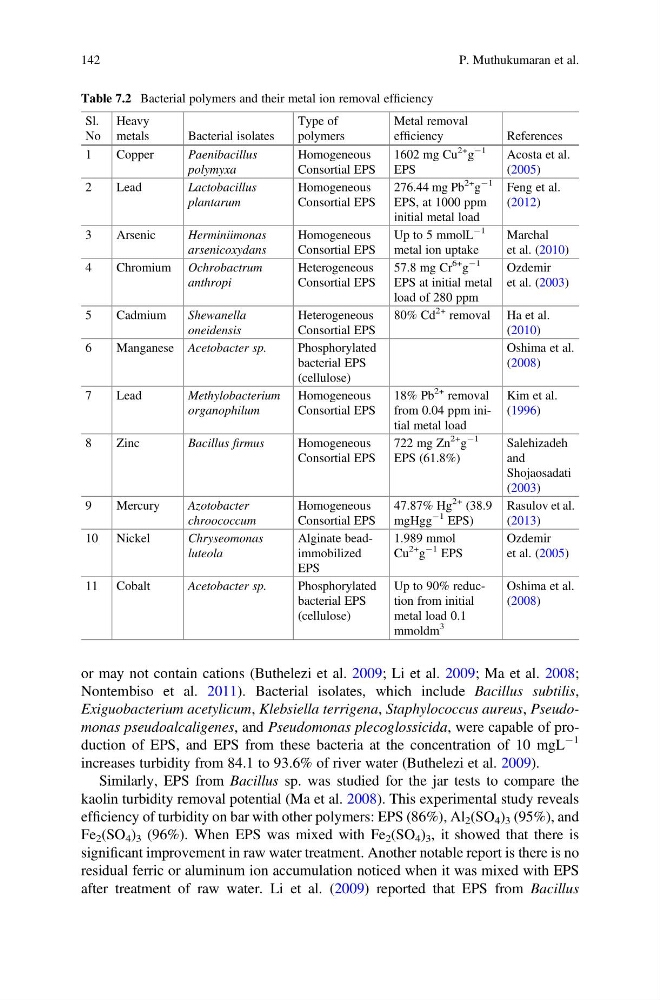
Table 7.2 Bacterial polymers and their metal ion removal efficiency
Sl.
No
Heavy
metals
Bacterial isolates
Type of
polymers
Metal removal
efficiency
References
1
Copper
Paenibacillus
polymyxa
Homogeneous
Consortial EPS
1602 mg Cu
2+ g
À1
EPS
Acosta et al.
(2005)
2
Lead
Lactobacillus
plantarum
Homogeneous
Consortial EPS
276.44 mg Pb
2+ g
À1
EPS, at 1000 ppm
initial metal load
Feng et al.
(2012)
3
Arsenic
Herminiimonas
arsenicoxydans
Homogeneous
Consortial EPS
Up to 5 mmolL
À1
metal ion uptake
Marchal
et al. (2010)
4
Chromium Ochrobactrum
anthropi
Heterogeneous
Consortial EPS
57.8 mg Cr
6+ g
À1
EPS at initial metal
load of 280 ppm
Ozdemir
et al. (2003)
5
Cadmium
Shewanella
oneidensis
Heterogeneous
Consortial EPS
80% Cd
2+ removal Ha et al.
(2010)
6
Manganese Acetobacter sp.
Phosphorylated
bacterial EPS
(cellulose)
Oshima et al.
(2008)
7
Lead
Methylobacterium
organophilum
Homogeneous
Consortial EPS
18% Pb
2+ removal
from 0.04 ppm initial metal load
Kim et al.
(1996)
8
Zinc
Bacillus firmus
Homogeneous
Consortial EPS
722 mg Zn
2+ g
À1
EPS (61.8%)
Salehizadeh
and
Shojaosadati
(2003)
9
Mercury
Azotobacter
chroococcum
Homogeneous
Consortial EPS
47.87% Hg
2+ (38.9
mgHgg
À1 EPS)
Rasulov et al.
(2013)
10 Nickel
Chryseomonas
luteola
Alginate beadimmobilized
EPS
1.989 mmol
Cu
2+ g
À1 EPS
Ozdemir
et al. (2005)
11 Cobalt
Acetobacter sp.
Phosphorylated
bacterial EPS
(cellulose)
Up to 90% reduction from initial
metal load 0.1
mmoldm
3
Oshima et al.
(2008)
142
P. Muthukumaran et al.
Nontembiso et al. 2011). Bacterial isolates, which include Bacillus subtilis,
Exiguobacterium acetylicum, Klebsiella terrigena, Staphylococcus aureus, Pseudomonas pseudoalcaligenes, and Pseudomonas plecoglossicida, were capable of production of EPS, and EPS from these bacteria at the concentration of 10 mgL
À1
increases turbidity from 84.1 to 93.6% of river water (Buthelezi et al. 2009).
Similarly, EPS from Bacillus sp. was studied for the jar tests to compare the
kaolin turbidity removal potential (Ma et al. 2008). This experimental study reveals
efficiency of turbidity on bar with other polymers: EPS (86%), Al 2 (SO 4 ) 3 (95%), and
Fe 2 (SO 4 ) 3 (96%). When EPS was mixed with Fe 2 (SO 4 ) 3 , it showed that there is
significant improvement in raw water treatment. Another notable report is there is no
residual ferric or aluminum ion accumulation noticed when it was mixed with EPS
after treatment of raw water. Li et al. (2009) reported that EPS from Bacillus
Table 7.2 Bacterial polymers and their metal ion removal efficiency
Sl.
No
Heavy
metals
Bacterial isolates
Type of
polymers
Metal removal
efficiency
References
1
Copper
Paenibacillus
polymyxa
Homogeneous
Consortial EPS
1602 mg Cu
2+ g
À1
EPS
Acosta et al.
(2005)
2
Lead
Lactobacillus
plantarum
Homogeneous
Consortial EPS
276.44 mg Pb
2+ g
À1
EPS, at 1000 ppm
initial metal load
Feng et al.
(2012)
3
Arsenic
Herminiimonas
arsenicoxydans
Homogeneous
Consortial EPS
Up to 5 mmolL
À1
metal ion uptake
Marchal
et al. (2010)
4
Chromium Ochrobactrum
anthropi
Heterogeneous
Consortial EPS
57.8 mg Cr
6+ g
À1
EPS at initial metal
load of 280 ppm
Ozdemir
et al. (2003)
5
Cadmium
Shewanella
oneidensis
Heterogeneous
Consortial EPS
80% Cd
2+ removal Ha et al.
(2010)
6
Manganese Acetobacter sp.
Phosphorylated
bacterial EPS
(cellulose)
Oshima et al.
(2008)
7
Lead
Methylobacterium
organophilum
Homogeneous
Consortial EPS
18% Pb
2+ removal
from 0.04 ppm initial metal load
Kim et al.
(1996)
8
Zinc
Bacillus firmus
Homogeneous
Consortial EPS
722 mg Zn
2+ g
À1
EPS (61.8%)
Salehizadeh
and
Shojaosadati
(2003)
9
Mercury
Azotobacter
chroococcum
Homogeneous
Consortial EPS
47.87% Hg
2+ (38.9
mgHgg
À1 EPS)
Rasulov et al.
(2013)
10 Nickel
Chryseomonas
luteola
Alginate beadimmobilized
EPS
1.989 mmol
Cu
2+ g
À1 EPS
Ozdemir
et al. (2005)
11 Cobalt
Acetobacter sp.
Phosphorylated
bacterial EPS
(cellulose)
Up to 90% reduction from initial
metal load 0.1
mmoldm
3
Oshima et al.
(2008)
142
P. Muthukumaran et al.