

advantages, such as chemical stability and less reactivity with organic nitrogenous
contaminants. The required concentration shoots up when the turbidity increases. It
is considered to be more effective for water containing sludges. The usage of iodine
as a disinfectant is restricted because of the cost, and it cannot be applied to a large
system (White 1992; Howard et al. 2000).
2.3 Silver
Recently, silver has been proven to be an effective antibacterial agent against
microbes since the times of ancient Greeks. It can be added in the form of salt (silver
nitrate), colloidal suspension, and a small bed of silver (Srinivasan et al. 2013). For
effective usage, silver can be deposited on the surface of porous carbon to inactivate
microbes. Mostly, the support could be either ceramic or polymeric materials. These
kinds of systems have been established against both gram-positive and gramnegative bacteria, which shows an almost 100% reduction in bacterial colonies. In
this case, several mechanisms have been proposed in the literature to inactivate
microbes such as cell wall rupture, generation of reactive oxygen species, and
deactivation of proteins (Klueh et al. 2000). The use of silver as a disinfectant has
become popular in most of European countries and the USA, and it is accepted for
the bacteriological quality of stored water.
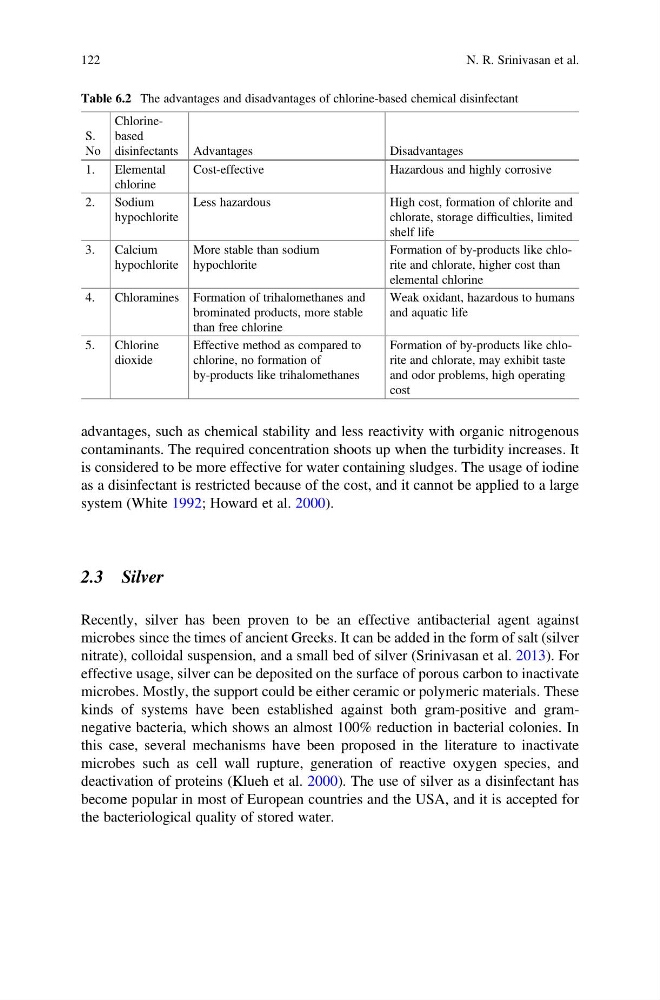
Table 6.2 The advantages and disadvantages of chlorine-based chemical disinfectant
S.
No
Chlorinebased
disinfectants Advantages
Disadvantages
1.
Elemental
chlorine
Cost-effective
Hazardous and highly corrosive
2.
Sodium
hypochlorite
Less hazardous
High cost, formation of chlorite and
chlorate, storage difficulties, limited
shelf life
3.
Calcium
hypochlorite
More stable than sodium
hypochlorite
Formation of by-products like chlorite and chlorate, higher cost than
elemental chlorine
4.
Chloramines Formation of trihalomethanes and
brominated products, more stable
than free chlorine
Weak oxidant, hazardous to humans
and aquatic life
5.
Chlorine
dioxide
Effective method as compared to
chlorine, no formation of
by-products like trihalomethanes
Formation of by-products like chlorite and chlorate, may exhibit taste
and odor problems, high operating
cost
122
N. R. Srinivasan et al.
contaminants. The required concentration shoots up when the turbidity increases. It
is considered to be more effective for water containing sludges. The usage of iodine
as a disinfectant is restricted because of the cost, and it cannot be applied to a large
system (White 1992; Howard et al. 2000).
2.3 Silver
Recently, silver has been proven to be an effective antibacterial agent against
microbes since the times of ancient Greeks. It can be added in the form of salt (silver
nitrate), colloidal suspension, and a small bed of silver (Srinivasan et al. 2013). For
effective usage, silver can be deposited on the surface of porous carbon to inactivate
microbes. Mostly, the support could be either ceramic or polymeric materials. These
kinds of systems have been established against both gram-positive and gramnegative bacteria, which shows an almost 100% reduction in bacterial colonies. In
this case, several mechanisms have been proposed in the literature to inactivate
microbes such as cell wall rupture, generation of reactive oxygen species, and
deactivation of proteins (Klueh et al. 2000). The use of silver as a disinfectant has
become popular in most of European countries and the USA, and it is accepted for
the bacteriological quality of stored water.
Table 6.2 The advantages and disadvantages of chlorine-based chemical disinfectant
S.
No
Chlorinebased
disinfectants Advantages
Disadvantages
1.
Elemental
chlorine
Cost-effective
Hazardous and highly corrosive
2.
Sodium
hypochlorite
Less hazardous
High cost, formation of chlorite and
chlorate, storage difficulties, limited
shelf life
3.
Calcium
hypochlorite
More stable than sodium
hypochlorite
Formation of by-products like chlorite and chlorate, higher cost than
elemental chlorine
4.
Chloramines Formation of trihalomethanes and
brominated products, more stable
than free chlorine
Weak oxidant, hazardous to humans
and aquatic life
5.
Chlorine
dioxide
Effective method as compared to
chlorine, no formation of
by-products like trihalomethanes
Formation of by-products like chlorite and chlorate, may exhibit taste
and odor problems, high operating
cost
122
N. R. Srinivasan et al.