

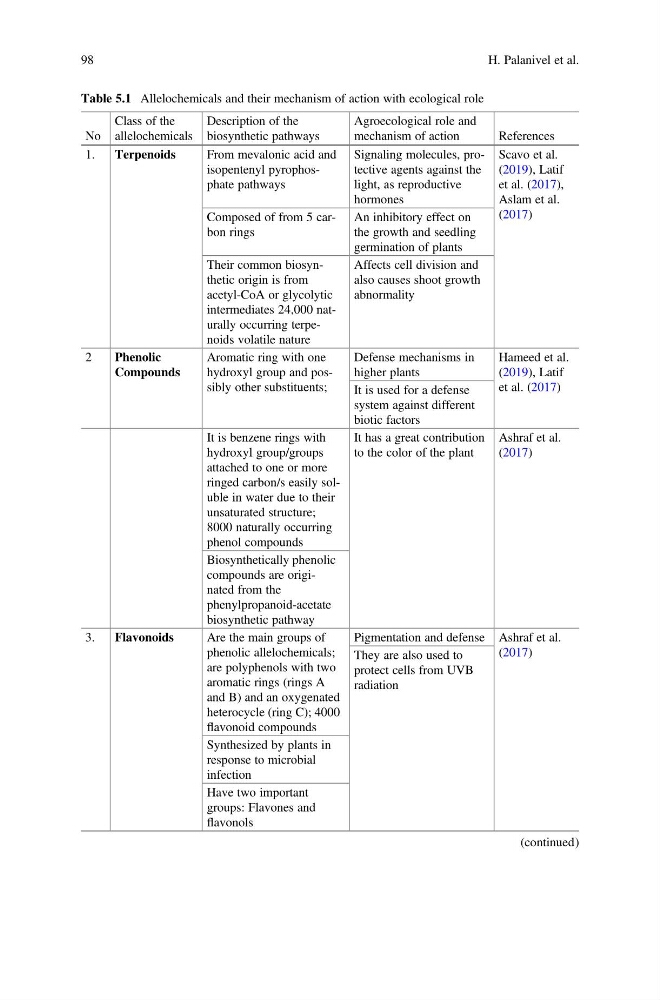
Table 5.1 Allelochemicals and their mechanism of action with ecological role
No
Class of the
allelochemicals
Description of the
biosynthetic pathways
Agroecological role and
mechanism of action
References
1.
Terpenoids
From mevalonic acid and
isopentenyl pyrophosphate pathways
Signaling molecules, protective agents against the
light, as reproductive
hormones
Scavo et al.
(2019), Latif
et al. (2017),
Aslam et al.
(2017)
Composed of from 5 carbon rings
An inhibitory effect on
the growth and seedling
germination of plants
Their common biosynthetic origin is from
acetyl-CoA or glycolytic
intermediates 24,000 naturally occurring terpenoids volatile nature
Affects cell division and
also causes shoot growth
abnormality
2
Phenolic
Compounds
Aromatic ring with one
hydroxyl group and possibly other substituents;
Defense mechanisms in
higher plants
Hameed et al.
(2019), Latif
et al. (2017)
It is used for a defense
system against different
biotic factors
It is benzene rings with
hydroxyl group/groups
attached to one or more
ringed carbon/s easily soluble in water due to their
unsaturated structure;
8000 naturally occurring
phenol compounds
It has a great contribution
to the color of the plant
Ashraf et al.
(2017)
Biosynthetically phenolic
compounds are originated from the
phenylpropanoid-acetate
biosynthetic pathway
3.
Flavonoids
Are the main groups of
phenolic allelochemicals;
are polyphenols with two
aromatic rings (rings A
and B) and an oxygenated
heterocycle (ring C); 4000
flavonoid compounds
Pigmentation and defense Ashraf et al.
(2017)
They are also used to
protect cells from UVB
radiation
Synthesized by plants in
response to microbial
infection
Have two important
groups: Flavones and
flavonols
(continued)
98
H. Palanivel et al.
No
Class of the
allelochemicals
Description of the
biosynthetic pathways
Agroecological role and
mechanism of action
References
1.
Terpenoids
From mevalonic acid and
isopentenyl pyrophosphate pathways
Signaling molecules, protective agents against the
light, as reproductive
hormones
Scavo et al.
(2019), Latif
et al. (2017),
Aslam et al.
(2017)
Composed of from 5 carbon rings
An inhibitory effect on
the growth and seedling
germination of plants
Their common biosynthetic origin is from
acetyl-CoA or glycolytic
intermediates 24,000 naturally occurring terpenoids volatile nature
Affects cell division and
also causes shoot growth
abnormality
2
Phenolic
Compounds
Aromatic ring with one
hydroxyl group and possibly other substituents;
Defense mechanisms in
higher plants
Hameed et al.
(2019), Latif
et al. (2017)
It is used for a defense
system against different
biotic factors
It is benzene rings with
hydroxyl group/groups
attached to one or more
ringed carbon/s easily soluble in water due to their
unsaturated structure;
8000 naturally occurring
phenol compounds
It has a great contribution
to the color of the plant
Ashraf et al.
(2017)
Biosynthetically phenolic
compounds are originated from the
phenylpropanoid-acetate
biosynthetic pathway
3.
Flavonoids
Are the main groups of
phenolic allelochemicals;
are polyphenols with two
aromatic rings (rings A
and B) and an oxygenated
heterocycle (ring C); 4000
flavonoid compounds
Pigmentation and defense Ashraf et al.
(2017)
They are also used to
protect cells from UVB
radiation
Synthesized by plants in
response to microbial
infection
Have two important
groups: Flavones and
flavonols
(continued)
98
H. Palanivel et al.