

73
Anatomy
the 250 different polypeptides present in the axoneme, as estimated by bidimensional electrophoresis, only a few have been associated with a function.
Paraxial Rod
In addition to the 9 + 2 axoneme, algal flagella may contain a number of other structures within the
flagellar membrane. Among those extending through the entire length of the flagella, there is the
paraxial rod, which is known only in the order of Pedinellales (Dictyochophyceae, Ochrophyta),
and in members of the Euglenophyceae and Dinophyceae. Paraxial rod is also termed paraflagellar
rod (PFR). PFRs are complex and highly organized lattice-like structures that run parallel to the
axoneme. Among the different groups, PFRs are structurally and biochemically similar.
In the Pedinellales, the membrane of the single emergent flagellum is expanded into a sheath or
fin supported along the edge by the rod, which is cross-banded. Thanks to the presence of the fin,
these algae are excellent swimmers. Their axoneme beats in a distinct planar wave.
Paraflagellar structures of characteristic appearance are present in some dinoflagellates. A hollow cylinder with the wall composed of helically arranged filaments is present in the single emergent
(longitudinal) flagellum of Noctiluca gametes and in the longitudinal flagellum of both Gyrodinium
lebouriae and Oxyrrhis marina. This rod is about as big as the axoneme in diameter and runs along
the axoneme to which it is attached for almost its entire length. The thin filaments (nanofilaments
with a 2–4-nm diameter) of its highly geometrically organized network are periodically attached to
some of the outer doublet microtubules of the axoneme, which in O. marina is doublet number 4.
A different type of paraxial rod is present in the complex-shaped transverse flagellum of dinoflagellates. This rod takes a nearly straight path along the inner wall of the sulcus and is regularly banded
in the transverse direction. In contrast, the axoneme itself is distinctly helical.
A rod is present in most members of Euglenophyceae. In genera with two emergent flagella,
such as Eutreptia and Eutreptiella, both flagella carry a paraxial rod. In Eutreptiella, where the
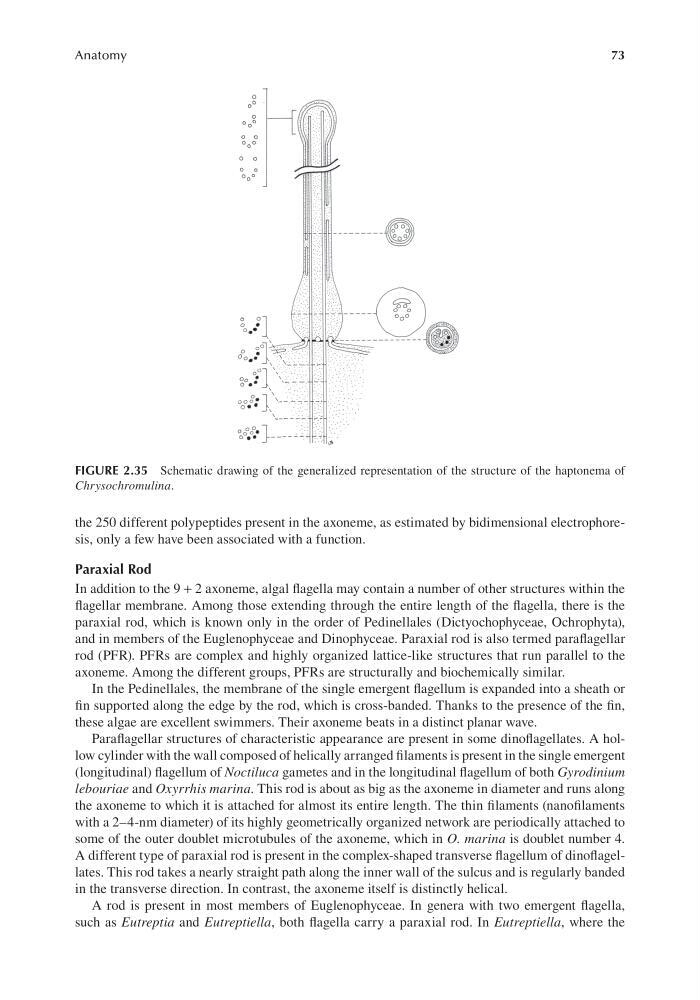
FIGURE 2.35 Schematic drawing of the generalized representation of the structure of the haptonema of
Chrysochromulina.
Anatomy
the 250 different polypeptides present in the axoneme, as estimated by bidimensional electrophoresis, only a few have been associated with a function.
Paraxial Rod
In addition to the 9 + 2 axoneme, algal flagella may contain a number of other structures within the
flagellar membrane. Among those extending through the entire length of the flagella, there is the
paraxial rod, which is known only in the order of Pedinellales (Dictyochophyceae, Ochrophyta),
and in members of the Euglenophyceae and Dinophyceae. Paraxial rod is also termed paraflagellar
rod (PFR). PFRs are complex and highly organized lattice-like structures that run parallel to the
axoneme. Among the different groups, PFRs are structurally and biochemically similar.
In the Pedinellales, the membrane of the single emergent flagellum is expanded into a sheath or
fin supported along the edge by the rod, which is cross-banded. Thanks to the presence of the fin,
these algae are excellent swimmers. Their axoneme beats in a distinct planar wave.
Paraflagellar structures of characteristic appearance are present in some dinoflagellates. A hollow cylinder with the wall composed of helically arranged filaments is present in the single emergent
(longitudinal) flagellum of Noctiluca gametes and in the longitudinal flagellum of both Gyrodinium
lebouriae and Oxyrrhis marina. This rod is about as big as the axoneme in diameter and runs along
the axoneme to which it is attached for almost its entire length. The thin filaments (nanofilaments
with a 2–4-nm diameter) of its highly geometrically organized network are periodically attached to
some of the outer doublet microtubules of the axoneme, which in O. marina is doublet number 4.
A different type of paraxial rod is present in the complex-shaped transverse flagellum of dinoflagellates. This rod takes a nearly straight path along the inner wall of the sulcus and is regularly banded
in the transverse direction. In contrast, the axoneme itself is distinctly helical.
A rod is present in most members of Euglenophyceae. In genera with two emergent flagella,
such as Eutreptia and Eutreptiella, both flagella carry a paraxial rod. In Eutreptiella, where the
FIGURE 2.35 Schematic drawing of the generalized representation of the structure of the haptonema of
Chrysochromulina.