

“Third-country market cooperation” is a Chinese concept whereby Chinese and
foreign companies cooperate economically (i.e., financing, technology transfer,
capacity building) in a third-country market to realize industrial and infrastructure
development and public welfare of the third country. It is a new system of international cooperation that enables cooperation among three countries to achieve an
effect greater than the sum of its parts by improving people’s livelihoods. At present,
China has signed a memorandum of understanding regarding third-country market
cooperation with 14 countries including Japan, Australia, Austria, Belgium, Canada,
France, Italy, the Netherlands, Portugal, South Korea, Singapore, Spain, Switzerland, and the United Kingdom.
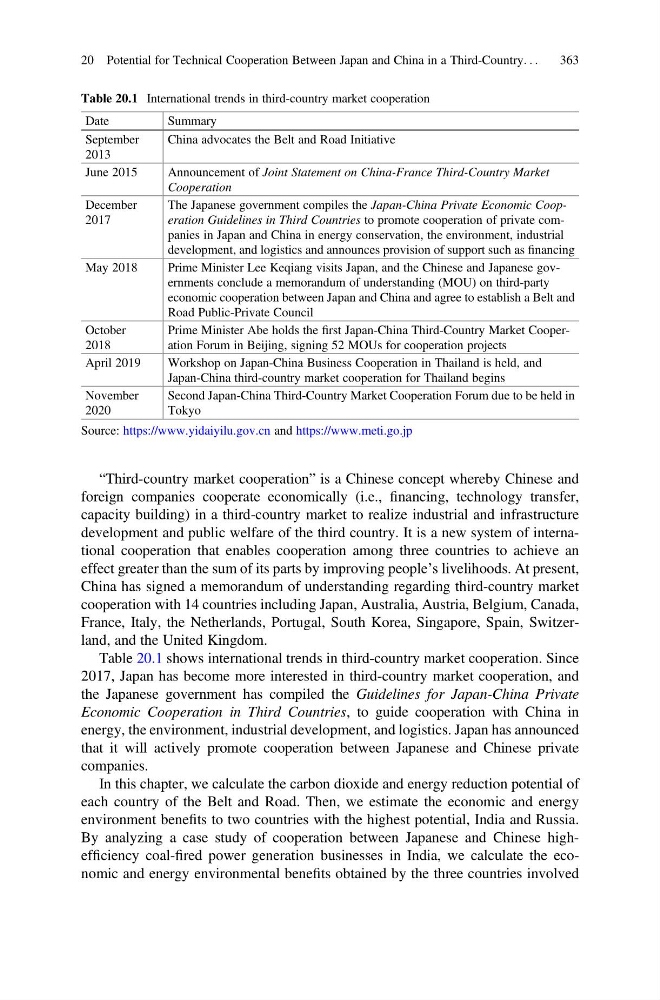
Table 20.1 shows international trends in third-country market cooperation. Since
2017, Japan has become more interested in third-country market cooperation, and
the Japanese government has compiled the Guidelines for Japan-China Private
Economic Cooperation in Third Countries, to guide cooperation with China in
energy, the environment, industrial development, and logistics. Japan has announced
that it will actively promote cooperation between Japanese and Chinese private
companies.
In this chapter, we calculate the carbon dioxide and energy reduction potential of
each country of the Belt and Road. Then, we estimate the economic and energy
environment benefits to two countries with the highest potential, India and Russia.
By analyzing a case study of cooperation between Japanese and Chinese highefficiency coal-fired power generation businesses in India, we calculate the economic and energy environmental benefits obtained by the three countries involved
Table 20.1 International trends in third-country market cooperation
Date
Summary
September
2013
China advocates the Belt and Road Initiative
June 2015
Announcement of Joint Statement on China-France Third-Country Market
Cooperation
December
2017
The Japanese government compiles the Japan-China Private Economic Cooperation Guidelines in Third Countries to promote cooperation of private companies in Japan and China in energy conservation, the environment, industrial
development, and logistics and announces provision of support such as financing
May 2018
Prime Minister Lee Keqiang visits Japan, and the Chinese and Japanese governments conclude a memorandum of understanding (MOU) on third-party
economic cooperation between Japan and China and agree to establish a Belt and
Road Public-Private Council
October
2018
Prime Minister Abe holds the first Japan-China Third-Country Market Cooperation Forum in Beijing, signing 52 MOUs for cooperation projects
April 2019
Workshop on Japan-China Business Cooperation in Thailand is held, and
Japan-China third-country market cooperation for Thailand begins
November
2020
Second Japan-China Third-Country Market Cooperation Forum due to be held in
Tokyo
Source: https://www.yidaiyilu.gov.cn and https://www.meti.go.jp
20 Potential for Technical Cooperation Between Japan and China in a Third-Country. . .
363
foreign companies cooperate economically (i.e., financing, technology transfer,
capacity building) in a third-country market to realize industrial and infrastructure
development and public welfare of the third country. It is a new system of international cooperation that enables cooperation among three countries to achieve an
effect greater than the sum of its parts by improving people’s livelihoods. At present,
China has signed a memorandum of understanding regarding third-country market
cooperation with 14 countries including Japan, Australia, Austria, Belgium, Canada,
France, Italy, the Netherlands, Portugal, South Korea, Singapore, Spain, Switzerland, and the United Kingdom.
Table 20.1 shows international trends in third-country market cooperation. Since
2017, Japan has become more interested in third-country market cooperation, and
the Japanese government has compiled the Guidelines for Japan-China Private
Economic Cooperation in Third Countries, to guide cooperation with China in
energy, the environment, industrial development, and logistics. Japan has announced
that it will actively promote cooperation between Japanese and Chinese private
companies.
In this chapter, we calculate the carbon dioxide and energy reduction potential of
each country of the Belt and Road. Then, we estimate the economic and energy
environment benefits to two countries with the highest potential, India and Russia.
By analyzing a case study of cooperation between Japanese and Chinese highefficiency coal-fired power generation businesses in India, we calculate the economic and energy environmental benefits obtained by the three countries involved
Table 20.1 International trends in third-country market cooperation
Date
Summary
September
2013
China advocates the Belt and Road Initiative
June 2015
Announcement of Joint Statement on China-France Third-Country Market
Cooperation
December
2017
The Japanese government compiles the Japan-China Private Economic Cooperation Guidelines in Third Countries to promote cooperation of private companies in Japan and China in energy conservation, the environment, industrial
development, and logistics and announces provision of support such as financing
May 2018
Prime Minister Lee Keqiang visits Japan, and the Chinese and Japanese governments conclude a memorandum of understanding (MOU) on third-party
economic cooperation between Japan and China and agree to establish a Belt and
Road Public-Private Council
October
2018
Prime Minister Abe holds the first Japan-China Third-Country Market Cooperation Forum in Beijing, signing 52 MOUs for cooperation projects
April 2019
Workshop on Japan-China Business Cooperation in Thailand is held, and
Japan-China third-country market cooperation for Thailand begins
November
2020
Second Japan-China Third-Country Market Cooperation Forum due to be held in
Tokyo
Source: https://www.yidaiyilu.gov.cn and https://www.meti.go.jp
20 Potential for Technical Cooperation Between Japan and China in a Third-Country. . .
363