

sophistication of waste treatment facilities and rising construction costs, wide-area
waste treatment has become popular. Similarly, wide-area recycling is also spreading, as seen in the Eco Town Plan (Ministry of the Environment 2020).
General circulation (global recycling) refers to social and international efforts in
which green consumption is promoted and separate collection systems are
established for waste. In addition, international industries for recycling and disposal
of waste and discarded resources are established to maximize resource utilization
and minimize environmental impact. Ultimately, general circulation aims to realize a
wide-area recycling society that transcends national borders, such as in the China–
Japan–Korea (CJK) circular economy model.
Small and middle circulations are domestic recycling methods, whereas general
circulation is an international recycling method. The global recycling system (GRS)
includes these three types of recycling (Koizumi and Zhou 2005, Koizumi 2006). As
trade becomes increasingly globalized, it is important to build a GRS with international waste movement, in order to maximize resource utilization and to effectively
reduce global emissions.
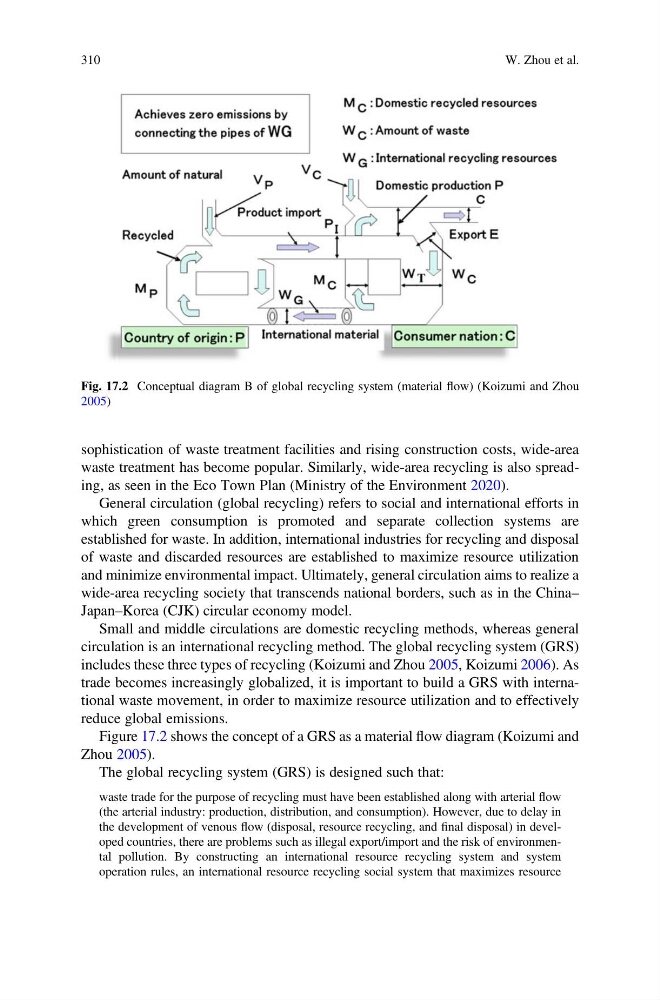
Figure 17.2 shows the concept of a GRS as a material flow diagram (Koizumi and
Zhou 2005).
The global recycling system (GRS) is designed such that:
waste trade for the purpose of recycling must have been established along with arterial flow
(the arterial industry: production, distribution, and consumption). However, due to delay in
the development of venous flow (disposal, resource recycling, and final disposal) in developed countries, there are problems such as illegal export/import and the risk of environmental pollution. By constructing an international resource recycling system and system
operation rules, an international resource recycling social system that maximizes resource
Fig. 17.2 Conceptual diagram B of global recycling system (material flow) (Koizumi and Zhou
2005)
310
W. Zhou et al.
waste treatment has become popular. Similarly, wide-area recycling is also spreading, as seen in the Eco Town Plan (Ministry of the Environment 2020).
General circulation (global recycling) refers to social and international efforts in
which green consumption is promoted and separate collection systems are
established for waste. In addition, international industries for recycling and disposal
of waste and discarded resources are established to maximize resource utilization
and minimize environmental impact. Ultimately, general circulation aims to realize a
wide-area recycling society that transcends national borders, such as in the China–
Japan–Korea (CJK) circular economy model.
Small and middle circulations are domestic recycling methods, whereas general
circulation is an international recycling method. The global recycling system (GRS)
includes these three types of recycling (Koizumi and Zhou 2005, Koizumi 2006). As
trade becomes increasingly globalized, it is important to build a GRS with international waste movement, in order to maximize resource utilization and to effectively
reduce global emissions.
Figure 17.2 shows the concept of a GRS as a material flow diagram (Koizumi and
Zhou 2005).
The global recycling system (GRS) is designed such that:
waste trade for the purpose of recycling must have been established along with arterial flow
(the arterial industry: production, distribution, and consumption). However, due to delay in
the development of venous flow (disposal, resource recycling, and final disposal) in developed countries, there are problems such as illegal export/import and the risk of environmental pollution. By constructing an international resource recycling system and system
operation rules, an international resource recycling social system that maximizes resource
Fig. 17.2 Conceptual diagram B of global recycling system (material flow) (Koizumi and Zhou
2005)
310
W. Zhou et al.