

fossil fuels. As shown in Table 12.1, there are many natural clean energies such as
solar, wind, water, geothermal, and biomass. Various types of power plant have been
developed and their efficiency improved. Using a combination of different types of
power generation systems is important to maintain power stability.
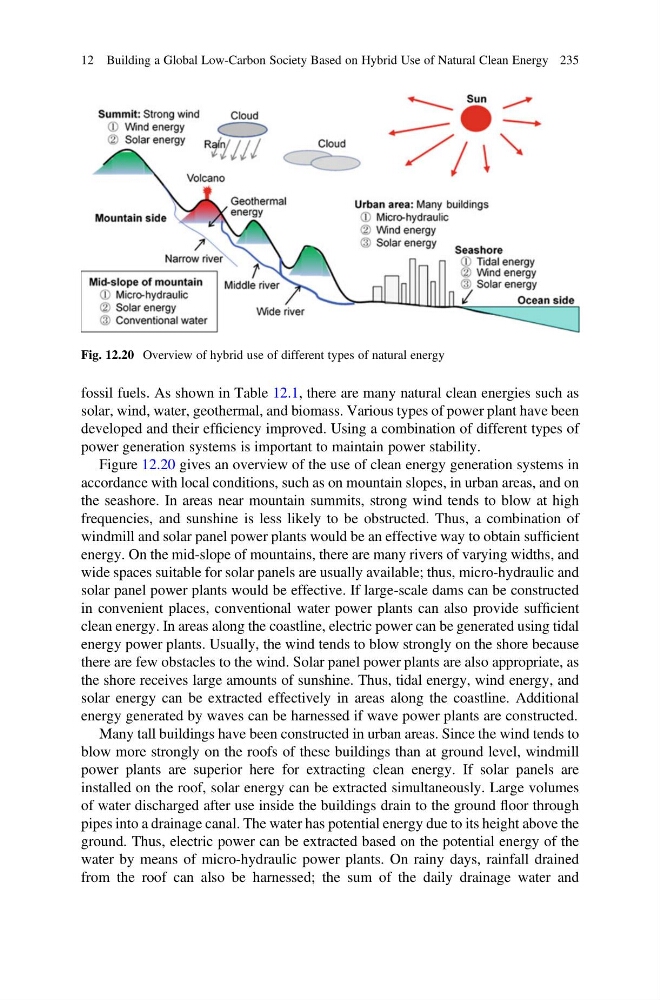
Figure 12.20 gives an overview of the use of clean energy generation systems in
accordance with local conditions, such as on mountain slopes, in urban areas, and on
the seashore. In areas near mountain summits, strong wind tends to blow at high
frequencies, and sunshine is less likely to be obstructed. Thus, a combination of
windmill and solar panel power plants would be an effective way to obtain sufficient
energy. On the mid-slope of mountains, there are many rivers of varying widths, and
wide spaces suitable for solar panels are usually available; thus, micro-hydraulic and
solar panel power plants would be effective. If large-scale dams can be constructed
in convenient places, conventional water power plants can also provide sufficient
clean energy. In areas along the coastline, electric power can be generated using tidal
energy power plants. Usually, the wind tends to blow strongly on the shore because
there are few obstacles to the wind. Solar panel power plants are also appropriate, as
the shore receives large amounts of sunshine. Thus, tidal energy, wind energy, and
solar energy can be extracted effectively in areas along the coastline. Additional
energy generated by waves can be harnessed if wave power plants are constructed.
Many tall buildings have been constructed in urban areas. Since the wind tends to
blow more strongly on the roofs of these buildings than at ground level, windmill
power plants are superior here for extracting clean energy. If solar panels are
installed on the roof, solar energy can be extracted simultaneously. Large volumes
of water discharged after use inside the buildings drain to the ground floor through
pipes into a drainage canal. The water has potential energy due to its height above the
ground. Thus, electric power can be extracted based on the potential energy of the
water by means of micro-hydraulic power plants. On rainy days, rainfall drained
from the roof can also be harnessed; the sum of the daily drainage water and
Fig. 12.20 Overview of hybrid use of different types of natural energy
12 Building a Global Low-Carbon Society Based on Hybrid Use of Natural Clean Energy 235
solar, wind, water, geothermal, and biomass. Various types of power plant have been
developed and their efficiency improved. Using a combination of different types of
power generation systems is important to maintain power stability.
Figure 12.20 gives an overview of the use of clean energy generation systems in
accordance with local conditions, such as on mountain slopes, in urban areas, and on
the seashore. In areas near mountain summits, strong wind tends to blow at high
frequencies, and sunshine is less likely to be obstructed. Thus, a combination of
windmill and solar panel power plants would be an effective way to obtain sufficient
energy. On the mid-slope of mountains, there are many rivers of varying widths, and
wide spaces suitable for solar panels are usually available; thus, micro-hydraulic and
solar panel power plants would be effective. If large-scale dams can be constructed
in convenient places, conventional water power plants can also provide sufficient
clean energy. In areas along the coastline, electric power can be generated using tidal
energy power plants. Usually, the wind tends to blow strongly on the shore because
there are few obstacles to the wind. Solar panel power plants are also appropriate, as
the shore receives large amounts of sunshine. Thus, tidal energy, wind energy, and
solar energy can be extracted effectively in areas along the coastline. Additional
energy generated by waves can be harnessed if wave power plants are constructed.
Many tall buildings have been constructed in urban areas. Since the wind tends to
blow more strongly on the roofs of these buildings than at ground level, windmill
power plants are superior here for extracting clean energy. If solar panels are
installed on the roof, solar energy can be extracted simultaneously. Large volumes
of water discharged after use inside the buildings drain to the ground floor through
pipes into a drainage canal. The water has potential energy due to its height above the
ground. Thus, electric power can be extracted based on the potential energy of the
water by means of micro-hydraulic power plants. On rainy days, rainfall drained
from the roof can also be harnessed; the sum of the daily drainage water and
Fig. 12.20 Overview of hybrid use of different types of natural energy
12 Building a Global Low-Carbon Society Based on Hybrid Use of Natural Clean Energy 235