

Examples of General Lessons Learned as Reported from the Dashboard Tool
Community/Nongovernmental Organization (NGO) relations
Ø Certain communities
are democratic in nature;
thus, choosing large
groups of people to
make decisions related
to a project, rather than a
select few, may be
beneficial.
Ø Respecting local
culture may be key to
the success of the
project.
Ø Define expectations
and capacity of cash
contributions in the
assessment phase.
Ø Importance of involving
local officials (mayor,
president, chief, etc.) to
help gain acceptance and
credibility of EWB-USA
members by the
community as well as
provide maintenance
assistance.
Ø Effective community
interviews/surveys in the
early phase (assessment)
of the project to confirm
needs, develop a data
profile, and facilitate trust
and a long-term working
relationship.
Ø Importance of
communicating EWBUSA’s level of
involvement to the
community and
integrating the
community into the
project.
Ø Expectations of the
NGO to coordinate,
including when EWBUSA chapters are not
present in the country.
Technical
Ø Understanding and
accounting for existing
field conditions and
environment risks, such
as topography,
groundwater, climate
change.
Ø Be prepared for the
unexpected, such as
ground material
inconsistency, rain
affecting construction
progress, etc.
Ø Understanding
availability of local
materials, and
compromises of material
strength properties in
those materials.
Ø Men in the community
may tend to migrate to the
inner cities for work,
resulting in less manual
laborers available locally.
Ø Ensure technology is
appropriate for
community.
Ø Long-term operation
and maintenance plan.
Ø Consider
incorporating hygiene
training in conjunction
with the technical
project, where
applicable.
Logistics/Management
Ø Be constantly aware
of construction safety
(e.g. around
excavations) and
personal protective
equipment (PPE).
Ø Schedule planning,
including general delays
and delivery of
materials/equipment from
local manufacturer or
contractor.
Ø Look up common
building practices in the
region.
Ø Ensure security of
materials.
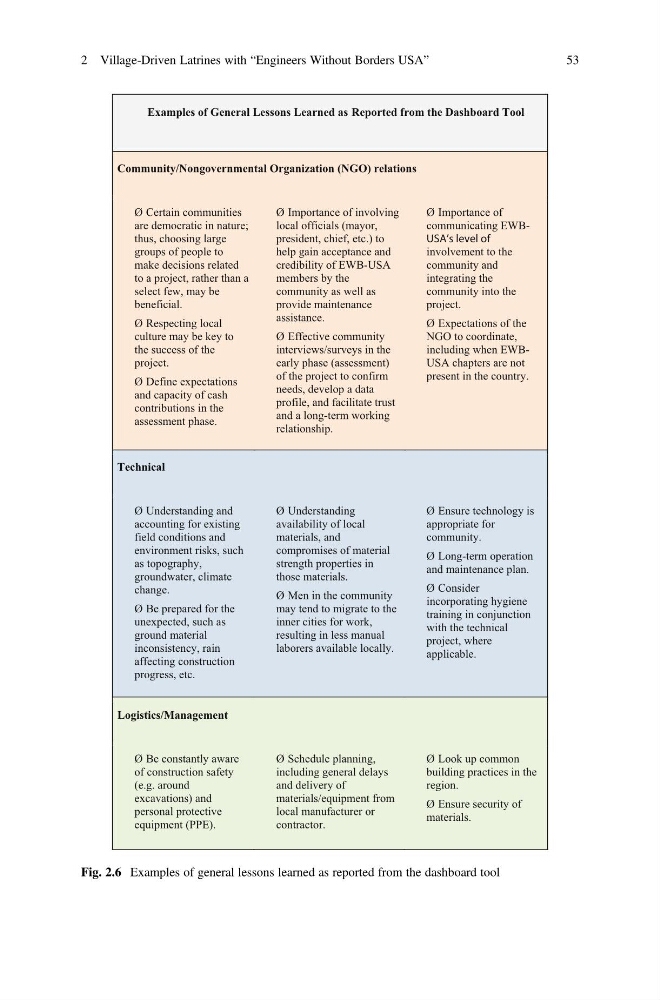
Fig. 2.6 Examples of general lessons learned as reported from the dashboard tool
2 Village-Driven Latrines with “Engineers Without Borders USA”
53
Community/Nongovernmental Organization (NGO) relations
Ø Certain communities
are democratic in nature;
thus, choosing large
groups of people to
make decisions related
to a project, rather than a
select few, may be
beneficial.
Ø Respecting local
culture may be key to
the success of the
project.
Ø Define expectations
and capacity of cash
contributions in the
assessment phase.
Ø Importance of involving
local officials (mayor,
president, chief, etc.) to
help gain acceptance and
credibility of EWB-USA
members by the
community as well as
provide maintenance
assistance.
Ø Effective community
interviews/surveys in the
early phase (assessment)
of the project to confirm
needs, develop a data
profile, and facilitate trust
and a long-term working
relationship.
Ø Importance of
communicating EWBUSA’s level of
involvement to the
community and
integrating the
community into the
project.
Ø Expectations of the
NGO to coordinate,
including when EWBUSA chapters are not
present in the country.
Technical
Ø Understanding and
accounting for existing
field conditions and
environment risks, such
as topography,
groundwater, climate
change.
Ø Be prepared for the
unexpected, such as
ground material
inconsistency, rain
affecting construction
progress, etc.
Ø Understanding
availability of local
materials, and
compromises of material
strength properties in
those materials.
Ø Men in the community
may tend to migrate to the
inner cities for work,
resulting in less manual
laborers available locally.
Ø Ensure technology is
appropriate for
community.
Ø Long-term operation
and maintenance plan.
Ø Consider
incorporating hygiene
training in conjunction
with the technical
project, where
applicable.
Logistics/Management
Ø Be constantly aware
of construction safety
(e.g. around
excavations) and
personal protective
equipment (PPE).
Ø Schedule planning,
including general delays
and delivery of
materials/equipment from
local manufacturer or
contractor.
Ø Look up common
building practices in the
region.
Ø Ensure security of
materials.
Fig. 2.6 Examples of general lessons learned as reported from the dashboard tool
2 Village-Driven Latrines with “Engineers Without Borders USA”
53