

system adjustment of the latrine usage and maintenance. As part of the collaborative mindset of the project process, opportunities can also arise for community
leadership and technical skill-building.
2. Construction Materials. Sourcing local materials and local labor for construction
increases the likelihood that the community will take on ownership and long-term
maintenance.
3. Finances. The financial components of any engineering project are important for
timely project delivery to fulfill the commitments we have made to our community partners, as well as being responsible stewards of donor funding.
Figure 2.6 describes more examples of the lessons learned that can be found using
the dashboard tool.
As noted previously, the high-level metrics that are monitored for performance
and quality include functionality, maintenance, and community capacity. Figure 2.7
shows the current reporting on 37 active EWB-USA sanitation projects on these
three metrics. This reporting is completed by project teams at least 1 year after
implementation is completed. Highlights of the graphs include:
1. Approximately 79 percent of sanitation projects are reported to be functioning as
intended.
2. Approximately 91 percent of sanitation projects are reported as being maintained
by the community.
3. Approximately 96 percent of sanitation projects are reported as the community
having the financial and technical capacity to take on long-term operation and
maintenance of the system.
The following are two recent lessons learned quotes from project teams:
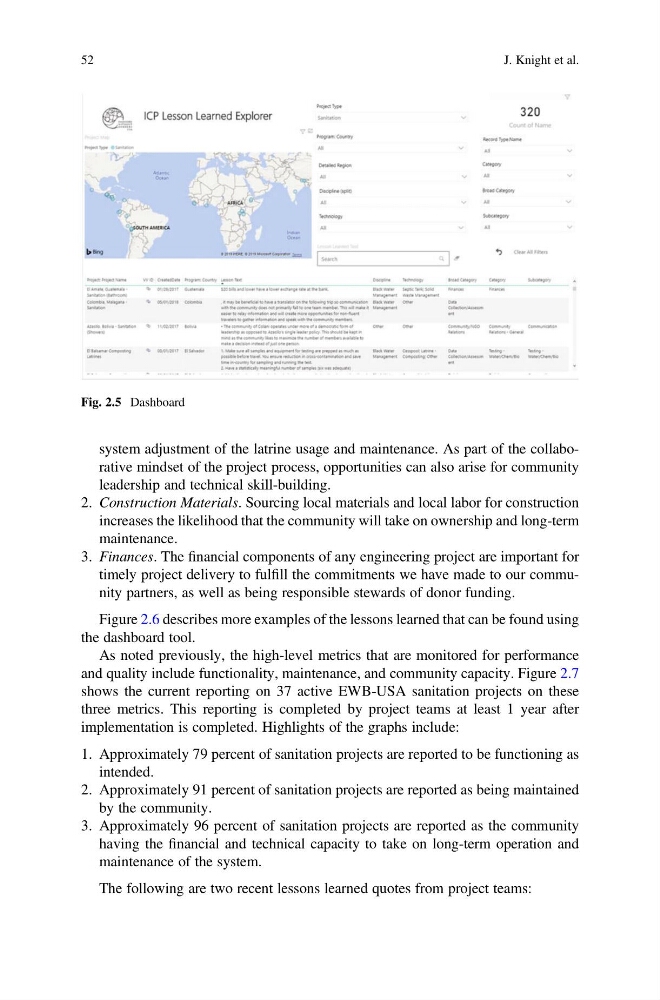
Fig. 2.5 Dashboard
52
J. Knight et al.
leadership and technical skill-building.
2. Construction Materials. Sourcing local materials and local labor for construction
increases the likelihood that the community will take on ownership and long-term
maintenance.
3. Finances. The financial components of any engineering project are important for
timely project delivery to fulfill the commitments we have made to our community partners, as well as being responsible stewards of donor funding.
Figure 2.6 describes more examples of the lessons learned that can be found using
the dashboard tool.
As noted previously, the high-level metrics that are monitored for performance
and quality include functionality, maintenance, and community capacity. Figure 2.7
shows the current reporting on 37 active EWB-USA sanitation projects on these
three metrics. This reporting is completed by project teams at least 1 year after
implementation is completed. Highlights of the graphs include:
1. Approximately 79 percent of sanitation projects are reported to be functioning as
intended.
2. Approximately 91 percent of sanitation projects are reported as being maintained
by the community.
3. Approximately 96 percent of sanitation projects are reported as the community
having the financial and technical capacity to take on long-term operation and
maintenance of the system.
The following are two recent lessons learned quotes from project teams:
Fig. 2.5 Dashboard
52
J. Knight et al.