

H 2 /mol glucose which was produced at 13% NaCl, initial pH 6.8, 35
C, and food to
microorganism ratio of 1.5 after 1 year of acclimatization.
Although dark fermentation with extremely halotolerant bacteria could offer an
affordable process for hydrogen production, the pretreatment cost of the lignocellulosic biomass remains a challenge until now. This research focused on the dark
fermentation process with the isolated extremely halotolerant hydrogen-producing
bacteria from the salt pan and salt-damaged soil and did not cover the part of
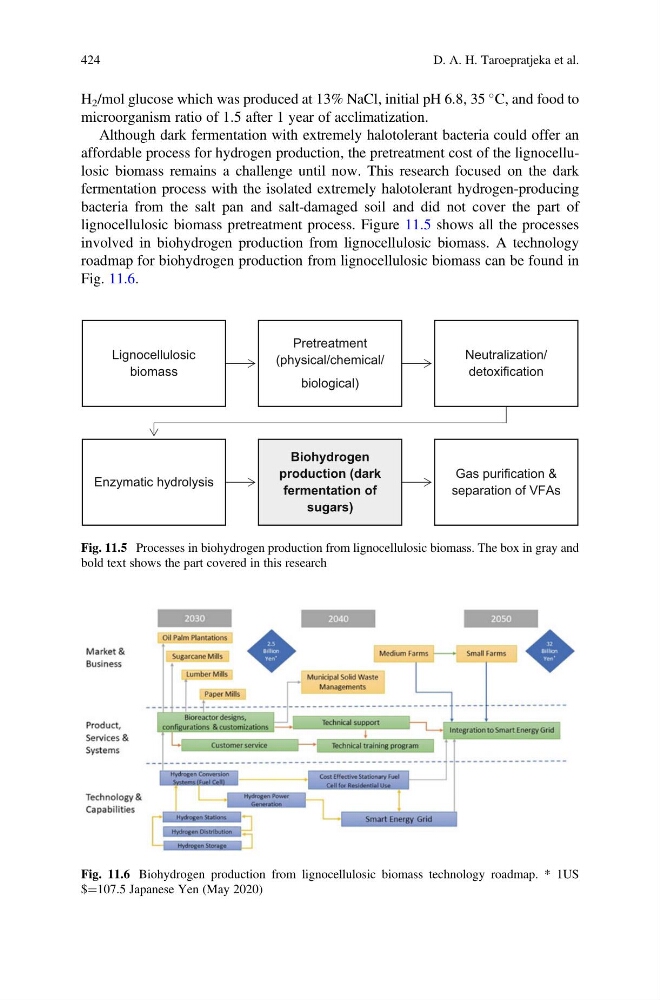
lignocellulosic biomass pretreatment process. Figure 11.5 shows all the processes
involved in biohydrogen production from lignocellulosic biomass. A technology
roadmap for biohydrogen production from lignocellulosic biomass can be found in
Fig. 11.6.
Fig. 11.6 Biohydrogen production from lignocellulosic biomass technology roadmap. * 1US
$¼107.5 Japanese Yen (May 2020)
Lignocellulosic
biomass
Pretreatment
(physical/chemical/
biological)
Neutralization/
detoxification
Enzymatic hydrolysis
Biohydrogen
production (dark
fermentation of
sugars)
Gas purification &
separation of VFAs
Fig. 11.5 Processes in biohydrogen production from lignocellulosic biomass. The box in gray and
bold text shows the part covered in this research
424
D. A. H. Taroepratjeka et al.
C, and food to
microorganism ratio of 1.5 after 1 year of acclimatization.
Although dark fermentation with extremely halotolerant bacteria could offer an
affordable process for hydrogen production, the pretreatment cost of the lignocellulosic biomass remains a challenge until now. This research focused on the dark
fermentation process with the isolated extremely halotolerant hydrogen-producing
bacteria from the salt pan and salt-damaged soil and did not cover the part of
lignocellulosic biomass pretreatment process. Figure 11.5 shows all the processes
involved in biohydrogen production from lignocellulosic biomass. A technology
roadmap for biohydrogen production from lignocellulosic biomass can be found in
Fig. 11.6.
Fig. 11.6 Biohydrogen production from lignocellulosic biomass technology roadmap. * 1US
$¼107.5 Japanese Yen (May 2020)
Lignocellulosic
biomass
Pretreatment
(physical/chemical/
biological)
Neutralization/
detoxification
Enzymatic hydrolysis
Biohydrogen
production (dark
fermentation of
sugars)
Gas purification &
separation of VFAs
Fig. 11.5 Processes in biohydrogen production from lignocellulosic biomass. The box in gray and
bold text shows the part covered in this research
424
D. A. H. Taroepratjeka et al.