

4.1 In Situ Methods
In situ methods refer to the formation of nanostructures from precursor with the
presence of another phase material [21, 22]. The most common method for the
synthesis of magnetic particles in the literature is the coprecipitation method. In this
method, divalent and trivalent iron salts are condensed in the presence of hydroxide
bases. This method is relatively simple, cheap, and reproducible and results in high
yield besides keeping the surface of particles free for any subsequent
functionalization. However, the particles obtained in the first stage might agglomerate due to the neutralization of counter cations such as Na
+ and the negative charge
of FeO
À groups on the surface. Moreover, the pH value and the required time to
accomplish the transformation of the particle crystal structure are the crucial factors
for the synthesis of iron oxides.
Other than that, hydrothermal is another method that has been investigated
extensively for the synthesis of magnetic nanoparticles. The hydrothermal method
is a process where the iron precursors in aqueous solution are heated at high
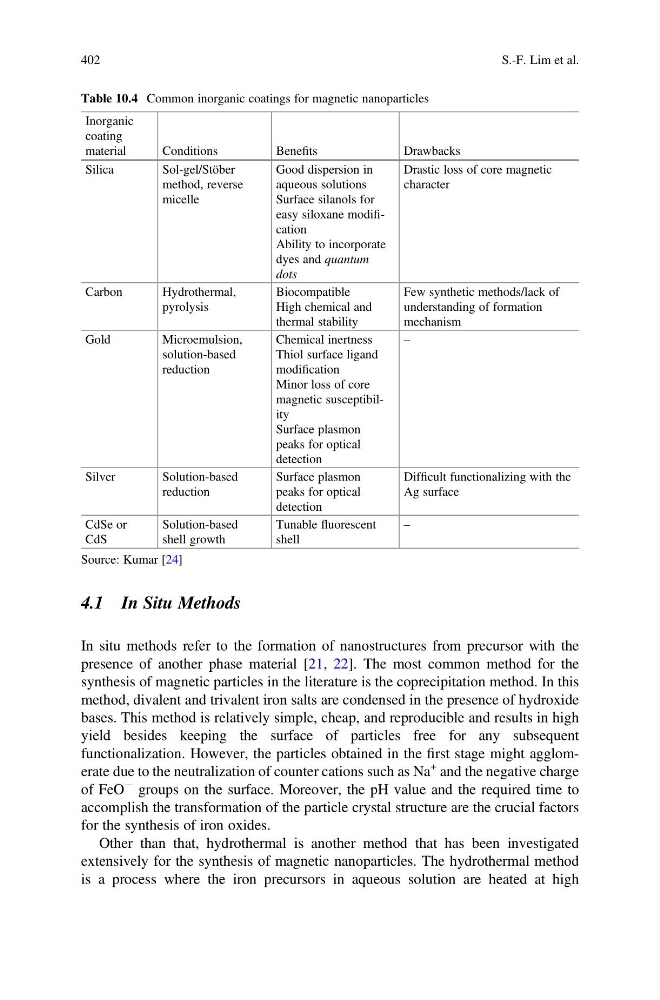
Table 10.4 Common inorganic coatings for magnetic nanoparticles
Inorganic
coating
material
Conditions
Benefits
Drawbacks
Silica
Sol-gel/Stöber
method, reverse
micelle
Good dispersion in
aqueous solutions
Surface silanols for
easy siloxane modification
Ability to incorporate
dyes and quantum
dots
Drastic loss of core magnetic
character
Carbon
Hydrothermal,
pyrolysis
Biocompatible
High chemical and
thermal stability
Few synthetic methods/lack of
understanding of formation
mechanism
Gold
Microemulsion,
solution-based
reduction
Chemical inertness
Thiol surface ligand
modification
Minor loss of core
magnetic susceptibility
Surface plasmon
peaks for optical
detection
–
Silver
Solution-based
reduction
Surface plasmon
peaks for optical
detection
Difficult functionalizing with the
Ag surface
CdSe or
CdS
Solution-based
shell growth
Tunable fluorescent
shell
–
Source: Kumar [24]
402
S.-F. Lim et al.
In situ methods refer to the formation of nanostructures from precursor with the
presence of another phase material [21, 22]. The most common method for the
synthesis of magnetic particles in the literature is the coprecipitation method. In this
method, divalent and trivalent iron salts are condensed in the presence of hydroxide
bases. This method is relatively simple, cheap, and reproducible and results in high
yield besides keeping the surface of particles free for any subsequent
functionalization. However, the particles obtained in the first stage might agglomerate due to the neutralization of counter cations such as Na
+ and the negative charge
of FeO
À groups on the surface. Moreover, the pH value and the required time to
accomplish the transformation of the particle crystal structure are the crucial factors
for the synthesis of iron oxides.
Other than that, hydrothermal is another method that has been investigated
extensively for the synthesis of magnetic nanoparticles. The hydrothermal method
is a process where the iron precursors in aqueous solution are heated at high
Table 10.4 Common inorganic coatings for magnetic nanoparticles
Inorganic
coating
material
Conditions
Benefits
Drawbacks
Silica
Sol-gel/Stöber
method, reverse
micelle
Good dispersion in
aqueous solutions
Surface silanols for
easy siloxane modification
Ability to incorporate
dyes and quantum
dots
Drastic loss of core magnetic
character
Carbon
Hydrothermal,
pyrolysis
Biocompatible
High chemical and
thermal stability
Few synthetic methods/lack of
understanding of formation
mechanism
Gold
Microemulsion,
solution-based
reduction
Chemical inertness
Thiol surface ligand
modification
Minor loss of core
magnetic susceptibility
Surface plasmon
peaks for optical
detection
–
Silver
Solution-based
reduction
Surface plasmon
peaks for optical
detection
Difficult functionalizing with the
Ag surface
CdSe or
CdS
Solution-based
shell growth
Tunable fluorescent
shell
–
Source: Kumar [24]
402
S.-F. Lim et al.