

3 Parameters Affecting the Adsorption of Heavy Metals
The use of agricultural waste materials as adsorbents is affected by several variables,
such as solution pH, initial concentration, adsorbent dose, and contact time. These
variables control the adsorption capacity, kinetics, and selectivity of the heavy metal
removal. The following subsections discuss the influence of each variable in the
adsorption process.
3.1 Effect of Solution pH
Solution pH is a dominant factor to scrutinize in the heavy metal adsorption process,
as it can significantly affect the surface charge of the adsorbent, as well as the
ionization and speciation of the heavy metals [54]. Typically, the adsorption of
cationic heavy metals is effective at high solution pH value, while the relation is
opposite for anionic heavy metals. The adsorption performance for the anionic heavy
metal removal surpasses at low solution pH value. At low solution pH, the surface
adsorbent is usually positively charged. In that event, the cationic heavy metals
compete with H
+ ions to occupy the adsorption sites. Thus, this phenomenon attracts
anionic heavy metals through electrostatic forces. Contrastingly, increasing the
solution pH values increases the negativity charge of the adsorbent surface, for as
much as this attracts the cationic heavy metals to the surface of the adsorbent, and at
the same time, the anionic components compete with OH
À ions. At very high pH,
some heavy metals precipitate out of the solution instead of adsorbing to the
adsorbent surface [55].
The studies on heavy metal adsorption using agricultural waste-derived adsorbents as reported in the literature demonstrated the accustomed tendencies as
discussed above in the effect of solution pH on the removal capacity of the
contaminant. The removal of Cu(II) using spent shitake by Dong and Lim [56]
exhibited that the adsorption capacity increased with pH values from 0.7 to 3.0
before it became stable between solution pH 3 and solution pH 5. Another study
using of gaozaban to treat Cd(II) also indicated that the adsorption capacity
increased with solution pH from 2 to 4. The Cd species vary in different pH values:
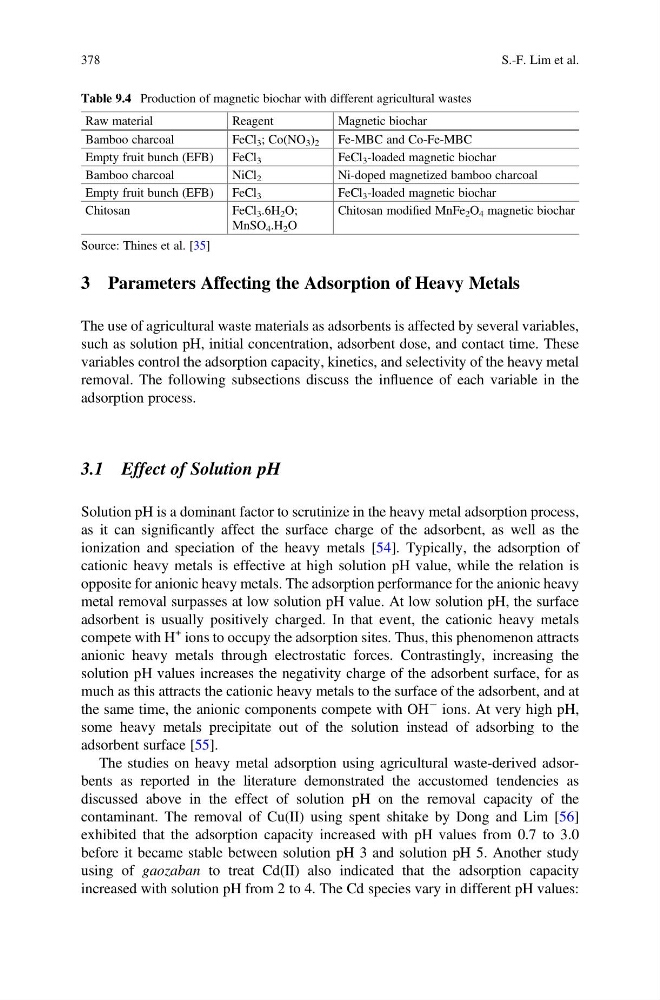
Table 9.4 Production of magnetic biochar with different agricultural wastes
Raw material
Reagent
Magnetic biochar
Bamboo charcoal
FeCl 3 ; Co(NO 3 ) 2 Fe-MBC and Co-Fe-MBC
Empty fruit bunch (EFB) FeCl 3
FeCl 3 -loaded magnetic biochar
Bamboo charcoal
NiCl 2
Ni-doped magnetized bamboo charcoal
Empty fruit bunch (EFB) FeCl 3
FeCl 3 -loaded magnetic biochar
Chitosan
FeCl 3 .6H 2 O;
MnSO 4 .H 2 O
Chitosan modified MnFe 2 O 4 magnetic biochar
Source: Thines et al. [35]
378
S.-F. Lim et al.
The use of agricultural waste materials as adsorbents is affected by several variables,
such as solution pH, initial concentration, adsorbent dose, and contact time. These
variables control the adsorption capacity, kinetics, and selectivity of the heavy metal
removal. The following subsections discuss the influence of each variable in the
adsorption process.
3.1 Effect of Solution pH
Solution pH is a dominant factor to scrutinize in the heavy metal adsorption process,
as it can significantly affect the surface charge of the adsorbent, as well as the
ionization and speciation of the heavy metals [54]. Typically, the adsorption of
cationic heavy metals is effective at high solution pH value, while the relation is
opposite for anionic heavy metals. The adsorption performance for the anionic heavy
metal removal surpasses at low solution pH value. At low solution pH, the surface
adsorbent is usually positively charged. In that event, the cationic heavy metals
compete with H
+ ions to occupy the adsorption sites. Thus, this phenomenon attracts
anionic heavy metals through electrostatic forces. Contrastingly, increasing the
solution pH values increases the negativity charge of the adsorbent surface, for as
much as this attracts the cationic heavy metals to the surface of the adsorbent, and at
the same time, the anionic components compete with OH
À ions. At very high pH,
some heavy metals precipitate out of the solution instead of adsorbing to the
adsorbent surface [55].
The studies on heavy metal adsorption using agricultural waste-derived adsorbents as reported in the literature demonstrated the accustomed tendencies as
discussed above in the effect of solution pH on the removal capacity of the
contaminant. The removal of Cu(II) using spent shitake by Dong and Lim [56]
exhibited that the adsorption capacity increased with pH values from 0.7 to 3.0
before it became stable between solution pH 3 and solution pH 5. Another study
using of gaozaban to treat Cd(II) also indicated that the adsorption capacity
increased with solution pH from 2 to 4. The Cd species vary in different pH values:
Table 9.4 Production of magnetic biochar with different agricultural wastes
Raw material
Reagent
Magnetic biochar
Bamboo charcoal
FeCl 3 ; Co(NO 3 ) 2 Fe-MBC and Co-Fe-MBC
Empty fruit bunch (EFB) FeCl 3
FeCl 3 -loaded magnetic biochar
Bamboo charcoal
NiCl 2
Ni-doped magnetized bamboo charcoal
Empty fruit bunch (EFB) FeCl 3
FeCl 3 -loaded magnetic biochar
Chitosan
FeCl 3 .6H 2 O;
MnSO 4 .H 2 O
Chitosan modified MnFe 2 O 4 magnetic biochar
Source: Thines et al. [35]
378
S.-F. Lim et al.