

3.6 Manure from Livestock Industry
The current practice of livestock manure land application is environmentally and
economically problematic because it introduces chemicals, antimicrobial, pathogens, and excessive nutrients into the soil and surface and groundwater as well as
it contributes to greenhouse gas (GHG) emission. Although the land application of
manure fertilizes the soil, it is not the most efficient way to achieve that. With proper
treatment before manure land application, valuable resources could be recovered as
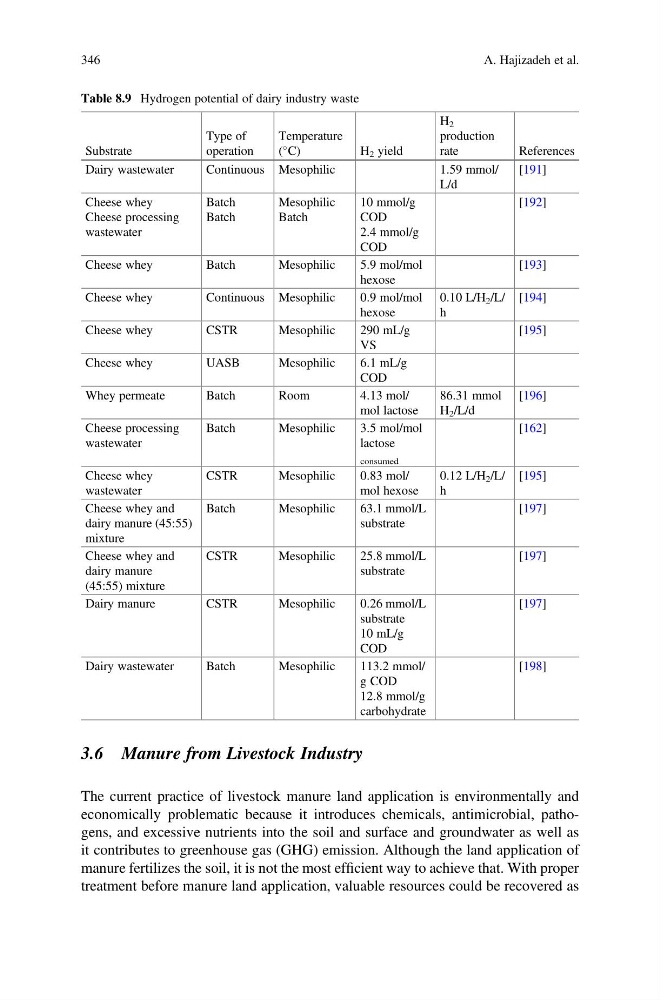
Table 8.9 Hydrogen potential of dairy industry waste
Substrate
Type of
operation
Temperature
(
C)
H 2 yield
H 2
production
rate
References
Dairy wastewater
Continuous Mesophilic
1.59 mmol/
L/d
[191]
Cheese whey
Cheese processing
wastewater
Batch
Batch
Mesophilic
Batch
10 mmol/g
COD
2.4 mmol/g
COD
[192]
Cheese whey
Batch
Mesophilic
5.9 mol/mol
hexose
[193]
Cheese whey
Continuous Mesophilic
0.9 mol/mol
hexose
0.10 L/H 2 /L/
h
[194]
Cheese whey
CSTR
Mesophilic
290 mL/g
VS
[195]
Cheese whey
UASB
Mesophilic
6.1 mL/g
COD
Whey permeate
Batch
Room
4.13 mol/
mol lactose
86.31 mmol
H 2 /L/d
[196]
Cheese processing
wastewater
Batch
Mesophilic
3.5 mol/mol
lactose
consumed
[162]
Cheese whey
wastewater
CSTR
Mesophilic
0.83 mol/
mol hexose
0.12 L/H 2 /L/
h
[195]
Cheese whey and
dairy manure (45:55)
mixture
Batch
Mesophilic
63.1 mmol/L
substrate
[197]
Cheese whey and
dairy manure
(45:55) mixture
CSTR
Mesophilic
25.8 mmol/L
substrate
[197]
Dairy manure
CSTR
Mesophilic
0.26 mmol/L
substrate
10 mL/g
COD
[197]
Dairy wastewater
Batch
Mesophilic
113.2 mmol/
g COD
12.8 mmol/g
carbohydrate
[198]
346
A. Hajizadeh et al.
The current practice of livestock manure land application is environmentally and
economically problematic because it introduces chemicals, antimicrobial, pathogens, and excessive nutrients into the soil and surface and groundwater as well as
it contributes to greenhouse gas (GHG) emission. Although the land application of
manure fertilizes the soil, it is not the most efficient way to achieve that. With proper
treatment before manure land application, valuable resources could be recovered as
Table 8.9 Hydrogen potential of dairy industry waste
Substrate
Type of
operation
Temperature
(
C)
H 2 yield
H 2
production
rate
References
Dairy wastewater
Continuous Mesophilic
1.59 mmol/
L/d
[191]
Cheese whey
Cheese processing
wastewater
Batch
Batch
Mesophilic
Batch
10 mmol/g
COD
2.4 mmol/g
COD
[192]
Cheese whey
Batch
Mesophilic
5.9 mol/mol
hexose
[193]
Cheese whey
Continuous Mesophilic
0.9 mol/mol
hexose
0.10 L/H 2 /L/
h
[194]
Cheese whey
CSTR
Mesophilic
290 mL/g
VS
[195]
Cheese whey
UASB
Mesophilic
6.1 mL/g
COD
Whey permeate
Batch
Room
4.13 mol/
mol lactose
86.31 mmol
H 2 /L/d
[196]
Cheese processing
wastewater
Batch
Mesophilic
3.5 mol/mol
lactose
consumed
[162]
Cheese whey
wastewater
CSTR
Mesophilic
0.83 mol/
mol hexose
0.12 L/H 2 /L/
h
[195]
Cheese whey and
dairy manure (45:55)
mixture
Batch
Mesophilic
63.1 mmol/L
substrate
[197]
Cheese whey and
dairy manure
(45:55) mixture
CSTR
Mesophilic
25.8 mmol/L
substrate
[197]
Dairy manure
CSTR
Mesophilic
0.26 mmol/L
substrate
10 mL/g
COD
[197]
Dairy wastewater
Batch
Mesophilic
113.2 mmol/
g COD
12.8 mmol/g
carbohydrate
[198]
346
A. Hajizadeh et al.