

hexose in continuous mesophilic operation (Table 8.9). Conflicting conclusions have
been reported about the optimum pH for H 2 production from cheese whey. For
mesophilic operation, pH of 6 and 7 were reported optimum for maximizing the H 2
yield and production rate, respectively [193]. In contrast, Yang et al. [192] reported a
pH of 4–5 is the best in terms of both H 2 yield and rate.
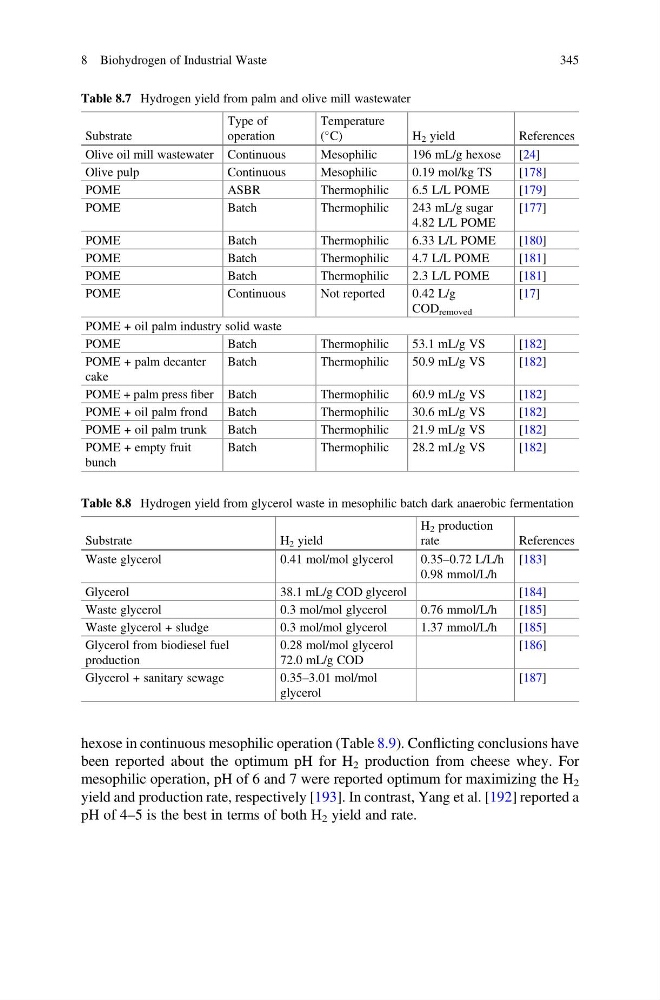
Table 8.7 Hydrogen yield from palm and olive mill wastewater
Substrate
Type of
operation
Temperature
(
C)
H 2 yield
References
Olive oil mill wastewater Continuous
Mesophilic
196 mL/g hexose [24]
Olive pulp
Continuous
Mesophilic
0.19 mol/kg TS
[178]
POME
ASBR
Thermophilic
6.5 L/L POME
[179]
POME
Batch
Thermophilic
243 mL/g sugar
4.82 L/L POME
[177]
POME
Batch
Thermophilic
6.33 L/L POME
[180]
POME
Batch
Thermophilic
4.7 L/L POME
[181]
POME
Batch
Thermophilic
2.3 L/L POME
[181]
POME
Continuous
Not reported
0.42 L/g
COD removed
[17]
POME + oil palm industry solid waste
POME
Batch
Thermophilic
53.1 mL/g VS
[182]
POME + palm decanter
cake
Batch
Thermophilic
50.9 mL/g VS
[182]
POME + palm press fiber Batch
Thermophilic
60.9 mL/g VS
[182]
POME + oil palm frond
Batch
Thermophilic
30.6 mL/g VS
[182]
POME + oil palm trunk
Batch
Thermophilic
21.9 mL/g VS
[182]
POME + empty fruit
bunch
Batch
Thermophilic
28.2 mL/g VS
[182]
Table 8.8 Hydrogen yield from glycerol waste in mesophilic batch dark anaerobic fermentation
Substrate
H 2 yield
H 2 production
rate
References
Waste glycerol
0.41 mol/mol glycerol
0.35–0.72 L/L/h
0.98 mmol/L/h
[183]
Glycerol
38.1 mL/g COD glycerol
[184]
Waste glycerol
0.3 mol/mol glycerol
0.76 mmol/L/h
[185]
Waste glycerol + sludge
0.3 mol/mol glycerol
1.37 mmol/L/h
[185]
Glycerol from biodiesel fuel
production
0.28 mol/mol glycerol
72.0 mL/g COD
[186]
Glycerol + sanitary sewage
0.35–3.01 mol/mol
glycerol
[187]
8 Biohydrogen of Industrial Waste
345
been reported about the optimum pH for H 2 production from cheese whey. For
mesophilic operation, pH of 6 and 7 were reported optimum for maximizing the H 2
yield and production rate, respectively [193]. In contrast, Yang et al. [192] reported a
pH of 4–5 is the best in terms of both H 2 yield and rate.
Table 8.7 Hydrogen yield from palm and olive mill wastewater
Substrate
Type of
operation
Temperature
(
C)
H 2 yield
References
Olive oil mill wastewater Continuous
Mesophilic
196 mL/g hexose [24]
Olive pulp
Continuous
Mesophilic
0.19 mol/kg TS
[178]
POME
ASBR
Thermophilic
6.5 L/L POME
[179]
POME
Batch
Thermophilic
243 mL/g sugar
4.82 L/L POME
[177]
POME
Batch
Thermophilic
6.33 L/L POME
[180]
POME
Batch
Thermophilic
4.7 L/L POME
[181]
POME
Batch
Thermophilic
2.3 L/L POME
[181]
POME
Continuous
Not reported
0.42 L/g
COD removed
[17]
POME + oil palm industry solid waste
POME
Batch
Thermophilic
53.1 mL/g VS
[182]
POME + palm decanter
cake
Batch
Thermophilic
50.9 mL/g VS
[182]
POME + palm press fiber Batch
Thermophilic
60.9 mL/g VS
[182]
POME + oil palm frond
Batch
Thermophilic
30.6 mL/g VS
[182]
POME + oil palm trunk
Batch
Thermophilic
21.9 mL/g VS
[182]
POME + empty fruit
bunch
Batch
Thermophilic
28.2 mL/g VS
[182]
Table 8.8 Hydrogen yield from glycerol waste in mesophilic batch dark anaerobic fermentation
Substrate
H 2 yield
H 2 production
rate
References
Waste glycerol
0.41 mol/mol glycerol
0.35–0.72 L/L/h
0.98 mmol/L/h
[183]
Glycerol
38.1 mL/g COD glycerol
[184]
Waste glycerol
0.3 mol/mol glycerol
0.76 mmol/L/h
[185]
Waste glycerol + sludge
0.3 mol/mol glycerol
1.37 mmol/L/h
[185]
Glycerol from biodiesel fuel
production
0.28 mol/mol glycerol
72.0 mL/g COD
[186]
Glycerol + sanitary sewage
0.35–3.01 mol/mol
glycerol
[187]
8 Biohydrogen of Industrial Waste
345