

3 Importance of Biological Activity
It may be noted in this discussion that the interrelationship between nutrients and
biological activity represents a continuing thread in the study of the life of a lake.
Thus an understanding of the relationship between biological activity in a lake and
its aging process is essential [1].
A lake contains many biological communities. Within the water column are
numerous organisms of microscopic size. The floating microscopic organisms are
called plankton, which may be subdivided into two groups: the phytoplankton or
plant life, which includes algae, fungi, and pollens that fall into the lake, and the
zooplankton or animal forms. The plankton may also be broken down into the
nekton, or free swimming organisms, and the benthon, which exist on the bottom.
A prime concern is the algae, the microscopic green plants floating in the water
column. These organisms represent the base of the food chain in that they can
convert simple inorganic matter into organic matter with the aid of sunlight in the
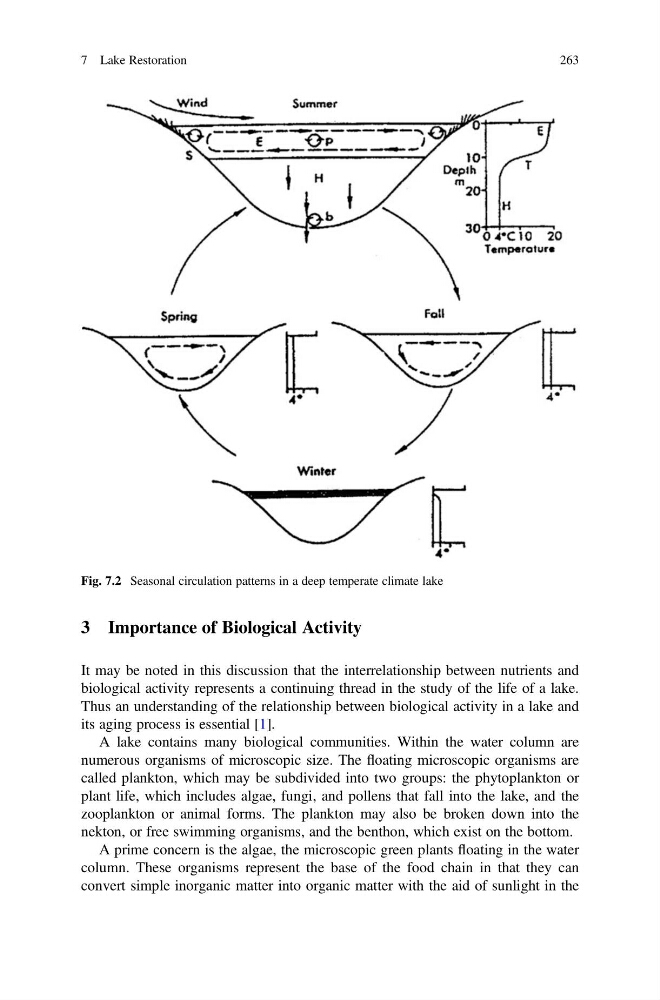
Fig. 7.2 Seasonal circulation patterns in a deep temperate climate lake
7 Lake Restoration
263
It may be noted in this discussion that the interrelationship between nutrients and
biological activity represents a continuing thread in the study of the life of a lake.
Thus an understanding of the relationship between biological activity in a lake and
its aging process is essential [1].
A lake contains many biological communities. Within the water column are
numerous organisms of microscopic size. The floating microscopic organisms are
called plankton, which may be subdivided into two groups: the phytoplankton or
plant life, which includes algae, fungi, and pollens that fall into the lake, and the
zooplankton or animal forms. The plankton may also be broken down into the
nekton, or free swimming organisms, and the benthon, which exist on the bottom.
A prime concern is the algae, the microscopic green plants floating in the water
column. These organisms represent the base of the food chain in that they can
convert simple inorganic matter into organic matter with the aid of sunlight in the
Fig. 7.2 Seasonal circulation patterns in a deep temperate climate lake
7 Lake Restoration
263