

may be consumed and the hypolimnion will become anaerobic. Not only will this
interfere with fish life, it also results in the release of certain nutrients, specifically
phosphorus, that are insoluble in aerobic conditions, but soluble under anaerobic
conditions. The presence of more nutrients may increase oxygen-consuming biological activity that will further create anaerobic conditions.
As fall approaches, the surface of the lake is cooled and the cooler water circulates
to a depth of equal temperature and/or density. This tends to lower the thermocline
until the lake becomes uniform in temperature. Now even a light wind can circulate
the water from top to bottom and the period of fall overturn occurs. During this time
complete oxygen saturation of the water usually occurs and aerobic reactions persist.
As the air temperature reaches 4
C and becomes colder, the surface of the lake
will approach 0
C, but the denser 4
C water will remain on the bottom. When ice
covers the surface, the period of winter stagnation begins. The duration of this
depends upon latitude, altitude, weather conditions, and numerous specific lake
conditions. Lakes with significant warm underground springs have been found to
have less ice cover and, in some instances, have holes in the ice above the location of
the spring. Very deep lakes such as Lake Baikal, Crater Lake, and Lake Tahoe contain
so much heat energy in the water that they do not freeze. Figure 7.2 summarizes the
circulation/depth patterns during the seasons in a deep temperate climate lake.
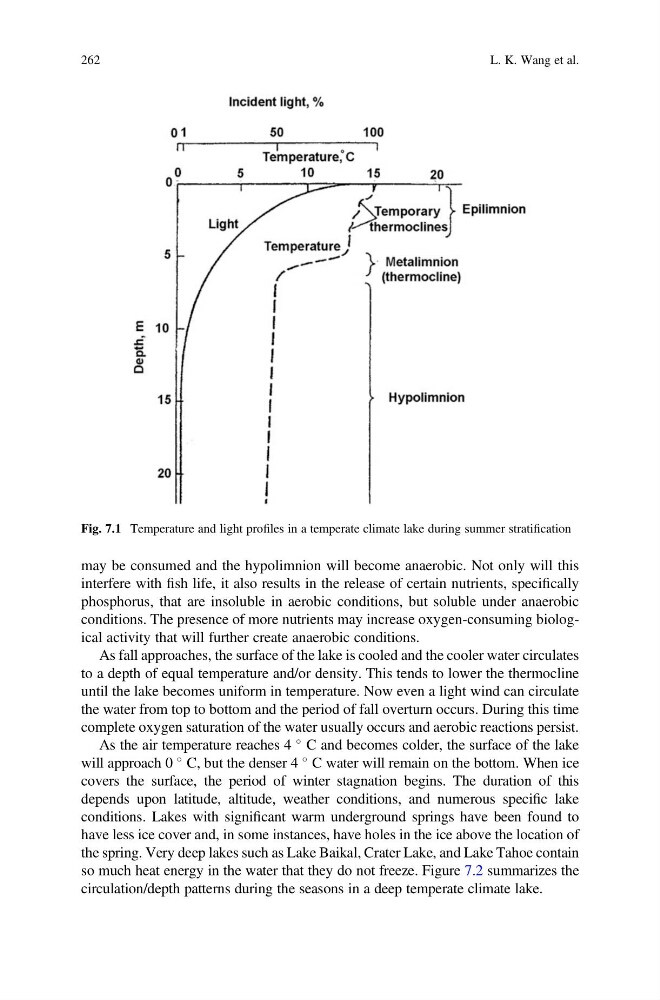
Fig. 7.1 Temperature and light profiles in a temperate climate lake during summer stratification
262
L. K. Wang et al.
interfere with fish life, it also results in the release of certain nutrients, specifically
phosphorus, that are insoluble in aerobic conditions, but soluble under anaerobic
conditions. The presence of more nutrients may increase oxygen-consuming biological activity that will further create anaerobic conditions.
As fall approaches, the surface of the lake is cooled and the cooler water circulates
to a depth of equal temperature and/or density. This tends to lower the thermocline
until the lake becomes uniform in temperature. Now even a light wind can circulate
the water from top to bottom and the period of fall overturn occurs. During this time
complete oxygen saturation of the water usually occurs and aerobic reactions persist.
As the air temperature reaches 4
C and becomes colder, the surface of the lake
will approach 0
C, but the denser 4
C water will remain on the bottom. When ice
covers the surface, the period of winter stagnation begins. The duration of this
depends upon latitude, altitude, weather conditions, and numerous specific lake
conditions. Lakes with significant warm underground springs have been found to
have less ice cover and, in some instances, have holes in the ice above the location of
the spring. Very deep lakes such as Lake Baikal, Crater Lake, and Lake Tahoe contain
so much heat energy in the water that they do not freeze. Figure 7.2 summarizes the
circulation/depth patterns during the seasons in a deep temperate climate lake.
Fig. 7.1 Temperature and light profiles in a temperate climate lake during summer stratification
262
L. K. Wang et al.