

dipping, the excess solder is removed through solder leveling process involving the
use of hot air or hot oil. The next processing steps are electrical and mechanical
testing of the board. Examination of the plated holes based on electrical test,
dimensional inspection, visual inspection, and quality audits on a cross section cut
from a sample panel are done in these steps. After these have been certified to meet
standard or consumer’s specification, the PWBs are then packed and labeled for
onward processing or shipping to other manufacturing companies where it serves as
a vital raw material. Prominent step after this is the assembly process where electrical
and electronic components are attached to the board through wave, dip, or drag
soldering methods.
2.7.2 Water Use
General production steps for the production of PWB can be described as wet process,
involving the use of water and solvents. Water is predominantly used for washing
and rinsing of the PWB surfaces, to remove scrap-based materials as well to wash the
solvent and greases. In other parts of the factory, water is employed in plant washdowns to dissolve the used solvent and other chemicals. In recent times, there has
been reduction in the use of non-environmentally friendly chemicals like chlorofluorocarbons (CFCs) and trichloroethane (TCA); deionized water is widely used as
alternative.
2.7.3 Wastewater Characterization
Large volume of wastewater is generated during the production of the PWBs. The
wastewater contains used solvents, dissolved and undissolved metals, and other
particles like photographic resist. Table 4.36 presents output of printed wiring
board pollution. The results of releases verified in some printed wiring board
manufacturing facilities are summarized in Table 4.37.
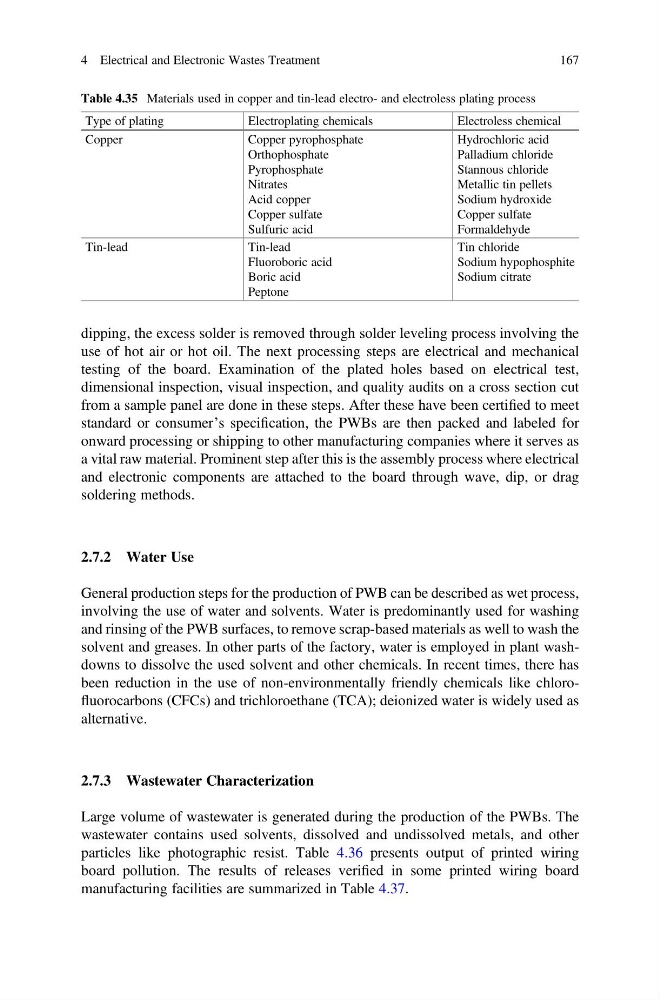
Table 4.35 Materials used in copper and tin-lead electro- and electroless plating process
Type of plating
Electroplating chemicals
Electroless chemical
Copper
Copper pyrophosphate
Orthophosphate
Pyrophosphate
Nitrates
Acid copper
Copper sulfate
Sulfuric acid
Hydrochloric acid
Palladium chloride
Stannous chloride
Metallic tin pellets
Sodium hydroxide
Copper sulfate
Formaldehyde
Tin-lead
Tin-lead
Fluoroboric acid
Boric acid
Peptone
Tin chloride
Sodium hypophosphite
Sodium citrate
4 Electrical and Electronic Wastes Treatment
167
use of hot air or hot oil. The next processing steps are electrical and mechanical
testing of the board. Examination of the plated holes based on electrical test,
dimensional inspection, visual inspection, and quality audits on a cross section cut
from a sample panel are done in these steps. After these have been certified to meet
standard or consumer’s specification, the PWBs are then packed and labeled for
onward processing or shipping to other manufacturing companies where it serves as
a vital raw material. Prominent step after this is the assembly process where electrical
and electronic components are attached to the board through wave, dip, or drag
soldering methods.
2.7.2 Water Use
General production steps for the production of PWB can be described as wet process,
involving the use of water and solvents. Water is predominantly used for washing
and rinsing of the PWB surfaces, to remove scrap-based materials as well to wash the
solvent and greases. In other parts of the factory, water is employed in plant washdowns to dissolve the used solvent and other chemicals. In recent times, there has
been reduction in the use of non-environmentally friendly chemicals like chlorofluorocarbons (CFCs) and trichloroethane (TCA); deionized water is widely used as
alternative.
2.7.3 Wastewater Characterization
Large volume of wastewater is generated during the production of the PWBs. The
wastewater contains used solvents, dissolved and undissolved metals, and other
particles like photographic resist. Table 4.36 presents output of printed wiring
board pollution. The results of releases verified in some printed wiring board
manufacturing facilities are summarized in Table 4.37.
Table 4.35 Materials used in copper and tin-lead electro- and electroless plating process
Type of plating
Electroplating chemicals
Electroless chemical
Copper
Copper pyrophosphate
Orthophosphate
Pyrophosphate
Nitrates
Acid copper
Copper sulfate
Sulfuric acid
Hydrochloric acid
Palladium chloride
Stannous chloride
Metallic tin pellets
Sodium hydroxide
Copper sulfate
Formaldehyde
Tin-lead
Tin-lead
Fluoroboric acid
Boric acid
Peptone
Tin chloride
Sodium hypophosphite
Sodium citrate
4 Electrical and Electronic Wastes Treatment
167