

guns representing the three primary colors (red, green, and blue) which produce
individual color via a high stream of high velocity electrons that are modified by
static and dynamic convergence mechanisms and an electromagnetic system. The
incident beam exited the phosphor on the aperture mask behind the face of the screen
to produce images.
The transmitting-type electron tubes are completely vacuumed tubes operating
over a wide range of frequency. The stream of electrons within the tube is under the
influence of both electrostatic and electromagnetic fields that are usually applied
externally. A good example of this is the klystron tube. Production of the components under this subcategory shares, virtually, the same procedure which primarily
includes preparation of glass panel and shadow mask, coating of the glass panel
interior, installation of electron shield, preparation and connection of the glass funnel
to panel or shadow mask assembly, the electron gun installation, and finally putting
finishing processes in place [4]. In the preparation of the panel and shadow mask, the
shadow mask, constructed from a thin layer of aluminum steel, is molded to match
the contour of the interior surface of the glass panel. It is then welded to a blackened
metal frame before being cleaned with degreasing solvents and caustics. All other
accessories like springs to fix the glass panel and shadow mask assembly in position,
in relation to each other, and for onward processing are put in place. This step is
followed by coating of interior surface of the panel mask through the screening
process which makes the panel mask to create image. After usual washing processes,
the glass panel is subjected to carbon stripe process where it is coated with photoresist which contains chromate, dilute acids, oxidizers, and others like binding
agents, before spurning to activate the photoresist and then dried. The shadow
mask is later reinserted in the glass panel where it is subjected to photolithography
process involving exposures to ultraviolet light. It is removed after the exposure and
water-washed before being recoated and developed in order to improve its photoresist exposure pattern. However for color tubes, the assembly undergoes phosphor
stripe process to fix the three primary colors (green, blue, and red); necessary
cleaning and finishing are done before the installation of the electron shield. The
shield, which prevents stray electrons from reacting outside the screen area, is made
up of thin aluminum and is welded to the shadow mask assembly before being
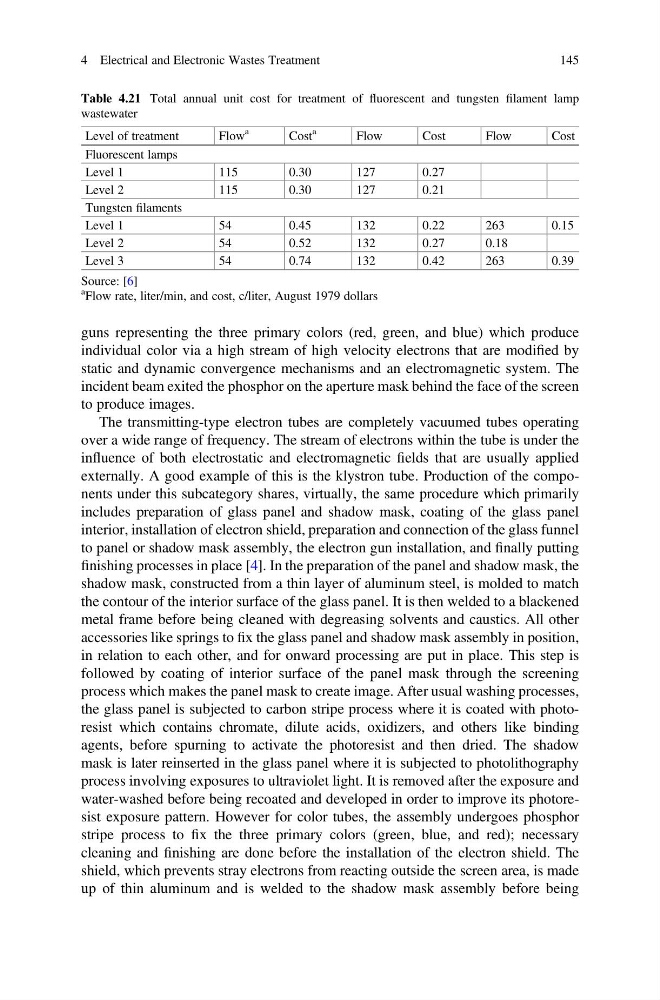
Table 4.21 Total annual unit cost for treatment of fluorescent and tungsten filament lamp
wastewater
Level of treatment
Flow
a
Cost
a
Flow
Cost
Flow
Cost
Fluorescent lamps
Level 1
115
0.30
127
0.27
Level 2
115
0.30
127
0.21
Tungsten filaments
Level 1
54
0.45
132
0.22
263
0.15
Level 2
54
0.52
132
0.27
0.18
Level 3
54
0.74
132
0.42
263
0.39
Source: [6]
a Flow rate, liter/min, and cost, c/liter, August 1979 dollars
4 Electrical and Electronic Wastes Treatment
145
individual color via a high stream of high velocity electrons that are modified by
static and dynamic convergence mechanisms and an electromagnetic system. The
incident beam exited the phosphor on the aperture mask behind the face of the screen
to produce images.
The transmitting-type electron tubes are completely vacuumed tubes operating
over a wide range of frequency. The stream of electrons within the tube is under the
influence of both electrostatic and electromagnetic fields that are usually applied
externally. A good example of this is the klystron tube. Production of the components under this subcategory shares, virtually, the same procedure which primarily
includes preparation of glass panel and shadow mask, coating of the glass panel
interior, installation of electron shield, preparation and connection of the glass funnel
to panel or shadow mask assembly, the electron gun installation, and finally putting
finishing processes in place [4]. In the preparation of the panel and shadow mask, the
shadow mask, constructed from a thin layer of aluminum steel, is molded to match
the contour of the interior surface of the glass panel. It is then welded to a blackened
metal frame before being cleaned with degreasing solvents and caustics. All other
accessories like springs to fix the glass panel and shadow mask assembly in position,
in relation to each other, and for onward processing are put in place. This step is
followed by coating of interior surface of the panel mask through the screening
process which makes the panel mask to create image. After usual washing processes,
the glass panel is subjected to carbon stripe process where it is coated with photoresist which contains chromate, dilute acids, oxidizers, and others like binding
agents, before spurning to activate the photoresist and then dried. The shadow
mask is later reinserted in the glass panel where it is subjected to photolithography
process involving exposures to ultraviolet light. It is removed after the exposure and
water-washed before being recoated and developed in order to improve its photoresist exposure pattern. However for color tubes, the assembly undergoes phosphor
stripe process to fix the three primary colors (green, blue, and red); necessary
cleaning and finishing are done before the installation of the electron shield. The
shield, which prevents stray electrons from reacting outside the screen area, is made
up of thin aluminum and is welded to the shadow mask assembly before being
Table 4.21 Total annual unit cost for treatment of fluorescent and tungsten filament lamp
wastewater
Level of treatment
Flow
a
Cost
a
Flow
Cost
Flow
Cost
Fluorescent lamps
Level 1
115
0.30
127
0.27
Level 2
115
0.30
127
0.21
Tungsten filaments
Level 1
54
0.45
132
0.22
263
0.15
Level 2
54
0.52
132
0.27
0.18
Level 3
54
0.74
132
0.42
263
0.39
Source: [6]
a Flow rate, liter/min, and cost, c/liter, August 1979 dollars
4 Electrical and Electronic Wastes Treatment
145