

Wastewater Treatment Process
Wastewater generated in the manufacturing of carbon and graphite subcategory is
treated using two approaches. The first approach involves skimming and contract
hauling of sludge with provision for settleable solid removal that may be used for
extrusion and impregnation quenches within the industry.
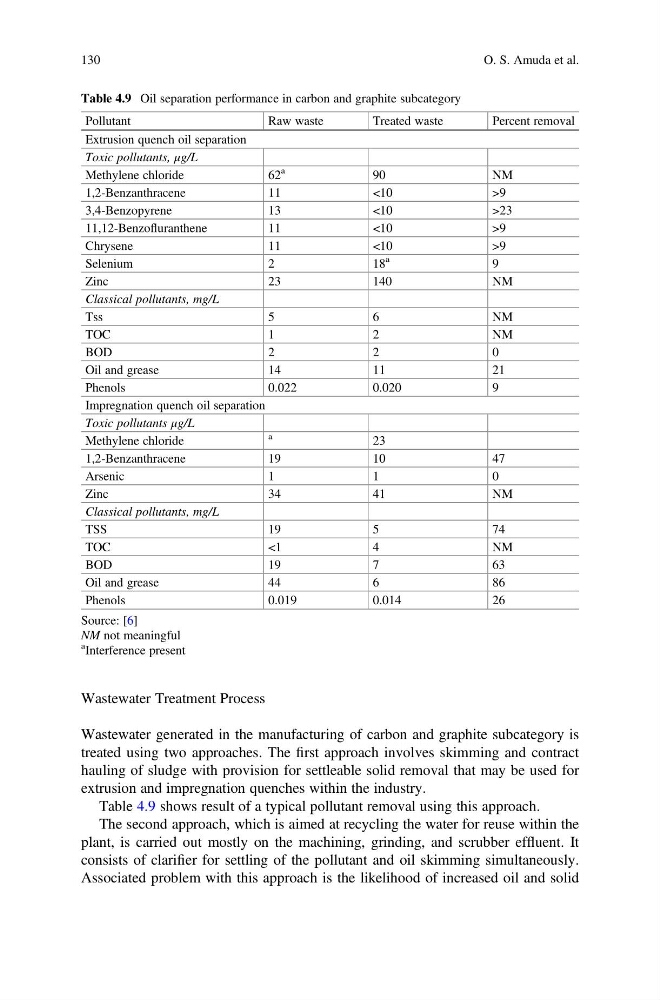
Table 4.9 shows result of a typical pollutant removal using this approach.
The second approach, which is aimed at recycling the water for reuse within the
plant, is carried out mostly on the machining, grinding, and scrubber effluent. It
consists of clarifier for settling of the pollutant and oil skimming simultaneously.
Associated problem with this approach is the likelihood of increased oil and solid
Table 4.9 Oil separation performance in carbon and graphite subcategory
Pollutant
Raw waste
Treated waste
Percent removal
Extrusion quench oil separation
Toxic pollutants, μg/L
Methylene chloride
62
a
90
NM
1,2-Benzanthracene
11
<10
>9
3,4-Benzopyrene
13
<10
>23
11,12-Benzofluranthene
11
<10
>9
Chrysene
11
<10
>9
Selenium
2
18
a
9
Zinc
23
140
NM
Classical pollutants, mg/L
Tss
5
6
NM
TOC
1
2
NM
BOD
2
2
0
Oil and grease
14
11
21
Phenols
0.022
0.020
9
Impregnation quench oil separation
Toxic pollutants μg/L
Methylene chloride
a
23
1,2-Benzanthracene
19
10
47
Arsenic
1
1
0
Zinc
34
41
NM
Classical pollutants, mg/L
TSS
19
5
74
TOC
<1
4
NM
BOD
19
7
63
Oil and grease
44
6
86
Phenols
0.019
0.014
26
Source: [6]
NM not meaningful
a Interference present
130
O. S. Amuda et al.
Wastewater generated in the manufacturing of carbon and graphite subcategory is
treated using two approaches. The first approach involves skimming and contract
hauling of sludge with provision for settleable solid removal that may be used for
extrusion and impregnation quenches within the industry.
Table 4.9 shows result of a typical pollutant removal using this approach.
The second approach, which is aimed at recycling the water for reuse within the
plant, is carried out mostly on the machining, grinding, and scrubber effluent. It
consists of clarifier for settling of the pollutant and oil skimming simultaneously.
Associated problem with this approach is the likelihood of increased oil and solid
Table 4.9 Oil separation performance in carbon and graphite subcategory
Pollutant
Raw waste
Treated waste
Percent removal
Extrusion quench oil separation
Toxic pollutants, μg/L
Methylene chloride
62
a
90
NM
1,2-Benzanthracene
11
<10
>9
3,4-Benzopyrene
13
<10
>23
11,12-Benzofluranthene
11
<10
>9
Chrysene
11
<10
>9
Selenium
2
18
a
9
Zinc
23
140
NM
Classical pollutants, mg/L
Tss
5
6
NM
TOC
1
2
NM
BOD
2
2
0
Oil and grease
14
11
21
Phenols
0.022
0.020
9
Impregnation quench oil separation
Toxic pollutants μg/L
Methylene chloride
a
23
1,2-Benzanthracene
19
10
47
Arsenic
1
1
0
Zinc
34
41
NM
Classical pollutants, mg/L
TSS
19
5
74
TOC
<1
4
NM
BOD
19
7
63
Oil and grease
44
6
86
Phenols
0.019
0.014
26
Source: [6]
NM not meaningful
a Interference present
130
O. S. Amuda et al.