

When the p-polarized IR radiation enters a thin molecular film (e.g. alkanethiol
monolayer on the Au surface), the transition dipole vectors of normal vibrations in
molecules adsorbed on the metal surface interact on the metal surface with the
electric field of the IR radiation giving rise to the absorption of the IR light and
thus some attenuation of the intensity of the reflected beam. The absorption of the IR
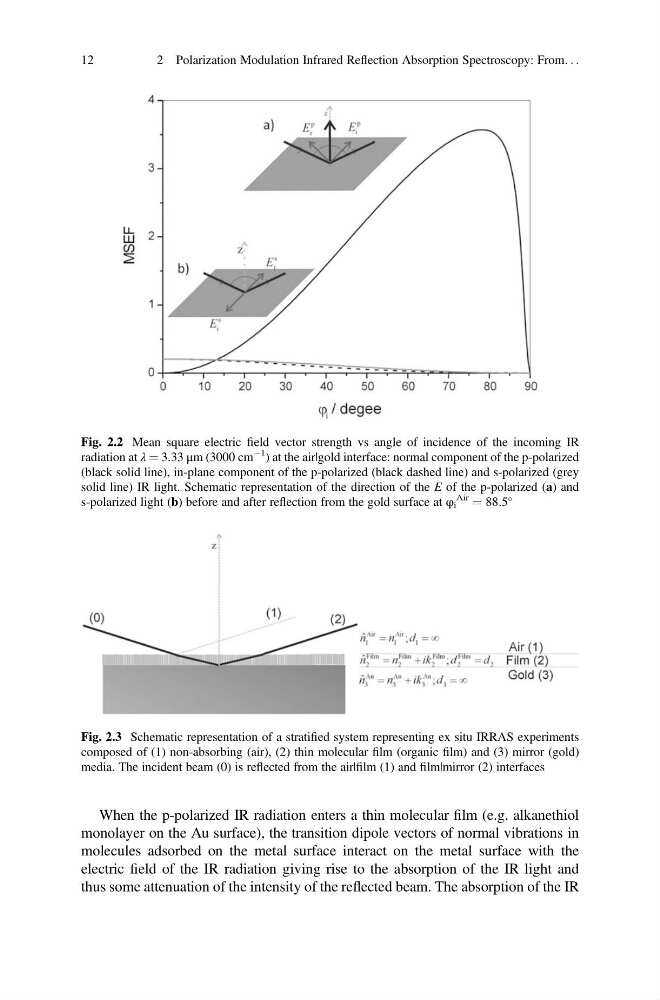
Fig. 2.2 Mean square electric field vector strength vs angle of incidence of the incoming IR
radiation at λ ¼ 3.33 μm (3000 cm
À1
) at the air|gold interface: normal component of the p-polarized
(black solid line), in-plane component of the p-polarized (black dashed line) and s-polarized (grey
solid line) IR light. Schematic representation of the direction of the E of the p-polarized (a) and
s-polarized light (b) before and after reflection from the gold surface at φ i
Air ¼ 88.5
Fig. 2.3 Schematic representation of a stratified system representing ex situ IRRAS experiments
composed of (1) non-absorbing (air), (2) thin molecular film (organic film) and (3) mirror (gold)
media. The incident beam (0) is reflected from the air|film (1) and film|mirror (2) interfaces
12
2 Polarization Modulation Infrared Reflection Absorption Spectroscopy: From. . .
monolayer on the Au surface), the transition dipole vectors of normal vibrations in
molecules adsorbed on the metal surface interact on the metal surface with the
electric field of the IR radiation giving rise to the absorption of the IR light and
thus some attenuation of the intensity of the reflected beam. The absorption of the IR
Fig. 2.2 Mean square electric field vector strength vs angle of incidence of the incoming IR
radiation at λ ¼ 3.33 μm (3000 cm
À1
) at the air|gold interface: normal component of the p-polarized
(black solid line), in-plane component of the p-polarized (black dashed line) and s-polarized (grey
solid line) IR light. Schematic representation of the direction of the E of the p-polarized (a) and
s-polarized light (b) before and after reflection from the gold surface at φ i
Air ¼ 88.5
Fig. 2.3 Schematic representation of a stratified system representing ex situ IRRAS experiments
composed of (1) non-absorbing (air), (2) thin molecular film (organic film) and (3) mirror (gold)
media. The incident beam (0) is reflected from the air|film (1) and film|mirror (2) interfaces
12
2 Polarization Modulation Infrared Reflection Absorption Spectroscopy: From. . .