

3. Centrifuge for 3 min at 7800 Â g.
4. Separate the lower organic layer into an Eppendorf tube (for
UPLC-ELSD analysis) or into a glass tube (for transesterification). Repeat the extraction and combine the extracts.
5. Take 100 μl of extract from the Eppendorf tube into a LC vial
insert (300 μl). The sample is ready for UPLC-ELSD analysis.
6. Evaporate the extract in the glass tube to dryness under nitrogen flow.
7. Dissolve the residue in 500 μl of petroleum ether
(bp. 40–60
C). The sample is used for derivatizations and
GC-MS runs.
3.1.2 Derivatization of
Bound Fatty Acids for
GC-MS
Transesterification with sodium methoxide is esterifying only fatty
acids which are bound to glycerolipids, glycerophospholipids, or
sterol esters, for example. Free fatty acids remain unesterified.
1. Add 250 μl of 0.5 M sodium methoxide solution (NaOMe in
MeOH) and a couple of boiling stones to the sample in petroleum ether. Vortex the mixture.
2. Boil the mixture at 45
C for 5 min in a block heater (see Note 4).
3. Add 500 μl of 15% sodium hydrogen sulfate (NaHSO 4 ). Vortex the mixture.
4. Add 250 μl petroleum ether, vortex, and centrifuge for 1 min at
7800 Â g. Separate the upper petroleum ether layer, evaporate
to dryness under nitrogen flow, and dissolve the residue in
100 μl of hexane, and transfer the sample to a GC vial insert
(250 μl).
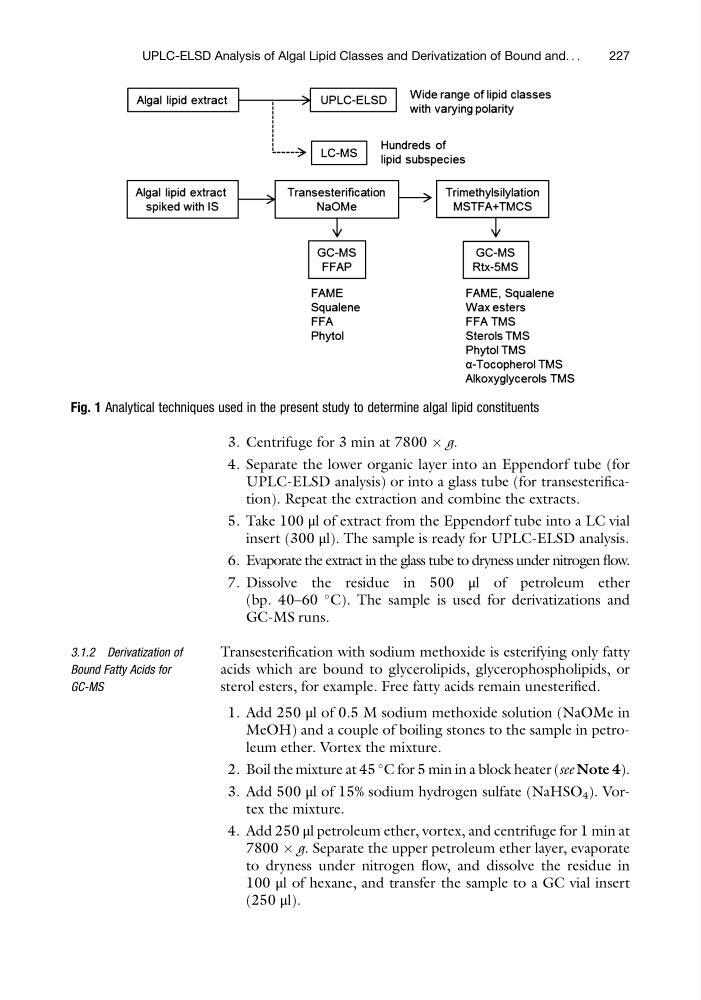
Fig. 1 Analytical techniques used in the present study to determine algal lipid constituents
UPLC-ELSD Analysis of Algal Lipid Classes and Derivatization of Bound and. . .
227
4. Separate the lower organic layer into an Eppendorf tube (for
UPLC-ELSD analysis) or into a glass tube (for transesterification). Repeat the extraction and combine the extracts.
5. Take 100 μl of extract from the Eppendorf tube into a LC vial
insert (300 μl). The sample is ready for UPLC-ELSD analysis.
6. Evaporate the extract in the glass tube to dryness under nitrogen flow.
7. Dissolve the residue in 500 μl of petroleum ether
(bp. 40–60
C). The sample is used for derivatizations and
GC-MS runs.
3.1.2 Derivatization of
Bound Fatty Acids for
GC-MS
Transesterification with sodium methoxide is esterifying only fatty
acids which are bound to glycerolipids, glycerophospholipids, or
sterol esters, for example. Free fatty acids remain unesterified.
1. Add 250 μl of 0.5 M sodium methoxide solution (NaOMe in
MeOH) and a couple of boiling stones to the sample in petroleum ether. Vortex the mixture.
2. Boil the mixture at 45
C for 5 min in a block heater (see Note 4).
3. Add 500 μl of 15% sodium hydrogen sulfate (NaHSO 4 ). Vortex the mixture.
4. Add 250 μl petroleum ether, vortex, and centrifuge for 1 min at
7800 Â g. Separate the upper petroleum ether layer, evaporate
to dryness under nitrogen flow, and dissolve the residue in
100 μl of hexane, and transfer the sample to a GC vial insert
(250 μl).
Fig. 1 Analytical techniques used in the present study to determine algal lipid constituents
UPLC-ELSD Analysis of Algal Lipid Classes and Derivatization of Bound and. . .
227