

sugar yields. Overall this demonstrated the likely importance of
specific individual optimizations of the protocol for each different
species of seaweed for accurate total sugar quantification. Here we
demonstrate a simple yet effective experimental methodology to
help determine the optimum parameters (for stage 1 of the acid
hydrolysis protocol) for the accurate quantification of carbohydrate
content in any species of seaweed.
2 Materials
Prepare all reagents and solutions and perform all dilutions using
ultrapure reverse osmosis (RO) water to achieve a sensitivity of
>18 MΩ cm (at 25
C) and using analytical grade reagents unless
otherwise stated. Caution must be used when handling hazardous
reagents such as concentrated acid and phenol (if using the colorimetric sugar quantification). In addition we advocate the use of a
fume hood or cabinet when dispensing such hazardous reagents.
All seaweed biomass must be dried in a fan-assisted oven at
ca. 80
C for a minimum of 48 h prior to use. Dried biomass must
be ground up or milled to ensure adequate homogeneity prior to
analysis. Ball-milling (or the use of a similar technique) is advised to
produce a fine powder of the biomass that aids the accurate weighing
of small quantities of material. Once dried and milled, the biomass
can be stored at room temperature in an airtight container.
The suggested range of acid concentrations evaluated for optimization of stage 1 of the total acid hydrolysis is 3–12 M, with
170
190
210
230
250
270
U. lactuca
C. crispus
mg total sugar/g seaweed
New Original
0
0.5
1
1.5
2
2.5
3
3.5
4
U. lactuca
C. crispus
mg fufural/g seaweed
New Original
A
B
Original: 12M H 2 SO 4 37°C 1 h/ 1M 100°C 2 h
New: 11M H 2 SO 4 37°C 1 h/ 1M 100°C 2 h
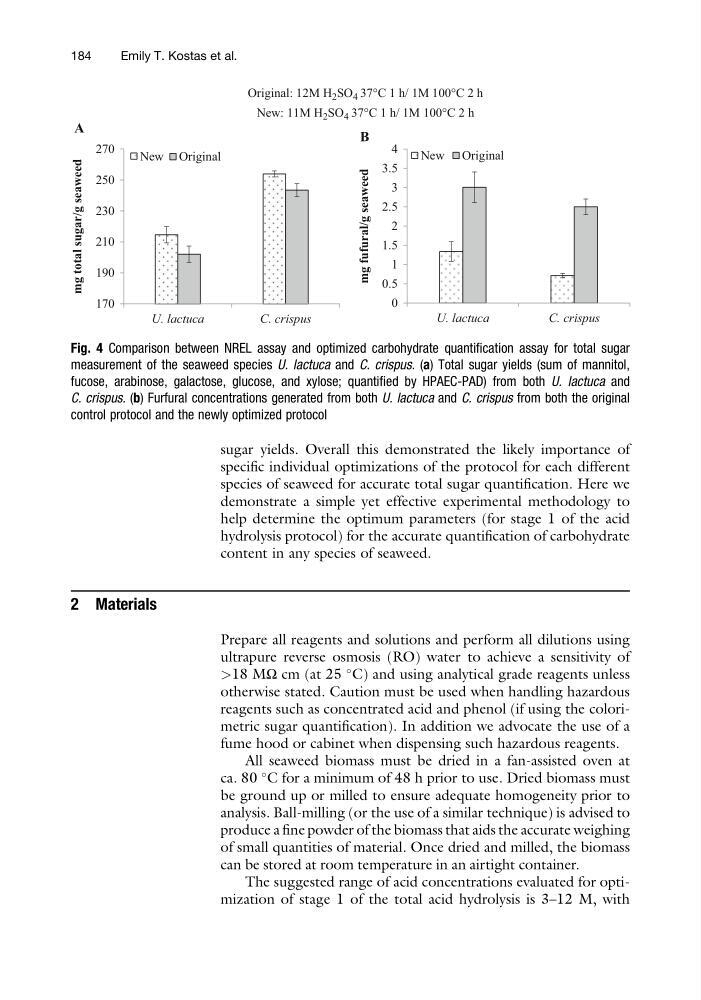
Fig. 4 Comparison between NREL assay and optimized carbohydrate quantification assay for total sugar
measurement of the seaweed species U. lactuca and C. crispus. (a) Total sugar yields (sum of mannitol,
fucose, arabinose, galactose, glucose, and xylose; quantified by HPAEC-PAD) from both U. lactuca and
C. crispus. (b) Furfural concentrations generated from both U. lactuca and C. crispus from both the original
control protocol and the newly optimized protocol
184
Emily T. Kostas et al.
specific individual optimizations of the protocol for each different
species of seaweed for accurate total sugar quantification. Here we
demonstrate a simple yet effective experimental methodology to
help determine the optimum parameters (for stage 1 of the acid
hydrolysis protocol) for the accurate quantification of carbohydrate
content in any species of seaweed.
2 Materials
Prepare all reagents and solutions and perform all dilutions using
ultrapure reverse osmosis (RO) water to achieve a sensitivity of
>18 MΩ cm (at 25
C) and using analytical grade reagents unless
otherwise stated. Caution must be used when handling hazardous
reagents such as concentrated acid and phenol (if using the colorimetric sugar quantification). In addition we advocate the use of a
fume hood or cabinet when dispensing such hazardous reagents.
All seaweed biomass must be dried in a fan-assisted oven at
ca. 80
C for a minimum of 48 h prior to use. Dried biomass must
be ground up or milled to ensure adequate homogeneity prior to
analysis. Ball-milling (or the use of a similar technique) is advised to
produce a fine powder of the biomass that aids the accurate weighing
of small quantities of material. Once dried and milled, the biomass
can be stored at room temperature in an airtight container.
The suggested range of acid concentrations evaluated for optimization of stage 1 of the total acid hydrolysis is 3–12 M, with
170
190
210
230
250
270
U. lactuca
C. crispus
mg total sugar/g seaweed
New Original
0
0.5
1
1.5
2
2.5
3
3.5
4
U. lactuca
C. crispus
mg fufural/g seaweed
New Original
A
B
Original: 12M H 2 SO 4 37°C 1 h/ 1M 100°C 2 h
New: 11M H 2 SO 4 37°C 1 h/ 1M 100°C 2 h
Fig. 4 Comparison between NREL assay and optimized carbohydrate quantification assay for total sugar
measurement of the seaweed species U. lactuca and C. crispus. (a) Total sugar yields (sum of mannitol,
fucose, arabinose, galactose, glucose, and xylose; quantified by HPAEC-PAD) from both U. lactuca and
C. crispus. (b) Furfural concentrations generated from both U. lactuca and C. crispus from both the original
control protocol and the newly optimized protocol
184
Emily T. Kostas et al.