

derived biomass is significantly less recalcitrant in nature when compared
to lignocellulosic biomass. As such the NREL-based protocol (which is
specifically designed for lignocellulosic biomass) may be too thermochemically extreme for seaweed biomass. Therefore, use of the NREL
assay in its original format may significantly underestimate the “true”
carbohydrate content of the seaweed [6] through the potential degradation of liberated sugars into furan-based compounds [7]. We therefore
evaluated the NREL protocol [1] to assess its suitability toward seaweed
biomass and confirmed it to be thermochemically harsh [6]. Furthermore, we revealed that different species of seaweed require specific
individual optimizations of the protocol for accurate total carbohydrate
quantification. From our experimental work using Laminaria digitata
(which was used as a benchmark species), we identified that optimization
of stage 1 of the protocol (the low-temperature and concentrated acid
phase) had a greater impact on the assay than was evident for stage 2 (the
high-temperature dilute acid phase). The optimal conditions for obtaining the maximal sugar yields from Laminaria digitata required the use
of 11 M H 2 SO 4 originally rather than the 12 M H 2 SO 4 used in the
NREL protocol (Fig. 2) as this reduced the degree of furan generation.
However, our experimental work concluded that stage 2 of the
original NREL assay was already optimal and as such was not
modified in any way (Fig. 3). The newly optimized stage 1 conditions were then combined with the original NREL stage 2 conditions to formulate an optimized carbohydrate assay (for
L. digitata). The subsequent application of this newly optimized
(specifically for L. digitata) carbohydrate assay to further seaweed
species (Chondrus crispus and Ulva lactuca) also produced higher
total sugar yields and lower levels of sugar degradation products
Quantification
Stage 2
Stage 1
12M H2SO4
37ºC 1h
100ºC 2h
1M H2SO4
Chromatography
Colourimetric
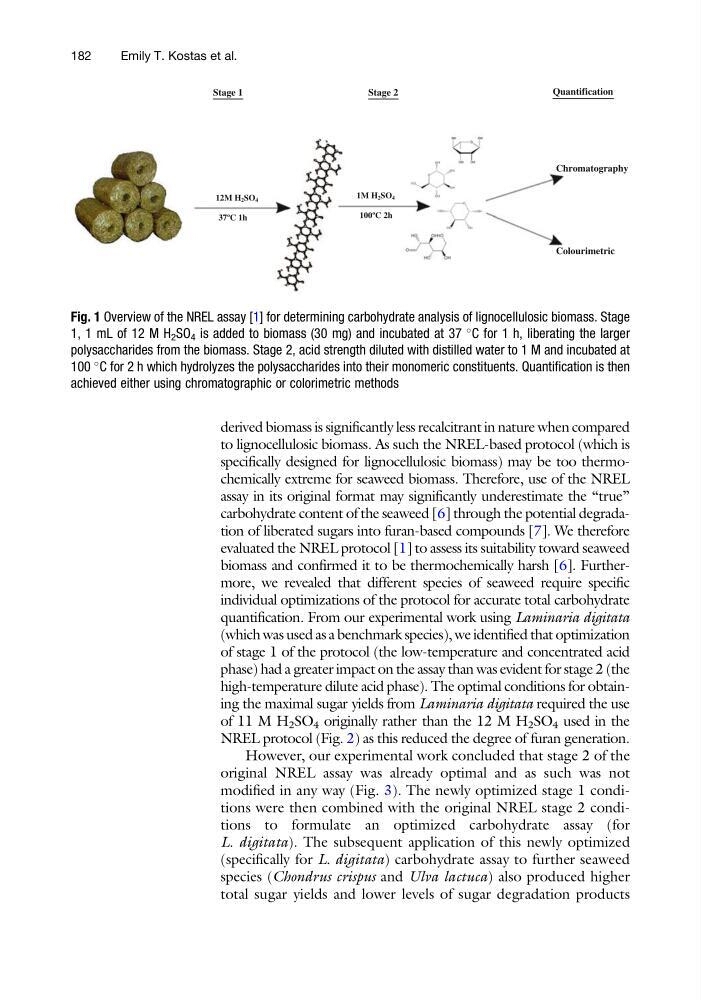
Fig. 1 Overview of the NREL assay [1] for determining carbohydrate analysis of lignocellulosic biomass. Stage
1, 1 mL of 12 M H 2 SO 4 is added to biomass (30 mg) and incubated at 37
C for 1 h, liberating the larger
polysaccharides from the biomass. Stage 2, acid strength diluted with distilled water to 1 M and incubated at
100
C for 2 h which hydrolyzes the polysaccharides into their monomeric constituents. Quantification is then
achieved either using chromatographic or colorimetric methods
182
Emily T. Kostas et al.
to lignocellulosic biomass. As such the NREL-based protocol (which is
specifically designed for lignocellulosic biomass) may be too thermochemically extreme for seaweed biomass. Therefore, use of the NREL
assay in its original format may significantly underestimate the “true”
carbohydrate content of the seaweed [6] through the potential degradation of liberated sugars into furan-based compounds [7]. We therefore
evaluated the NREL protocol [1] to assess its suitability toward seaweed
biomass and confirmed it to be thermochemically harsh [6]. Furthermore, we revealed that different species of seaweed require specific
individual optimizations of the protocol for accurate total carbohydrate
quantification. From our experimental work using Laminaria digitata
(which was used as a benchmark species), we identified that optimization
of stage 1 of the protocol (the low-temperature and concentrated acid
phase) had a greater impact on the assay than was evident for stage 2 (the
high-temperature dilute acid phase). The optimal conditions for obtaining the maximal sugar yields from Laminaria digitata required the use
of 11 M H 2 SO 4 originally rather than the 12 M H 2 SO 4 used in the
NREL protocol (Fig. 2) as this reduced the degree of furan generation.
However, our experimental work concluded that stage 2 of the
original NREL assay was already optimal and as such was not
modified in any way (Fig. 3). The newly optimized stage 1 conditions were then combined with the original NREL stage 2 conditions to formulate an optimized carbohydrate assay (for
L. digitata). The subsequent application of this newly optimized
(specifically for L. digitata) carbohydrate assay to further seaweed
species (Chondrus crispus and Ulva lactuca) also produced higher
total sugar yields and lower levels of sugar degradation products
Quantification
Stage 2
Stage 1
12M H2SO4
37ºC 1h
100ºC 2h
1M H2SO4
Chromatography
Colourimetric
Fig. 1 Overview of the NREL assay [1] for determining carbohydrate analysis of lignocellulosic biomass. Stage
1, 1 mL of 12 M H 2 SO 4 is added to biomass (30 mg) and incubated at 37
C for 1 h, liberating the larger
polysaccharides from the biomass. Stage 2, acid strength diluted with distilled water to 1 M and incubated at
100
C for 2 h which hydrolyzes the polysaccharides into their monomeric constituents. Quantification is then
achieved either using chromatographic or colorimetric methods
182
Emily T. Kostas et al.